.png "National Highway Projects in India: Policy & Government Initiatives")
India's National Highway Projects are undergoing a transformation that goes far beyond laying asphalt.
The Policy changes and Government Initiatives driving this transformation touch every layer of how roads are planned, financed, approved, and monitored.
In 2026, the combined effect of these National Highway Projects, Policy reforms, and Government Initiatives is visible in real numbers: over 1,46,566 km of national highways as of March 2026 — a 60 percent jump from 91,287 km in FY2014 — and a Union Budget 2026–27 allocation of Rs 3,09,875 crore for the Ministry of Road Transport and Highways (MoRTH), an 8 percent increase over the revised estimates for 2025–26.
What changed? It was not just construction capacity. It was a deep reform of the systems behind construction — from how land gets acquired, to how projects get financed, to how satellite imagery now tracks a contractor's daily progress from orbit.
"Our problem is we are unable to spend. Our speed of spending is too low." — Nitin Gadkari, Union Minister for Road Transport and Highways, speaking at the listing of the NHAI-sponsored Raajmarg InvIT on the Bombay Stock Exchange, March 2026
That candor from the minister himself captures both the ambition and the challenge. India can now mobilize up to Rs 8 lakh crore annually for highway development, but turning allocated funds into completed kilometers requires every reform — from digital land records to drone-based site monitoring — to work in sync.
India's highway growth is not accidental. It is the outcome of a long-term policy architecture that began with the National Highways Development Project (NHDP) in 1998 and evolved into the Bharatmala Pariyojana launched in 2017 — the country's largest-ever highway development program, covering approximately 34,800 km in Phase I at an estimated cost of Rs 5,35,000 crore.
 Key policy pillars as of 2026:
Four-lane and above national highways have more than doubled — from 18,371 km in 2014 to 45,516 km by 2026. Highway construction speed climbed from 11.6 km/day in 2014 to a peak of 34–37 km/day in recent years. The government's stated target is 60 km/day.
In FY2025–26, NHAI surpassed its construction target by 15 percent, completing 5,313 km against a goal of 4,640 km — the equivalent of building roughly 14 km of highway every single day of the year.
Also Read: The New Infra-Industrial Grid: Mapping India's Investment Flows
Land acquisition has historically been the single biggest cause of highway project delays in India. The Right to Fair Compensation and Transparency in Land Acquisition, Rehabilitation and Resettlement Act, 2013 (LARR Act) set clear compensation benchmarks — typically 2x the market rate for rural land and 1x for urban land — along with mandatory social impact assessments. While this strengthened farmer rights, implementation gaps slowed timelines.
Reforms since 2016 have steadily addressed these gaps:
Digital Land Records — DILRMP: The Digital India Land Records Modernization Programme (DILRMP), extended for 2021–26 with an outlay of Rs 875 crore, has computerized Record of Rights in 6,25,137 out of 6,57,397 villages (95 percent). As of 2024, 98.5 percent of rural land records have been digitized. Over 36 crore land parcels have been assigned a Unique Land Parcel Identification Number (ULPIN or "Bhu-Aadhar") using geo-referenced coordinates. This directly reduces boundary disputes and speeds up alignment finalization for highway projects.
Environmental Approvals — PARIVESH 2.0: Environmental clearances for highway projects are now processed through the PARIVESH 2.0 portal, a single-window digital platform under MoEFCC. This has reduced the time taken for Stage I and Stage II forest and environmental clearances significantly compared to the pre-2017 paper-based process.
National Single Window System (NSWS): Integrating approvals across 32 central ministries and 34 states and UTs, NSWS has facilitated over 8.29 lakh approvals since launch, streamlining utility shifting coordination, right-of-way permissions, and inter-departmental no-objection certificates that previously required separate physical applications.
Cascade Effect on Projects: According to a January 2026 industry analysis, what was once an ecosystem of "fragmented land records, endless paperwork, rigid procurement rules, and slow-moving environmental clearances is now shifting toward a streamlined, digital-first, performance-driven model."
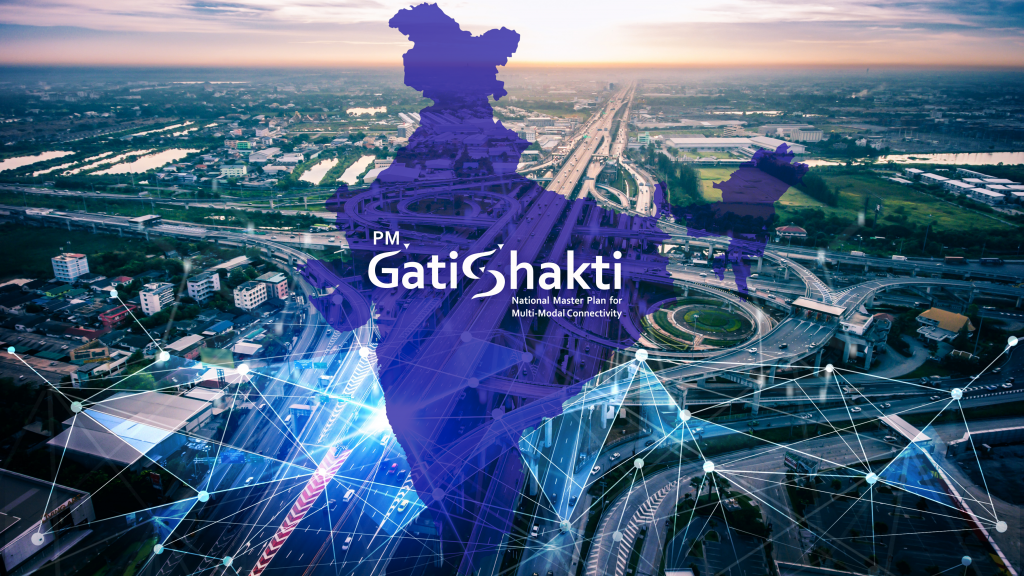
PM Gati Shakti National Master Plan (NMP), launched in October 2021, is not an infrastructure scheme — it is a coordination platform. It solves a problem that plagued Indian infrastructure for decades: ministries planning in silos, resulting in roads that didn't connect to railheads, ports that lacked last-mile road access, and duplication of survey and clearance work across departments.
GIS-Based Planning at Scale: The platform uses ISRO satellite imagery and a GIS architecture developed by BISAG-N. It has onboarded 44 central ministries and 36 states/UTs, integrating 1,614+ data layers onto a single spatial canvas. MoRTH has used the platform to plan over 8,891 km of roads. Every alignment can now be cross-checked against power lines, forest patches, railway tracks, and industrial zones before a single rupee is committed to design.
Multi-modal Integration: PM Gati Shakti incorporates Bharatmala (roads), Sagarmala (ports), inland waterways, and UDAN (aviation) into one planning view. By October 2025, the platform had commissioned over 118 Gati Shakti cargo terminals across the country — multimodal nodes handling road, rail, and sometimes inland waterway freight together.
Reduced Duplication: The Network Planning Group (NPG) has evaluated over 200 big-ticket projects under Gati Shakti principles. Before the platform, the same corridor might have been studied independently by three different ministries. Now, a single geospatial evaluation identifies overlapping surveys and resolves them upfront.
Better Project Sequencing: In August 2025, the 98th NPG meeting evaluated seven projects — new rail lines, highway expansions, a multimodal logistics park, and textile parks — in a single session, assessing cross-sectoral interactions to optimize construction sequencing and cut total travel time.
Private Sector Access: In October 2025 (marking four years of Gati Shakti), the government opened the portal to private infrastructure developers and logistics operators for non-sensitive spatial data. This allows private highway concessionaires to plan last-mile logistics integration before they even win a tender.
The platform's impact on logistics efficiency is measurable: India's World Bank Logistics Performance Index rank improved from 44th (2018) to 38th (2023), with a target of top 25 by 2030.
Building over 5,000 km of highways a year requires a sophisticated, diversified financing model. No single source — government budget, private equity, or debt — can carry the full load. India's highway sector now uses at least six distinct financing instruments operating in parallel.
Government Budget Allocation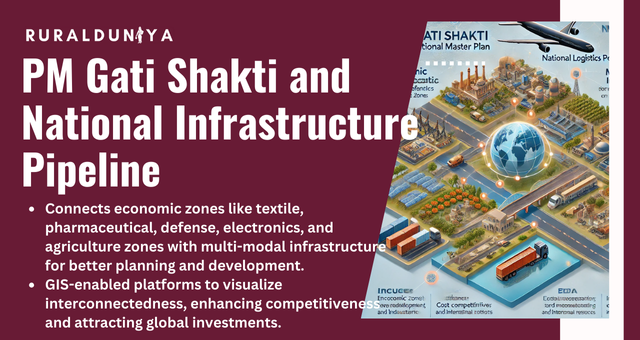
The Union Budget 2026–27 allocates Rs 1,21,999 crore (USD 13.6 billion) specifically for roads and bridges under MoRTH — a 5 percent increase over revised 2025–26 estimates. The total MoRTH allocation stands at Rs 3,09,875 crore, representing 6 percent of total government expenditure. Rs 35,027 crore comes from the Permanent Bridge Fee Fund (PBFF) for NHAI, and Rs 10,430 crore from the Central Road and Infrastructure Fund (CRIF) for states and UTs.
EPC (Engineering, Procurement & Construction)
In the EPC model, the government funds the entire project and a private firm builds it for a fixed price. It is the most common model for projects in areas with low traffic density or high risk. 56 percent of Bharatmala projects (by km) have been awarded through EPC.
HAM (Hybrid Annuity Model)
Introduced in January 2016 after the collapse of BOT-Toll projects, HAM is now the dominant PPP model for national highways. Under HAM, NHAI pays 40 percent of project cost during construction (in 5 milestone-linked instalments), while the developer raises the remaining 60 percent through debt and equity, recovering it through semi-annual annuity payments over 15 years. HAM accounts for roughly 40 percent of all NHAI projects awarded since 2016. Studies show HAM projects are completed 35 percent faster than traditional item-rate contracts.
In January 2025 alone, private companies secured highway contracts worth Rs 53,983 crore (USD 6.28 billion), accounting for 58 percent of all contracts awarded in that period.
PPP and BOT Revival
The government is reviving interest in Build-Operate-Transfer (BOT-Toll) projects for high-traffic corridors where toll revenue is predictable. Large infrastructure players — Larsen & Toubro, Adani Road Transport, and IRB Infrastructure Developers — are leading the charge on higher-value HAM and BOT packages, with Rs 500–1,500 crore ring-road and economic corridor packages emerging as key value drivers in the 2026 tender cycle.
Toll Monetisation
NHAI's total asset monetisation through TOT (Toll-Operate-Transfer) and InvIT routes since FY2019 stands at approximately Rs 1.52 lakh crore (USD 17.88 billion). The monetisation target for FY2025–26 was Rs 300 billion, and ICRA projected it could reach Rs 350–400 billion through timely execution.
Infrastructure Investment Trusts (InvITs)
The National Highways Infra Trust (NHIT) completed its Round 3 InvIT raise of Rs 16,000 crore (USD 1.92 billion) — the largest single transaction by NHAI — covering 889 km of national highways. NHAI also listed the Raajmarg Infrastructure Investment Trust on the Bombay Stock Exchange in March 2026. InvITs allow institutional investors (pension funds, insurance companies, sovereign wealth funds) to invest in operational highway assets, recycling capital for new construction without increasing government debt.
"India has the capacity to mobilise up to Rs 8 lakh crore every year for highway development. Each rupee spent on the sector can generate multiple benefits." — Nitin Gadkari, Union Minister for Road Transport and Highways, March 2026
The 2026 highway story is as much about data and technology as it is about construction. NHAI and MoRTH have deployed a multi-layered digital governance stack covering planning, execution, monitoring, and maintenance.
 FASTag and Toll Data
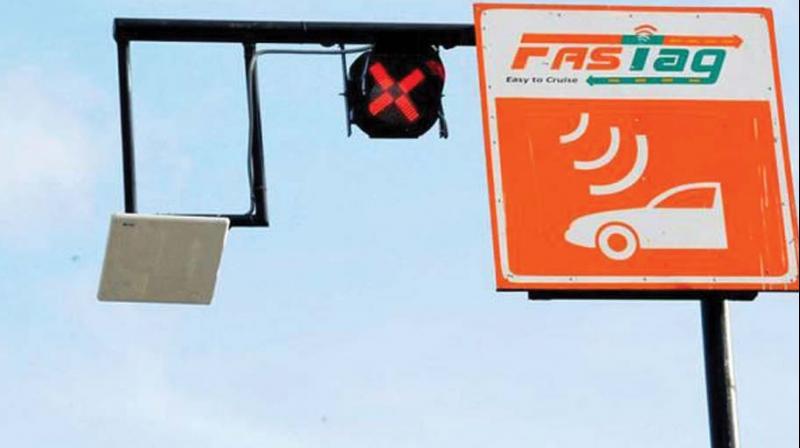
FASTag, India's mandatory electronic toll collection system, now covers virtually all national highway toll plazas and generates real-time traffic flow data across the network. Aggregate toll and traffic data feeds into demand forecasting models, helping NHAI prioritize widening projects and maintenance interventions on the highest-pressure corridors. The Multi-Lane Free Flow (MLFF) toll system, announced in May 2026, is expected to reduce toll collection operating costs from 12–15 percent to just 3–4 percent, while eliminating bottlenecks at plazas.
NHAI has mandated drone-based video recording for all Bharatmala projects from pre-construction through completion. Contractors submit geo-tagged, time-stamped 4K aerial footage at regular intervals — monthly or biweekly depending on project scale. This footage is uploaded to the NHAI Data Lake, accessible to project directors and ministry officials for real-time progress verification. Drone Analytics Monitoring Systems (DAMS) are also used to monitor bridge and flyover structures, and to identify encroachments on highway land.
NHAI has invited bids to deploy drone-based Network Survey Vehicles across 23 states covering 20,933 km of national highways for predictive maintenance — a shift from reactive pothole-filling to identifying pavement distress months before it becomes critical.
Also Read: Top National Expressway & Highway Projects in India 2026
NHAI's centralized PMIS tracks all active projects against milestones, payments, and contractor performance in real time. Field engineers upload inspection data through the NHAI ONE / Tatpar app using geo-tagged photographs and reports. Road-related complaints via the Rajmarg Yatra app and social media are channeled into the same grievance-redressal system.
ISRO satellite imagery underpins both PM Gati Shakti's GIS platform and NHAI's corridor planning. Building Information Modelling (BIM) is being adopted for complex structures — bridges, tunnels, interchanges — enabling clash detection, volumetric analysis, and 3D terrain mapping before construction begins. Drone-based LiDAR complements satellite imagery in forested and hilly terrain where photogrammetry is less effective.
NHAI's transition to predictive maintenance uses AI-powered dashcams that automatically detect potholes, damaged crash barriers, and failed lighting. Falling Weight Deflectometer (FWD) testing measures pavement structural health by dropping a controlled weight and analyzing the response. Bihar's government is deploying AI and ML-driven asset management for bridge safety and pothole-free roads. The Greater Visakhapatnam Municipal Corporation has launched SARTHI, an AI-based traffic management pilot. MoRTH has approved Uttar Pradesh's first AI-based road safety pilot to reduce accidents and improve enforcement.
India's national highway sector in 2026 is defined not by the scale of construction alone, but by the quality of the systems behind it. Policy reforms — from the Bharatmala framework to greenfield corridor prioritisation — have given the sector a long-term direction. Land acquisition has been significantly de-risked through 98.5 percent digitization of rural land records and 36 crore ULPIN-tagged parcels. PM Gati Shakti has replaced siloed ministry planning with a 1,614-layer GIS platform shared across 44 ministries and all states, enabling smarter sequencing and multi-modal integration.
Financing has diversified from sole budget dependency to a blend of EPC, HAM, BOT, InvITs, and toll monetisation — with Rs 1.52 lakh crore already recycled through asset monetization since 2019. And digital governance tools — drones, AI, PMIS, FASTag, satellite mapping — have made project monitoring more transparent and maintenance more predictive than at any previous point in Indian infrastructure history.
The result is a sector that built 5,313 km in FY2025–26, surpassing its target by 15 percent, with a budget of Rs 1,21,999 crore committed for FY2026–27 to sustain the momentum. The remaining challenge — as the minister himself acknowledged — is acceleration of spending and execution to match the ambition of 60 km/day. The policy architecture is in place. The financing tools exist. The digital rails are laid. The focus now shifts squarely to execution.

.jpg "AR Enterprises: Building The Supply Networks Behind India's Construction Growth")
.jpg "Industrial Packers: Engineering Industrial Packaging for India's Manufacturing Future")




We use cookies to ensure you get the best experience on our website. Read more...