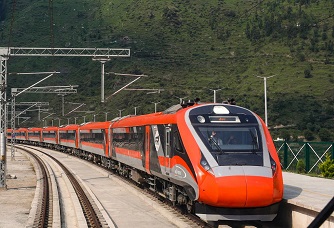
India has approved its first indigenous Ahmedabad-Dholera rail corridor worth ₹20,667 crore, marking a major step in the country’s railway modernisation plans.
Cleared by the Union Cabinet, the semi high-speed rail project will connect Ahmedabad with Dholera in Gujarat and is expected to significantly reduce travel time while boosting industrial growth, regional connectivity, and infrastructure development in the state.
The 134-km double-line corridor will connect Ahmedabad (Sarkhej) with the upcoming Dholera Special Investment Region (SIR), Dholera International Airport, and the Lothal National Maritime Heritage Complex. Once completed, the rail line is expected to cut travel time between Ahmedabad and Dholera to less than an hour, improving connectivity for passengers, businesses, and industries across the region.
The project is targeted for completion by 2030-31 and is being seen as a landmark development for India’s transport sector. Unlike conventional railway upgrades, the corridor is designed specifically for semi high-speed operations, allowing trains to run at speeds of up to 200 kmph train services with improved efficiency and reliability.
A key feature of the project is its focus on indigenous technology. Officials have described it as India’s first “desi” high-speed rail corridor, developed using domestic systems and broad-gauge infrastructure. The project supports the government’s Atmanirbhar Bharat vision aimed at strengthening self-reliance in infrastructure and transport technology.
Also Read: India Targets 1 Trillion USD Exports Amid Global Trade Challenges
The Ahmedabad-Dholera corridor is also expected to play a major role in the development of the Dholera region, which is being planned as one of India’s largest smart industrial cities. Better rail connectivity is likely to attract investments in manufacturing, logistics, technology, and urban development, while also creating new employment opportunities.
According to government estimates, the railway line will benefit around five lakh people and improve connectivity for nearly 284 villages in Gujarat. Officials believe the corridor will help support faster movement of workers, goods, and services between industrial zones and urban centres.
The project has been planned under the PM Gati Shakti National Master Plan, which focuses on improving multimodal connectivity and integrated infrastructure development across the country. The rail corridor is expected to complement Gujarat’s expanding network of expressways, ports, airports, and industrial hubs.
Apart from economic benefits, the government says the project will also contribute to environmental sustainability. Estimates suggest the corridor could reduce oil consumption by nearly 0.48 crore litres annually and lower carbon emissions by around 2 crore kilograms each year, creating environmental benefits comparable to planting nearly 10 lakh trees.
The approval of the Ahmedabad-Dholera rail corridor comes as India continues to expand its railway infrastructure through Vande Bharat trains, dedicated freight corridors, station redevelopment projects, and the Mumbai-Ahmedabad bullet train initiative. Railway experts believe this project could become a model for future Indian railway infrastructure development and upcoming semi high-speed rail networks across the country.
.jpg "Precise Fasteners: Committed To Fulfilling Client Expectations, Every Time!")



We use cookies to ensure you get the best experience on our website. Read more...