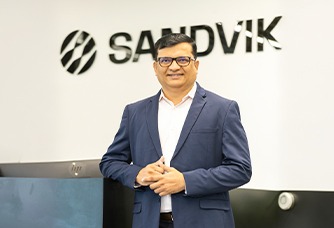
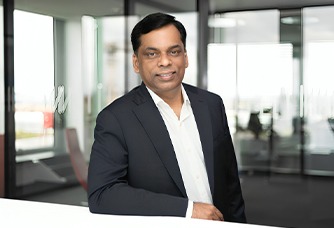
Anil Ghegade is a seasoned industry leader with over 20 years of experience spanning product development, R&D, operations, program management, product management, and general management. A mechanical engineer by qualification and he has also completed a strategic leadership program at INSEAD. Throughout his career, he has remained committed to continuous learning, regularly upgrading his skills and knowledge to stay aligned with evolving industry demands.
A significant part of his professional journey was with Eaton, where he joined as an Associate Engineer and progressed through multiple leadership roles to eventually become the Head of the Corporate Research and Technology Group. Following the acquisition of his business unit by Danfoss, he transitioned to the organization and served as Senior Director for the Innovation Hub in India, while also driving growth initiatives for the region.
His industry experience spans aerospace, off-highway vehicles, electrical systems, and industrial products. He has also built extensive international leadership experience, having worked in the United States and led R&D teams across the Asia-Pacific region, including India, China, Japan, and South Korea.
Currently, Anil serves as the Managing Director of Sandvik India Innovations Private Limited, where he is leading the establishment and growth of Sandvik’s innovation hub in India. Based in Pune, the center focuses on intelligent and digital manufacturing and plays a key role in advancing the company’s global innovation agenda.
In an insightful dialogue with Thiruamuthan, Assistant Editor at Industry Outlook, Anil Ghegade, Managing Director of Sandvik India Innovation Hub, discusses how Global Capability Centers (GCCs) in India are evolving from cost-focused support centers into strategic innovation hubs that drive end-to-end product development, engineering decisions, and digital innovation. He emphasizes that success today is defined less by cost efficiency and more by product ownership, innovation output, talent expertise, speed, quality, and overall business impact.
As Global Capability Centers (GCCs) in India move beyond cost arbitrage, how are they being repositioned as hubs for core engineering innovation and product ownership?
The industry is undergoing a structural repositioning of GCCs and innovation hubs here in India. A few years ago, when companies started setting up engineering centers in India, the whole idea was largely around cost arbitrage. However, today, GCCs and innovation hubs have structurally repositioned themselves from being execution engines to becoming strategic innovation engines. That is exactly the direction we are pursuing at Sandvik as well.
There are a few key factors driving this transition. The first is the depth of competence, engineering knowledge, and talent available in India, which makes this shift possible.
The second factor is the set of external challenges that every company is facing today. Digital systems are becoming increasingly complex with each passing year. At the same time, product lifecycles are getting shorter. As a result, companies need much greater speed in execution, whether in operations, R&D, engineering, or digital functions. Speed across the entire product development cycle has become critical.
When organizations are required to respond to these external factors—greater system complexity, the need for speed, and shorter product lifecycles—they also need the internal competence to support that transformation. India is in a unique position because of the strength of its engineering talent, and that is playing a significant role in enabling this shift.
Another important development is the growing level of ownership being entrusted to GCCs. Over the last decade, many GCCs have moved from supporting individual tasks to owning complete subsystems and, in several cases, entire product development streams. As a result, there has also been a shift in mindset. GCCs are moving away from a service-oriented mindset toward a product and ownership mindset. This is becoming embedded in their operating models and the way they function.
The evolution is also visible in how GCC performance is measured. Earlier, KPIs were largely focused on headcount and cost per employee. That then evolved toward service-level agreements. Today, the focus is on patents, innovation, product launches, development cycle times, product velocity, and platform scalability. These metrics have become far more important in measuring success.
These are also strong signals that global corporations are viewing Indian GCCs differently. In many cases, GCCs are becoming miniature versions of the business itself, making them an ideal environment to drive innovation and R&D agendas. That is how this transformation is progressing.
GCCs in India are transitioning from cost-driven execution centers to strategic innovation hubs, powered by deep engineering talent, speed, and growing product ownership mandates.
With increasing mandate for end-to-end product development, how are GCCs shifting from support roles to driving architecture, design, and high-value engineering decisions?
The way I would put it is this shift is now less about delegation and more about credibility. Therefore, credibility can only be built through two things: speed to maturity and consistently reaching the expected level of performance. In my opinion, these are the two key criteria through which GCCs establish credibility.
So, what is speed to maturity? We certainly have talent, but gone are the days when the entire ecosystem was built around generalists. Today, it is about specialization, system thinking, and deep domain expertise. These capabilities have become increasingly important. As a result, GCCs are building credibility by demonstrating strong subject matter expertise, system-level thinking, and consistently delivering at the desired performance levels. When this is done repeatedly, credibility naturally gets established with the headquarters.
Alongside this, organizations themselves are going through significant restructuring. Modern organizations are moving away from siloed structures toward more synergized and smart decentralized models. This shift enables greater collaboration, where architecture, design, testing, and related functions can be deployed horizontally through common frameworks. Such an approach improves deployment, scalability, and long-term maintainability.
When organizations adopt this kind of pod-based structure, it also enables GCC engineers to have a much broader global influence. They are no longer compartmentalized into a single function or activity. Therefore, organizational structure itself is becoming an important enabler of execution and ownership.
Another significant change is the rise of technical leadership within GCCs. Over the years, Indian engineers have built strong competence, and today system architects and product engineering leaders from GCCs are actively participating in global design reviews, technical councils, and innovation forums. This has given Indian GCCs a stronger voice in global decision-making processes.
As a result, GCCs are increasingly able to influence key engineering decisions, contribute to product ownership, and ensure that their perspectives are heard at a global level. With these developments, the model has evolved from that of a delivery center to a co-owning and collaborative partner in product development.
Also Read: How AI and Machine Learning Are Transforming Test Automation
As companies expand GCC capabilities across AI, embedded systems, and digital engineering, what talent and capability gaps are emerging in building innovation-led teams?
India is the second-largest producer of engineering graduates in the world after China. However, volume alone means very little today because the industry has evolved, and the demand is shifting from generalist capabilities to deep expertise. Even within GCCs, the focus is moving away from scale and volume towards specialization, competence, and domain expertise. That is where some of the capability gaps continue to emerge.
If I were to highlight the top three gaps, the first would be systems thinking. Particularly in complex, distributed, hardware-software integrated solutions, we still see a gap in the ability to think at a system level. Part of this is influenced by the education system, and part of it comes from the type of exposure engineers receive early in their careers. As products become more connected and multidisciplinary, this capability becomes increasingly important.
The second gap is in applied AI talent. Everyone is talking about AI today, but the talent required to move beyond building models and into production-grade deployment remains limited. In my view, this is more of an industry-wide challenge than an India-specific one. One aspect is identifying the right business use cases where AI can create value. The other is having the systems capability to deploy, scale, and sustain those solutions effectively. Both areas still require significant development.
The third gap is at the leadership level. There is still a need to strengthen the ability of engineering leaders to drive innovation agendas in global forums. Technical competence is available, but influencing global decisions, shaping innovation roadmaps, and leading cross-functional initiatives require a different set of leadership capabilities. This is an area where we are also investing within our organization because it can become a limiting factor in the future.
Another challenge is the mindset shift from services to products. A large part of India's technology industry has historically been built around services. However, GCCs and innovation hubs are increasingly product-led organizations, where the expectation is ownership and accountability across the product lifecycle. Moving from a services mindset to a product mindset requires a significant cultural and behavioral shift, and that transition is still underway in many parts of the industry.
These are some of the key gaps that can slow down progress. At the same time, organizations are actively addressing them through targeted hiring, focused capability development, leadership investments, and by creating environments where people feel psychologically safe to share ideas, raise questions, and challenge assumptions. Those efforts are helping build the innovation-led teams that the next generation of GCCs will require.
With tighter integration between global headquarters and GCCs, how are organizations ensuring faster decision-making while maintaining alignment on innovation priorities?
The organizational structures are execution systems only solve a part of the problem, which is the first part. The second part is the operating model, and these two go hand in hand.
In my experience, the way we look at it is through the lens of what and how. What we are working on, and why we are working on it, is largely dictated by the business units. Even though you may have a GCC or innovation hub in India, the business owns the P&L, the product roadmap, the technology roadmap, and the broader business track plan. Therefore, it is important to ensure strong alignment with the business so that we are working on the right priorities.
That does not mean creativity is restricted within the GCC. It simply means that even when new ideas emerge, they should be aligned with and approved by the business units so that everyone is moving in the same direction.
Once that alignment is established, the focus shifts to the how. The entire execution system and accountability framework need to be built locally. This is where organizational structures and operating models become critical. Accountability must sit with the local leadership team, whether it relates to talent, processes, delivery KPIs, quality metrics, or overall execution.
To enable this, we have adopted a product-centric governance model, where decisions are made within product teams rather than through multiple layers of hierarchical approvals. We also operate with shared OKRs and KPIs across business and product groups to ensure common objectives and accountability.
Collaboration is another important aspect. We have established different councils, real-time dashboards, and transparent operating mechanisms to ensure complete visibility across teams and geographies. This transparency helps create trust and enables faster decision-making.
Leadership also plays a critical role in making this model successful. Leaders are responsible for ensuring strategic alignment, maintaining transparency, and staying compliant with global standards while empowering teams to make decisions locally.
Ultimately, speed comes from reducing dependency chains, while alignment comes from clarity of strategy. Trust, in turn, is built through transparency in execution and operating models. That is how organizations can achieve faster decision-making while remaining aligned on innovation priorities.
Also Read: Optimizing Power Consumption in Data Centers for Maximum Savings
As GCCs take on more IP-driven work, how can companies manage risks around data security, intellectual property ownership, and cross-border collaboration frameworks?
With the growth of GCCs and global engineering hubs, there is a perception that intellectual property is becoming more distributed, and every company is concerned about it. In reality, that is happening to some extent. However, every mature organization, including ours, has internal checks and controls in place to manage these risks effectively.
Leading organizations are addressing this through zero-trust security architectures and strict data access controls. Access is granted based on roles and business needs, ensuring that sensitive information is available only to the people who require it.
At the same time, clear IP ownership frameworks are established so that there is no ambiguity around who owns the intellectual property. These frameworks are supported by both individual-level and legal entity-level controls, declarations, and governance mechanisms.
Another important aspect is the segmentation of critical workloads and workforce access. Highly sensitive components are protected through restricted access environments. For example, trade secrets, source codes, and other critical assets are accessible only to authorized personnel, ensuring that sensitive intellectual property remains protected.
Organizations also place significant emphasis on compliance with global regulations. This includes adherence to data residency requirements, privacy laws, export control regulations, and other cross-border compliance frameworks that govern how information is shared and managed across locations.
Collaboration remains essential, but it must take place within secure environments. While organizations encourage global collaboration, they also ensure that intellectual property is not unnecessarily exposed. This is achieved through controlled development environments, monitored code repositories, secure collaboration platforms, and clearly defined governance processes.
Equally important is building a strong culture of security awareness. Ultimately, it is not only the processes and systems that protect intellectual property, but also the people who work with it every day. That is why organizations invest significantly in educating employees about data security, IP protection, and responsible collaboration practices.
The objective is not just enforcement through policies and controls, but also creating a sense of ownership among employees. When people understand the importance of protecting intellectual property and sensitive information, they become active participants in maintaining security rather than simply complying with regulations. This combination of governance, technology, compliance, and culture is what enables companies to manage risks effectively while supporting global innovation and cross-border collaboration.
Looking ahead, will GCCs evolve into global innovation anchors competing with headquarters, and what will define their success in driving core engineering breakthroughs?
There is no competition between GCCs in India and global headquarters. If you look at why global organizations continue to invest in India, it is largely because of the competence, engineering talent, and speed available here. These strengths complement the domain expertise, market understanding, and strategic direction that headquarters typically possess. When these capabilities come together, it creates a winning combination.
Going forward, the success of GCCs will be defined by the depth of ownership they carry. The key question will be whether GCCs own only specific features, subsystems, or entire platforms and systems. The greater the ownership, the stronger the indication of competence and trust within the global organization.
Innovation output will be another critical measure of success. This will not be evaluated solely by the number of patents generated, but also by the tangible business impact created through those innovations. Organizations will increasingly look at how innovation contributes to product differentiation, customer value, and business outcomes.
Talent capability will continue to be a major differentiator. Along with competence, the ability to deliver with speed, agility, and consistently high quality will remain important success criteria. These factors will determine how GCCs are positioned within the global innovation ecosystem.
If you look at these dimensions—depth of ownership, innovation output, talent competence, speed, agility, and quality—they are likely to become the key performance indicators on which GCCs will be evaluated in the future.
Therefore, I do not see the future as a compete scenario. I see it more as a complement scenario, where GCCs increasingly take leadership in specific domains. Areas such as digital platforms, embedded systems, AI, and advanced engineering are examples where India is building significant competence because of the talent available here.
At the same time, headquarters will continue to focus on broader strategic priorities, including product roadmaps, technology roadmaps, market strategy, and customer partnerships. The future model is therefore likely to be one of distributed innovation, where responsibilities are shared across locations based on strengths and capabilities.
In that model, GCCs will not simply act as execution centers. They will become critical nodes within the global innovation network, contributing meaningfully to core engineering decisions, product development, and technology advancement while working in close alignment with headquarters. That is how I see this evolution in the years ahead.
Also Read: Cost Reduction Strategies for Manufacturing Plants
If you were to offer one piece of advice to the next generation of leaders, and what would be the key principles that you believe are essential for long-term success?
I have a very simple formula that I learned from one of my mentors, and it is something I try to follow throughout my leadership journey: Show up, Speak up, Step up.
The first is Show up. As a leader, whenever you see an issue or an opportunity, be present. Show up, get involved, and take responsibility. Leadership begins with being willing to step into situations rather than staying on the sidelines.
The second is Speak up. Do not hesitate to voice your opinion, whether it is about a challenge that needs to be addressed or an opportunity for improvement. If a leader chooses to remain silent, it becomes a lost opportunity to create impact, influence decisions, and drive positive change. Leaders must be willing to express their views constructively and contribute to meaningful discussions.
The third is Step up. When you believe something is the right thing to do, step forward and take ownership of delivering it. Leadership is not only about identifying opportunities or raising concerns; it is also about taking accountability for outcomes and seeing things through to completion.
If we consistently practice these three principles—Show up, Speak up, and Step up—again and again throughout our careers, we will become better leaders. More importantly, we will contribute positively to the growth of our organizations and the broader ecosystem around us.
That is the one leadership mantra I would share with emerging leaders: Show up, Speak up, and Step up.
.jpg "AR Enterprises: Building The Supply Networks Behind India's Construction Growth")
.jpg "Industrial Packers: Engineering Industrial Packaging for India's Manufacturing Future")


We use cookies to ensure you get the best experience on our website. Read more...