.jpg "Building EV Bus Ecosystems for India's Clean Mobility Goals")
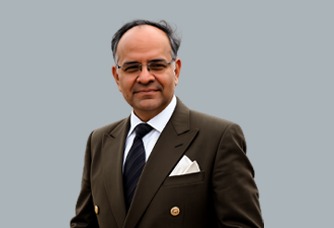
In an exclusive interaction with Thiruamuthan, Assistant Editor at Industry Outlook, Mahesh Babu, Managing Director, Olectra Greentech Limited, discusses how India’s e-bus ecosystem is steadily maturing through stronger stakeholder coordination, policy support, and evolving business models. He highlights the transition toward scalable deployment, improved battery economics, and a more sustainable and customer-centric public transport.
Mahesh Babu is a seasoned leader with over 30 years of experience across organizations such as Mahindra Electric, Switch Mobility, and Ashok Leyland. His expertise spans EV innovation, product development, and policy collaboration, with strong skills in strategic leadership and building agile, customer-centric mobility solutions.
With India accelerating e-bus adoption under schemes like FAME and state tenders, how are ecosystem gaps in charging, financing, and operations impacting large-scale deployment?
India’s e-bus journey is among the most progressive transformations in public mobility today. With nearly 17,000 electric buses already on the road and more than 5,000 added in the last year alone, the pace of adoption is clearly accelerating.
Equally important is the strength of the pipeline. Over 14,000 e-buses have been sanctioned nationally, with tenders issued for most of them, reflecting how policy intent is steadily translating into on-ground execution.
At this stage, what we are witnessing is less about gaps and more about ecosystem synchronization. Charging infrastructure is evolving from pilot-led deployments to structured, depot-based models. Financing is becoming more sophisticated, with increasing participation from institutional capital. On the operations side, transport undertakings are steadily building capabilities in data-led fleet management. This is a natural maturation curve. With every deployment, alignment across stakeholders improves, reinforcing confidence that the ecosystem will scale efficiently.
Looking ahead, the next phase of growth will be defined by deeper systemic readiness. Strengthening grid infrastructure to support large-scale fast charging will be critical to sustain momentum. At the same time, while private financing players have begun to participate, the market is still in an adoption phase. Expanding access to tailored financing models and de-risking mechanisms will be a key to unlocking faster, more widespread deployment.
The next phase of growth will be driven by advancements in battery technology, financial innovation, and strong policy support, enabling faster and more efficient e-bus adoption.
As gross cost contract (GCC) models gain traction, how are stakeholders balancing capital efficiency for OEMs with long-term operational viability for public transport authorities?
The Gross Cost Contract model has been a structural game changer for India.
Its core strength lies in enabling role clarity. Public transport authorities can focus on service delivery, while private players bring in capital, technology, and operational efficiency.
We are already seeing strong momentum, with electric buses accounting for ~30% of total bus sales in FY26, and this share is steadily rising. Importantly, the model itself is evolving. Contracts today are more structured, with clearer frameworks around payment security, risk allocation, and lifecycle management.
As operational experience deepens, GCC is likely to mature into a more balanced and sustainable framework, supporting both capital efficiency for OEMs and long-term viability for public bus systems.
Also Read: How Battery-as-a-Service Is Reshaping India's EV Economics
With charging infrastructure still evolving, how are transit agencies optimizing route planning and depot electrification to ensure uptime and minimize operational disruptions?
One of the most important learnings from India’s e-bus transition is that electrification is not a like-for-like replacement of diesel buses. It demands a fundamental rethinking of the entire operating model, from planning and deployment to daily operations.
Transit agencies are increasingly moving towards a data-led approach. Route selection is becoming far more scientific, with a clear focus on predictable, high-utilization corridors where electric buses can deliver optimal performance. At the same time, depot electrification is no longer treated as a parallel activity but is being planned in close alignment with grid readiness and power availability.
This shift is being reinforced by the steady expansion of charging infrastructure across the country. India now has over 29,000 public charging stations and around 38,000 charging points, with a mix of DC fast chargers and AC chargers supporting different use cases.
However, adoption dynamics vary significantly by segment. Two- and three-wheelers have scaled rapidly, largely because they are less dependent on public charging infrastructure and benefit from flexible charging options. Buses, on the other hand, operate on captive, depot-based charging models within cities, which actually creates a strong opportunity for accelerated adoption when planned correctly. In contrast, passenger cars and trucks require a far more extensive nationwide charging network, which is why their scale-up is comparatively gradual.
Alongside infrastructure, telematics and real-time monitoring are becoming central to operations. They are enabling better uptime, improving reliability, and providing the kind of operational visibility that electric fleets demand.
Cities like Delhi, with over 4,500 electric buses already in operation, clearly demonstrate that when planning, infrastructure readiness, and ecosystem alignment come together, large-scale deployment is not only achievable but also sustainable.
As battery costs remain a significant share of total ownership, how are OEMs and operators managing lifecycle risks, including degradation, replacement, and residual value?
Battery economics continue to sit at the core of the e-bus conversation, but the direction of travel is clearly positive.
Over the past decade, global battery costs have declined by roughly 30 to 40 percent, driven by advancements in cell chemistry, manufacturing efficiencies, and scale. This cost trajectory is expected to sustain, making electric buses increasingly competitive on the total cost of ownership.
At the same time, the industry is moving beyond a cost-centric view to a lifecycle management approach. OEMs and operators are adopting more structured risk mitigation mechanisms such as battery leasing models, extended warranties, and performance guarantees. These frameworks are helping de-risk upfront investments while improving predictability across the asset lifecycle.
There is also a growing emphasis on value recovery. Second-life applications in stationary energy storage and advancements in recycling ecosystems are beginning to play a meaningful role in strengthening residual value realization.
Importantly, technology evolution is reinforcing this shift. Newer battery chemistries are now offering warranties extending beyond 10 years, along with cycle life exceeding 6000 cycles, significantly improving durability and long-term economics.
Taken together, batteries are steadily transitioning from being perceived as a cost burden to becoming a managed, durable, and optimizable lifecycle asset within the e-bus ecosystem.
Also Read: Transforming India's Commercial Electric Mobility
With multiple players across OEMs, utilities, and financiers, what coordination challenges are emerging in building an integrated, scalable EV bus ecosystem in India?
In India’s EV bus journey what stands out is the increasing level of collaboration across stakeholders. While the ecosystem includes OEMs, operators, utilities, financiers, and government bodies, there is growing alignment around a shared objective of scaling clean public mobility.
Centralized aggregation initiatives and national programs have brought structure and demand visibility. At the same time, coordination between utilities and transport authorities, particularly in charging infrastructure planning, has improved significantly.
In a market as large and diverse as India, coordination will always be an evolving process. However, the trajectory is clearly toward a more integrated and collaborative ecosystem, which is a strong positive signal.
Looking ahead, how will advancements in battery technology, financing models, and policy support shape the next phase of EV bus ecosystem expansion across Indian cities?
The next phase of India’s e-bus journey will be defined by scale with stability and a sharper focus on the end user.
The market is poised for strong growth, expected to reach nearly USD 3 billion by 2030, with a CAGR exceeding 20%. At the same time, electric buses could account for close to 50% of new bus adoption by 2035, indicating a structural shift rather than a niche transition.
Four key drivers will shape this trajectory.
This customer-first approach is reshaping public transport. Electric buses offer a quieter, smoother ride with lower vibration, while operators are improving thermal comfort, seating, safety, and overall cabin quality. Digital integration through real-time tracking, accurate arrival information, and seamless ticketing is further enhancing reliability and convenience.
At a broader level, the question is no longer whether electric buses will scale in India, but how efficiently and how quickly we can build a fully integrated, customer-first ecosystem around them. The progress so far inspires strong confidence. With continued alignment across stakeholders, India is well positioned to emerge as a global benchmark in clean public transport transformation.
According to him, India’s e-bus ecosystem can scale effectively by:




.jpg "Building EV Bus Ecosystems for India's Clean Mobility Goals")

We use cookies to ensure you get the best experience on our website. Read more...