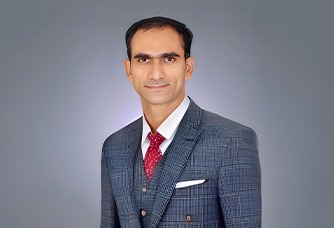
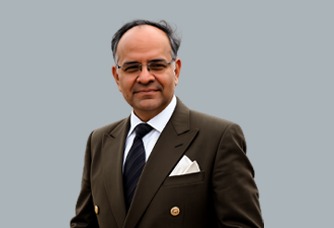
In an interaction with Industry Outlook, Dr. Sambashiva Daravath, Founder & CEO of Abhignya Biotech, shares how his transition from academia to entrepreneurship has shaped his leadership philosophy and approach to building a science-driven enterprise. He discusses the importance of aligning research with real-world applications, integrating regulatory discipline early in innovation, and fostering strong collaborations across academia and industry to accelerate biotechnology advancements.
He also highlights the challenges of scaling a deep-science startup and the critical role of people, processes, and long-term vision in creating a sustainable and impactful biotech organization. With deep expertise and a strong research-driven approach, Dr. Sambashiva Daravath focuses on driving growth, fostering innovation, and delivering high-quality products while building strategic partnerships and contributing to advancements in the life sciences industry.
1. As a leader transitioning from academia to entrepreneurship, how has your experience shaped your leadership approach?
Transitioning from academia to full-time entrepreneurship has fundamentally reshaped my perspective on leadership and value creation. In academia, my role was to generate knowledge and nurture talent; as a founder CEO, the mandate is to convert that knowledge into scalable impact, sustainable jobs and investable business models.
My years as an assistant professor of biotechnology taught me to be rigorous with data, transparent in decision makingand patient with long innovation cycles. These are critical in biotechnology where timelines are inherently long and the science unforgiving. I have translated this into a leadership style that is simultaneously people-centric and performance focused: we invest in young scientists and managers but also insist on clear metrics, disciplined execution and regulatory-grade documentation from day one.
2. What key leadership principles have helped you drive innovation and build a sustainable biotechnology ecosystem?
Three leadership principles particularly define how I steer innovation and long-term sustainability. First, we pursue programs with a credible line of sight from hypothesis to product, regulatory pathway and commercial relevance rather than conducting science for its own sake.
Second, our portfolio is built around clean, plant-based and chemistry-light interventions but we apply the same discipline of validation, standardization and safety as one would expect in a global biotech organization. This combination of traditional wisdom with modern biotechnology and quality systems is part of our differentiation.
Third, we intentionally embed ourselves in the broader life sciences ecosystem through collaborations with universities, incubators, conferences and startup programmes. By doing so, we gain access to cutting-edge science and talent while also contributing through mentorship, joint projects and capacity- building for the next generation of innovators.
Also Read: Boosting Energy Efficiency with Low-Friction & Circular Models
3. How do you balance scientific research, business strategy, and regulatory challenges while leading a biotech startup in a highly evolving industry?
In a biotechnology startup, science, strategy and regulation are not separate considerations but three dimensions of every significant decision. My approach is to ensure that each major initiative is evaluated simultaneously on scientific robustness, business viability and regulatory feasibility.
Practically, this means we design R&D programmes with target product profiles, competitive positioning and likely regulatory classifications from the outset. For instance, while the scientist in me advocates for deeper characterization and stronger data, the CEO in me assesses whether that incremental effort alters market access, pricing power or partnership potential.
On the regulatory side, my background in compliance and exposure to national programmes has made me acutely aware that quality and documentation cannot be outsourced or postponed. Consequently, we incorporate regulatory thinking directly into our SOPs, batch records and study designs and, when necessary, draw on external expertise to ensure our interpretations are globally aligned. This integrated approach enables us to move swiftly without compromising safety or credibility.
4. Can you share how your organization fosters a culture of collaboration between academia, industry, and research institutions to accelerate innovation?
From its inception, the company has been positioned as a translation engine between academic discovery and market demand. My own experience spanning university teaching, research, startup mentoring and ecosystem-building roles such as BioAsia coordination provides a comprehensive understanding of the needs of each stakeholder from a collaborative perspective.
We actively structure joint projects with universities and research centres where investigations and product concepts are co-designed. This allows students and faculty to work on real world problems while our team ensures that outputs are translatable into intellectual property, prototypes or commercial pilots. This model helps reduce the typical lag between publication and product.
Beyond bilateral collaborations, we also contribute to platforms conferences, innovation zones and startup programmes that bring together startups, large companies, investors and policymakers. The intent is to create a trusted interface where ideas, capital and regulatory insight can flow more freely, accelerating innovation at a system level rather than within our own company.
5. What has been your most significant leadership challenge in scaling business, and what key lessons have you learned from that journey?
The most demanding leadership challenge has been scaling from a founder-led, resource-constrained startup into an institution capable of consistent operation even when I am not present. In the early days, I personally managed grant applications, scientific design, branding and partnerships, which was necessary but not scalable.
The turning point came when I realised that my primary role had to shift from “doing” to “building the system that does”. This required establishing a core leadership team, standardizing processes, implementing simple yet robust performance metrics and being willing to delegate critical decisions while maintaining high standards.
At the same time, the biotech sector is capital- and time intensive, necessitating prioritization. We have had to deliberately shelve some promising ideas and focus our limited bandwidth on a smaller set of programmes where we can create clear differentiation and strong, defensible value.
The key lessons are: invest early in people and processes, communicate context not just tasks to your teams and accept that in deep science ventures, patience and persistence are strategic assets, not weaknesses.


.jpg "Building EV Bus Ecosystems for India's Clean Mobility Goals")
We use cookies to ensure you get the best experience on our website. Read more...