India's policy landscape is opening real doors for entrepreneurs eyeing a small-scale manufacturing business.
New government schemes, tax breaks, and state subsidies are rewriting the rules for local production. The government wants more goods made inside the country.
This covers electric vehicles, solar power, health equipment, and recycled bricks alike. The shift is not just talk. It is backed by real money, real targets, and real deadlines. For someone weighing a small-scale manufacturing business today, the timing could not be better.
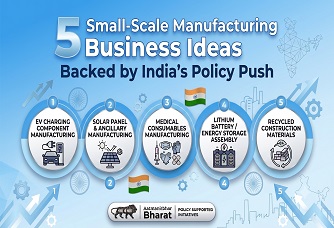
Five sectors stand out clearly. These are EV charging components, solar PV manufacturing, medical device manufacturing, lithium battery assembly, and recycled construction materials. Each one rides on a specific government push.
This ranges from the PLI Scheme to Ayushman Bharat to the Swachh Bharat Mission. Below, we break down why these five sectors deserve attention. We cover the policies behind them, and what leading voices in Indian industry say about the road ahead.
.jpg) India's shift to electric vehicles depends on more than cars rolling off assembly lines. It depends on EV charging components built at scale, locally. Connectors, controllers, cables, and charge points all count as charging components. Demand for these parts is rising fast across cities and highways. Government support makes this a smart entry point for new manufacturers.
India's shift to electric vehicles depends on more than cars rolling off assembly lines. It depends on EV charging components built at scale, locally. Connectors, controllers, cables, and charge points all count as charging components. Demand for these parts is rising fast across cities and highways. Government support makes this a smart entry point for new manufacturers.
Multiple policies back this segment directly. FAME II funding, and the expected FAME III expansion, both target EV charging infrastructure growth. Several states now offer subsidies for charging infra setup. This cuts costs for new entrants significantly. The PLI Scheme for Advanced Chemistry Cells also strengthens the wider EV ecosystem. It does this by supporting battery-linked component demand. Together, these policies push hard for local production over imports.
For a new entrant, the starting point can stay modest. Connector housings, charging cables, or control boards need less capital than a full station. As EV charging infrastructure expands into smaller towns, demand keeps growing steadily. States like Maharashtra, Delhi, Tamil Nadu, and Karnataka already offer capital subsidies for this space. They also provide lower electricity tariffs for charging operators. That combination of demand and policy support makes this accessible. It stands as one of the more approachable small-scale manufacturing business ideas tied to clean mobility. It needs neither massive upfront investment nor complex regulatory approvals. Anyone with basic electrical and fabrication know-how can realistically start here.
Industry voices confirm the gap is real and growing. Dhiraj Agrawal, Director at Allfine Industries, has flagged India's charger shortage directly. He describes the country's charger-to-EV ratio as "significantly higher than in countries like China and the US." He argues India needs far more charging points soon. This shortfall is exactly where small manufacturers can step in. Building components locally, rather than importing them, meets that demand directly.
Also Read: Flex-Fuel Guidebook: Accelerating the Ethanol Mobility Revolution
Solar PV manufacturing is one.jpg) of the clearest government priorities today. India wants fewer imported panels and more local factories. The National Solar Mission set this tone years ago. The current incentive structure has only sharpened that focus further. For a small manufacturer, this creates genuine room to grow.
of the clearest government priorities today. India wants fewer imported panels and more local factories. The National Solar Mission set this tone years ago. The current incentive structure has only sharpened that focus further. For a small manufacturer, this creates genuine room to grow.
The core driver is the PLI Scheme for high-efficiency solar modules. It has already pulled in tens of thousands of crores in investment. Module manufacturing capacity has pushed well past 100 gigawatts nationally. Import restrictions on non-approved solar components add further protection for domestic players. Subsidies for manufacturing clusters reduce setup costs in states with strong solar policy support.
This ancillary layer is where a small-scale manufacturing business can realistically compete. Full module plants need scale most small players cannot reach easily. But the ecosystem around them needs hundreds of smaller suppliers. This includes glass, frames, junction boxes, and mounting structures. As India's renewable energy targets climb higher, demand for these supporting solar components rises too. Anyone entering this space should track the ALMM list closely. State cluster incentives shift often, and this directly affects margins over time.
Rooftop solar adds another layer of opportunity beyond utility-scale projects. Homes, offices, and small factories increasingly install rooftop systems for their own power needs. Each installation needs mounting hardware, cabling, and junction boxes sourced locally. A smaller manufacturer supplying this rooftop segment avoids competing directly with giant integrated players. Instead, they build steady, repeat business through installers and EPC contractors across cities.
Vibhuti Garg, Director at IEEFA South Asia, has studied this scheme closely. She notes it "channels government support towards measurable industrial output." Her research also flags real hurdles the sector still faces. These include high capital intensity and import dependence on raw materials like polysilicon. That gap is actually an opportunity for smaller manufacturers. Instead of competing with giant integrated plants, they can focus on ancillary parts.
.jpg) Medical device manufacturing has moved from a policy afterthought to a national priority. The pandemic exposed how dependent India was on imports. That lesson has translated into real funding and real infrastructure since. For entrepreneurs, this sector offers steady demand and long-term backing.
Medical device manufacturing has moved from a policy afterthought to a national priority. The pandemic exposed how dependent India was on imports. That lesson has translated into real funding and real infrastructure since. For entrepreneurs, this sector offers steady demand and long-term backing.
Syringes, gloves, masks, and surgical kits sit at the accessible end of this market. These fall under medical consumables, a segment with high daily volume. Technical complexity here also stays relatively low for new entrants. Medical device parks in Tamil Nadu, Uttar Pradesh, and Telangana now offer shared infrastructure. This makes entry easier without huge capital outlay upfront.
Beyond basic consumables, there is room to grow into higher-value equipment too. Items like a portable ultrasound machine or a blood pressure machine carry better margins. India still imports 70 to 80 percent of high-end medical equipment currently. This leaves a wide gap for local manufacturers to close over time. Combined with rising insurance penetration and hospital expansion, demand keeps rising too. This sector offers one of the steadiest demand curves on this list. Quality certifications, however, need careful handling right from day one.
Naveen Rai, Director at GE HealthCare India and South Asia, has spoken about this shift. He describes recent policy reforms as "a promise towards strengthening domestic manufacturing." His comments point to India moving beyond being just a large consumer. The country is becoming a genuine manufacturing hub instead. The PLI Scheme for medical devices backs this shift with direct incentives. Ayushman Bharat, now covering hundreds of millions of citizens, keeps procurement demand steady.
Regulatory approval through India's Central Drugs Standard Control Organisation is a real, unavoidable step. It takes time, but it also builds credibility with hospital buyers and distributors. Government procurement platforms like GeM further favour manufacturers with proper certification in place. Small producers who invest early in compliance tend to win larger, repeat institutional orders. This makes patience around paperwork just as important as the manufacturing process itself.
.jpg) The lithium battery business sits at the intersection of two massive trends. Electric vehicles need batteries, and renewable power needs storage. Both are growing fast in India right now. Both currently depend heavily on imports too. This dependence is exactly what government policy now aims to fix.
The lithium battery business sits at the intersection of two massive trends. Electric vehicles need batteries, and renewable power needs storage. Both are growing fast in India right now. Both currently depend heavily on imports too. This dependence is exactly what government policy now aims to fix.
The PLI Scheme for Advanced Chemistry Cells is the anchor policy here. It offers financial incentives to companies building energy storage capacity within India. Several states have layered on their own subsidies too. These cover EV batteries and battery-linked manufacturing plants directly. Import substitution is a clear national goal, not just a talking point.
Assembly and pack integration remain the most practical starting point for smaller firms. Full cell manufacturing needs enormous capital most new entrants cannot access yet. But assembling packs or building battery management systems stays achievable. So does supplying casings and connectors for energy storage units. As both EV batteries and grid storage scale up this decade, opportunity grows. This segment offers a genuine long-term runway for a small-scale manufacturing business. It rewards those willing to start small and build technical depth over time.
Guru Punghavan, CEO of Boson Cell, has described his company's own journey this way. He explains, "We've gone from recycling batteries to vertically integrating cell manufacturing." His comments touch on how domestic production can undercut imports on price eventually. That path, from recycling toward fuller integration, mirrors what smaller players can follow. Starting with battery pack assembly, rather than raw cell production, keeps entry costs manageable.
Safety testing and certification matter enormously in this space, more than in most sectors. Battery fires draw heavy scrutiny from regulators and customers alike these days. A smaller assembler that invests in proper testing infrastructure builds trust faster. This trust translates directly into contracts with two-wheeler makers, fleet operators, and solar installers. Cutting corners on safety, by contrast, can end a battery business overnight.
Also Read: Hybrid Energy Systems: Shaping India's Industrial Power Landscape
Recycled construction materials sit at a 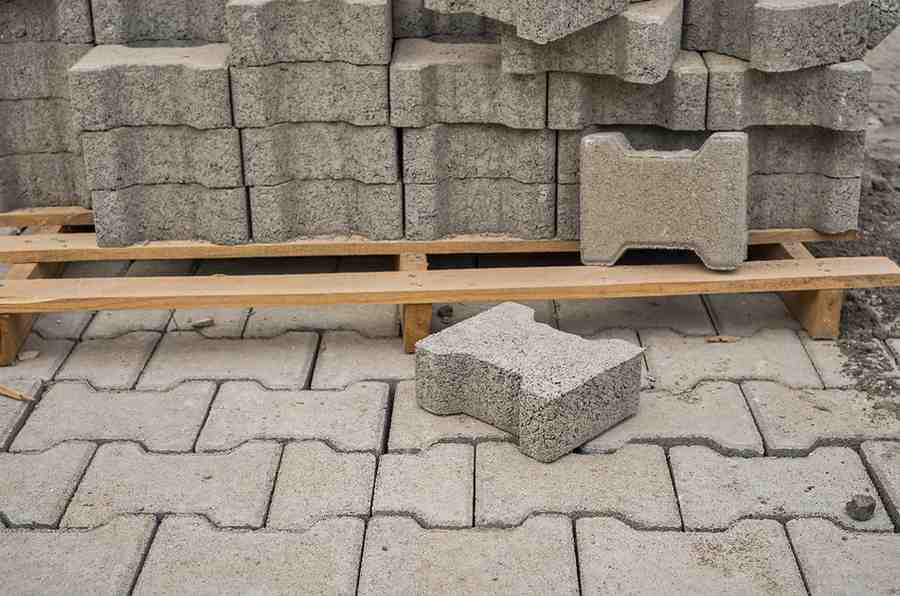 rare intersection of policy and pure business sense. India generates enormous volumes of construction waste and industrial byproducts. Turning that waste into usable material is now both mandate and market. The Swachh Bharat Mission first pushed this idea into mainstream policy conversation.
Fly ash bricks are the clearest starting point in this space. India produces around 180 million tonnes of fly ash yearly. Much of it comes from thermal plants across several states. Using this fly ash is often mandatory for plants located nearby. Green building codes like GRIHA and IGBC reward projects using sustainable building materials. The CPWD and other government bodies increasingly specify recycled content in tenders too. This creates dependable, institutional demand for manufacturers who enter this space early.
For a small manufacturer, entry barriers here stay genuinely low. A basic fly ash brick unit needs only modest machinery to start. It also needs a steady fly ash supply deal near a power plant. As government projects increasingly mandate recycled content, demand keeps climbing further. India's push toward a stronger circular economy only adds to this momentum. Demand for recycled materials looks set to keep rising through this decade. Combined with lower raw material costs than clay bricks, this stays attractive. It remains one of the most immediately actionable small-scale manufacturing business ideas on this entire list.
Kunjpreet Arora, Co-Founder of the Udaipur-based Startup Angirus, works directly in this space. She describes her company's construction-waste bricks as waterproof and chemical-free. She also calls them cost-effective compared to conventional clay options. Her company turns both construction debris and plastic waste into usable blocks. This reflects a wider pattern across Indian startups working with green building materials. Waste streams once seen as a liability are becoming genuine business inputs.
Each of these five sectors points to the same underlying story. India's government is backing local manufacturing with real money and real mandates. This includes market protection through import restrictions and procurement rules. Whether it is charging components, solar PV manufacturing, or medical consumables, the pattern repeats. The same holds for lithium battery assembly and recycled construction materials too. Policy creates the opening. Demand sustains it over the long run.
For anyone seriously considering a small-scale manufacturing business, these five sectors offer something rare. They pair genuine government support with real, growing customer demand. None of them require starting at massive scale on day one. Each allows a manufacturer to begin small and build technical know-how over time. Growth can happen alongside the policy tailwinds already in motion. The opportunity, quite simply, is here now.
Government policies and incentive programs continue to evolve. Before making any investment, verify the latest eligibility criteria and state-specific benefits. Careful research and compliance will help you make informed business decisions.







We use cookies to ensure you get the best experience on our website. Read more...