 Tata Power has announced an ambitious roadmap to significantly build its business over the next decade.The company is targeting Rs 1 lakh crore in revenue and Rs 10,000 crore in profit by 2030.
That will reflect its confidence in India’s rapidly evolving energy landscape and its own diversified growth strategy.
This announcement highlights Tata Power transforming from a traditional power utility into a futuristic energy solutions provider.
The company plans to drive growth across all its major verticals, including power generation, transmission, distribution, renewable energy, and manufacturing.
Tata Power’s growth strategy is built on expanding its presence across both conventional and clean energy segments. The company is focusing on building renewable energy capacity, thereby strengthening its transmission and distribution networks.
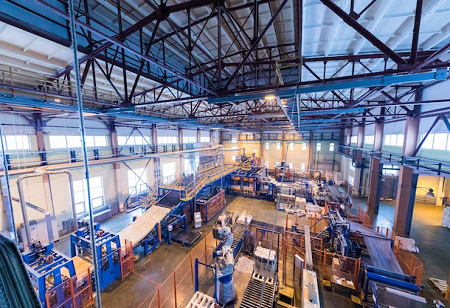
This will in turn enhance the solar manufacturing capability of the company. A key component of this strategy includes the addition of a 10 GW solar manufacturing facility. This aims to boost domestic production and reduce the dependence on imports.
“The company aspires to achieve profit of Rs 10,000 crore and a revenue of Rs 1 lakh crore by 2030. Tata Power today is leading the shift to an energy as a service approach by enabling residential and C&I customers to switch to clean and green solutions” said by Tata Power Chairman Natarajan Chandrasekaran
The company is also looking to expand its distribution, particularly in regions where power distribution is being privatized. With an existing base of over 13 million customers, Tata Power aims to strengthen its position as a reliable energy service provider.
Also Read: Energy-Efficient Refrigeration for Sustainable Cold Chains
The notable aspect of the announcement is its readiness in entering the nuclear energy segment. The company is exploring opportunities in nuclear power, including the use of small modular reactors (SMRs). These are considered safer, more flexible, and cost-effective compared to traditional large-scale reactors.
This growing interest towards nuclear energy is suitable. As currently India aims to shift from depending on foreign import and maximize local production. Unlike solar and wind energy, which are intermittent, nuclear power provides continuous electricity generation, making it crucial for grid stability solutions.
Currently, nuclear power contributes to small share of India’s total electricity generation. But the government has set ambitious targets to significantly expand capacity in the coming decades. As India moves towards achieving net-zero emissions and reducing dependence on fossil fuels, nuclear energy is expected to play a key supporting role alongside renewables.
Tata Power entering the nuclear space would mark a strategic diversification, which aligns the company with long-term national energy priorities.
Tata Power’s long-term vision is centered on becoming a leader in clean and sustainable energy solutions. The company aims in significantly increasing the share of green energy in its portfolio.
Its broader plans also include expanding generation capacity, enhancing manufacturing capabilities, and investing heavily in infrastructure to support India’s growing electricity demand. The company has also outlined large capital expenditure plans to organize its operations and achieve its 2030 targets.
By combining renewable expansion with emerging technologies like nuclear energy, Tata Power is positioning itself at the forefront of India’s energy transition.
TATA Power is India’s largest integrated power company, headquartered in Mumbai. The company mainly operates under conventional and renewable energy generation, transmission and distribution.







We use cookies to ensure you get the best experience on our website. Read more...