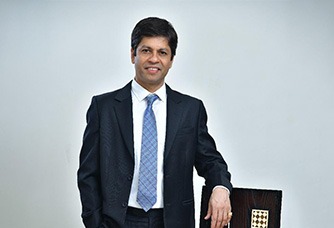
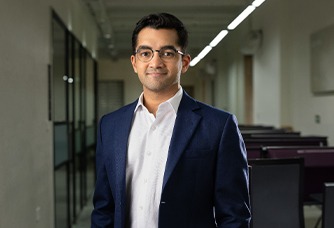
Jagadish Keswani is a seasoned business leader with over 37 years of leadership experience across commercial, residential, and industrial markets, with deep expertise in building controls, automation, HVAC, and security solutions.
Having held senior roles at Johnson Controls and Ingersoll Rand, he has built a strong track record in driving P&L performance, scaling businesses, and leading multi-regional operations across India, the Middle East, and Asia.
Currently leading Copeland’s India, Middle East, and Africa region, he focuses on accelerating growth, strengthening market presence, and aligning customer-centric strategies with business outcomes. His leadership is defined by execution excellence, team development, and the ability to translate strategy into sustained commercial success.
Jagadish Keswani, President - India, Middle East and Africa, Copeland, engaged in a conversation with Thiruamuthan, Assistant Editor at Industry Outlook, shares how India’s temperature-sensitive supply chains are evolving through smarter monitoring, decentralized refrigeration, and sustainable technologies. He highlights that these advancements improve efficiency, reduce losses, and ensure product integrity while building a more resilient and future-ready cold chain ecosystem.
As temperature-sensitive supply chains expand, particularly in vaccines and perishables, how are advanced monitoring and control systems improving energy efficiency without compromising product integrity?
India's temperature-sensitive supply chains are at a critical inflection point, driven by rising demand for vaccine distribution, biologics and perishables. Since infrastructure alone can't guarantee product integrity, efficient monitoring and maintenance are equally vital to a reliable cold chain system.
Traditionally, cold chain systems have been reactive, catching problems only after a temperature breach. IoT-enabled sensors and advanced monitoring mechanisms are changing by giving real-time visibility into temperature, humidity and equipment performance across warehouses and last-mile delivery vehicles. These new age solutions with automated alerts enable corrective action before deterioration occurs, critical for vaccines where any deviation can render consignments ineffective.
For instance, at Copeland, we embed this intelligence directly into compression and control technology. Our smart controls continuously modulate compressor speed and refrigerant flow based on real-time load, ambient conditions and demand, rather than running at fixed capacity. Our deployment with Sarhad Dairy in Gujarat involved 24 condensing units.
These units featured KHZ vapor-injection scroll and KHR reciprocating compressors with automated controls, delivering consistent multi-zone temperature management, lower maintenance costs and a projected full ROI in six to seven years.
As India's pharmaceutical sector, the world's third largest by volume, and its food supply chains continue to scale, the question is no longer whether to incorporate intelligent monitoring, but rather at what speed operators can transition from manual supervision to data-driven cold chain management.
The next phase of cold chain growth will not be defined by how much capacity is added, but by how intelligently that capacity is designed and managed.
With increasing focus on last-mile cold storage, how are decentralized and solar-powered refrigeration solutions addressing infrastructure gaps in rural and semi-urban regions?
India is the world's largest producer of milk, pulses and spices, and the second-largest producer of rice, wheat and cotton, yet 20-30 percent of agricultural production is lost post-harvest, largely due to spoilage, poor handling, and the near-absence of on-farm cold storage ecosystems. This is an economic gap and a structural failure with direct consequences for food security.
Rural India faces three key challenges: inconsistent power supply, upfront costs that are out of reach for small farmers, and cold storage facilities located too far from the farm gate. Solar-powered, decentralized refrigeration tackles all three - it removes grid dependency, brings storage closer to where produce is grown and lowers the cost of entry. Through Energy Efficiency Services Limited (EESL), under the Ministry of Power, the government is deploying affordable solar-powered cold storage units for small and marginal farmers across multiple states.
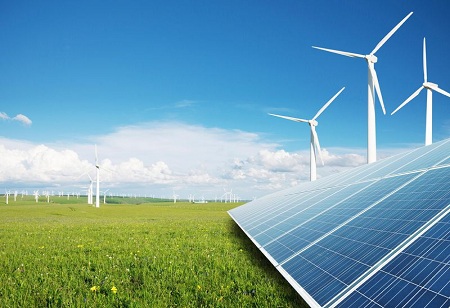
Copeland has also been an active contributor to this shift. In partnership with Ecozen, Copeland developed solar-powered cold rooms for off-grid farm-level storage using ZBW variable speed compressors with enhanced vapor injection (EVI) technology. These systems operate entirely off-grid, deliver up to 17 percent greater energy efficiency than conventional compressors, and offer low CO2 emissions. Over 300 units are now deployed across rural India, extending shelf life and cutting post-harvest losses.
Closing the last-mile cold chain gap will require decentralized, solar-powered solutions that are affordable and grid-independent, not centralized infrastructure alone.
Also Read: How the China+1 Shift Is Redefining Indian Logistics Networks
With sustainability mandates tightening, how can companies balance the shift to low-GWP refrigerants with performance, safety, and cost considerations in diverse operating conditions?
The refrigerant transition is no longer a distant regulatory horizon for India, but rather an imminent operational reality. India ratified the Kigali Amendment in 2021, committing to freeze Hydrofluorocarbon (HFC) consumption by 2028, reduce it by 10 percent by 2032, and reach an 85 percent reduction by 2047. HFCs, which currently dominate cold chain, HVAC and refrigeration applications, are high-GWP gases that trap substantially more heat than CO2, with GWPs running into the thousands.
The environmental case for transitioning is clear, but India's extreme ambient temperatures, price-sensitive market and workforce training needs mean the path forward cannot simply replicate developed-market approaches; it must be managed in the context of the local requirements.
At Copeland, we believe that this transition must be proactive, not reactive, without compromising performance or safety for speed of compliance. Our compression platforms are engineered for compatibility with low-GWP and natural refrigerants, supported by advanced controls technology that ensures optimal efficiency regardless of the refrigerant used.
Looking ahead, companies integrating low-GWP-compatible systems today will meet regulatory obligations while avoiding the disruption and costs facing those who delay.
LOOKING AHEAD: What innovations in refrigeration technology and system design will be critical to building scalable, energy-efficient, and resilient cold chain ecosystems?
India's cold chain ecosystem stands at the start of a long transformation. Capacity must grow alongside intelligence, sustainability, and resilience. The operators who define the next decade will be those who build smarter systems, not simply more of them.
First, the convergence of low-GWP refrigerants with technologies such as Oil-free centrifugal compressors, Brushless DC (BLDC) driven variable speed systems, and microchannel heat exchangers will lay the hardware foundation for more efficient, sustainable refrigeration, accelerated further by India's commitments under the India Cooling Action Plan.
Second, AI-powered dynamic thermal management will move operations from reactive to predictive, with systems adjusting compressor speed, refrigerant flow, and zone conditions in real time based on occupancy, weather and energy demand signals. IoT sensors tracking temperature, pressure, and consumption will set a new benchmark for operational intelligence.
Third, digital twin technology will let operators simulate and stress-test refrigeration configurations before deploying changes live, significantly lowering risk for pharma and food operators managing regulated, high-stakes supply chains.
India is advancing toward carbon neutrality by 2070, and Copeland remains committed to ensuring today's refrigeration infrastructure is intelligent, sustainable and aligned with the country's long-term climate ambitions.
.jpg "Saksham Enterprises: Optimizing Mission- Critical HVAC Infrastructure For The High Precision Sector")

.jpg "JDS Group of Companies: Innovating Smart Solutions For Modern Power Transmission & Distribution Infrastructure")


We use cookies to ensure you get the best experience on our website. Read more...