In an exclusive interview with Industry Outlook, Vineet Agarwal, Managing Director of Transport Corporation of India Limited, discusses how the China+1 shift is reshaping India's logistics sector, emphasizing the need for diversified and resilient supply chains. He highlights trends such as green logistics, multimodal transportation, AI integration, and the critical role of infrastructure in supporting growth, positioning India as a key logistics hub in the global market. With over 30 years of experience in the logistics and transportation sector, Vineet Agarwal's expertise includes strategic leadership, supply chain management, and driving business growth in the industry.
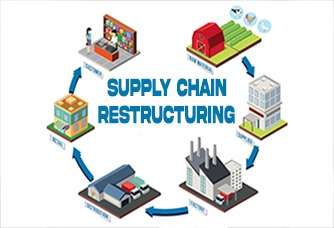
Supply chains need to be more diversified as well as resilient. And for that reason, overseas companies, along with the domestic ones, are looking to diversify their production by expanding into other countries, moving away from their reliance on China.
Hence, one strategy for many companies is to set up a base in India, not only for exports but also to cater to the domestic market. The large population here makes it an ideal location to absorb a significant portion of production, while also serving as a hub for export.
This trend has been taking shape clearly for several years, but post COVID-19 driven pandemic, it has accelerated. The challenge, of course, is that India must provide plug-and-play infrastructure for the companies coming into this segment. When they arrive, they need to find it easy to start, run, and ultimately grow their businesses.
Green logistics will be driven by alternative fuels and multimodal transport, delivering both cost efficiencies and meaningful reductions in carbon emissions across supply chains.
The future proof essentially means that we have to really keep investing into the future. And investing doesn't mean putting money in it. This also requires how they can be more efficient and smoother, so that no one can come in and disrupt the business.
One such way is to ensure that IT systems are up to date and explore new technologies like IoT, AI and ML. These advancements can act as a support to stay ahead and prepare for the future. Also, it is very important to maintain the people as they are going to handle things in the future rather than only investing hugely on the technology and processes.
Then, of course, there’s the infrastructure—everything you need, from trucks to warehousing, equipment, and other necessary resources for the business. All these can also be a continuous investment, which in turn will add value to the business. In the end, it’s crucial to continuously revise systems and processes, invest in technology, upgrade infrastructure, and develop your people, so that anyone in this business spectrum can ultimately future-proof themselves.
Also Read: The Role of FTWZs in India's Export Growth Strategy
In India’s logistics sector, there are several areas of growth. One key area is changing consumption trends—what used to take a trip to the supermarket is now delivered in 10 or 15 minutes. This shift means that backend logistics, the network design, and infrastructure all need to adapt. It’s not just about availability anymore; it’s also about speed—customers want their items quickly, in addition to having access to them.
This particularly depicts that supply chains have to evolve according to the growing transformation. Apart from that, multi-modal logistics, which emerges as a growing factor simultaneously. With the support of multimodal logistics, anything can be moved seamlessly, not just limiting oneself to road, but also by rail and by sea. Many companies are using that for cost reduction besides for ensuring that their logistics is green logistics. Hence, that's another trend that can be seen in logistics.
The overall formalization of the economy means the logistics sector is also becoming more structured. We are now seeing more established companies, or those looking to collaborate, opting to work with organized players.
Consequently, this is something that has been altered more and more with GST coming in. In the last 7-8 years, this has been a big trend in terms of formalization and organized logistics. Thus, these are seen as broad trends that are really driving the logistics sector.
Essentially, green logistics is driven by the fact that many companies are realizing the need to reduce their carbon emissions. The question then becomes: How do we achieve that? One solution is to use alternative fuels in logistics. This means transitioning from diesel to CNG, LNG, and eventually EVs, or perhaps even hydrogen in the future. However, this is a gradual transition, and it will take time, as there are cost structures to consider.
The aforementioned shift is happening, but it's occurring simultaneously with other changes. In addition, companies are looking to adopt multimodal transportation. For instance, when you switch to rail, carbon emissions decrease, and when you move from rail to sea, the reduction is even greater. By shifting transport modes, not only do you reduce carbon emissions, but you also gain cost benefits.
Why not view this as a modal shift? This is exactly what our country needs. We believe these two areas—first, the shift towards decarbonization through alternative fuels, and second, the move towards multimodal transportation—will drive the growth of green logistics.
Furthermore, companies can install solar panels on their warehouses or adopt similar initiatives to reduce energy consumption from the grid, contributing further to greener logistics.
AI will undoubtedly have a dramatic impact across many sectors, from IT services to financial services, legal, and beyond. In the logistics sector, there are numerous applications of AI, including process improvement, network optimization, and providing greater visibility. Ultimately, automating processes will lead to increased efficiency and productivity. We’re already seeing AI make a major impact, with certain processes that used to take a full day now being completed in just one hour. This kind of dramatic shift in output is going to drive greater efficiency in logistics.
For example, when you get materials delivered to your house in 10-15 minutes, that’s an optimal network functioning behind the scenes, and much of it is driven by AI.
Also Read: Future-Proofing Automation: Trends in Grippers and Tool Changers
It is vital to find the right balance. Moreover, customers often seek help with network design. For example, if a customer has three factories and needs to distribute products across India within a specific timeframe, they need assistance in designing an efficient network. This includes deciding where to place warehouses, how to operate the fleet, and so on. These are some of the basic challenges customers face when implementing a Go-to-Market (GTM) strategy.
We assist customers by helping them design this network and then handholding them through the process of running the entire logistics system. We provide full visibility of the operations, whether it's at the warehouse level, with inventories on trucks, or at any other point in the supply chain. This is achieved through tools like a control tower setup.
In summary, the demand from customers is for comprehensive solutions. They use multiple modes of transport and may also require additional services such as warehousing and cold chain solutions. We offer the entire range of services, making us a one-stop shop for many of our customers. Thank you so much for that insightful answer.
Compared to its South Asian peers, India’s biggest advantage is its own large domestic market. The China +1 strategy not only allows for exports from India but also provides the opportunity to build capacity for the domestic market. This is a significant advantage over other Asian countries, given the size of India’s market.
Additionally, the government is offering various incentives for companies to set up plants, whether in industrial zones, clusters, or near ports. There are also Production Linked Incentive (PLI) schemes in place. These incentives make India an attractive destination for the China +1 strategy.
However, companies should not just enter the market; they need to understand its importance both for imports and exports. They should also provide continuous feedback to the government and relevant entities regarding the challenges they face while setting up or operating facilities. This feedback will help improve the process for future companies and contribute to growing the ecosystem. The government is focused on making the China +1 strategy work, and they should definitely keep pushing for it.
The logistics sector has vast growth potential because it is not only linked to GDP growth but also to various other developments happening in the economy. Typically, the logistics sector grows at 1 to 1.5 times the GDP growth rate, and we expect that trend to continue and even accelerate.
Consumer trends and emerging sectors provide significant impetus for the logistics sector to keep growing. Whether it’s deliveries or the movement of goods and products, logistics is essential.
The sector has massive potential—it’s already one of the largest sectors in terms of employment and will continue to expand in the future.

.jpg "AR Enterprises: Building The Supply Networks Behind India's Construction Growth")
.jpg "Industrial Packers: Engineering Industrial Packaging for India's Manufacturing Future")




We use cookies to ensure you get the best experience on our website. Read more...