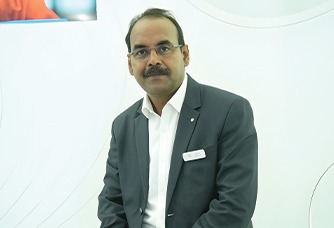
Satish Ingavale, Managing Director, John Crane India, engaged in a conversation with Thiruamuthan, Assistant Editor at Industry Outlook, discusses how advanced sealing technologies are strengthening ethane infrastructure in India by reducing leakages and improving reliability. He highlights the role of smart monitoring, high-performance materials, and evolving compliance standards in ensuring safe and efficient operations.
With over 30 years of experience in industrial engineering and sealing solutions, Satish Ingavale is a seasoned business leader specializes in operations, sales, and service management, with expertise in reliability engineering, customer-centric solutions, and driving performance across global energy and process industries.
With India rapidly expanding ethane imports and corridors, how are advanced sealing solutions improving reliability and minimizing costly leakages in operations?
As India continues to increase ethane imports and develop new pipeline corridors, sealing systems are facing increasingly demanding operating conditions. Fluids often shift between liquid, vapor, and supercritical states, which can challenge conventional seals and lead to leaks or unplanned downtime. Advanced sealing technologies, including non-contacting and separation seal designs, are engineered to better manage these fluctuations.
For example, type 8628VL and type 93AX Coaxial Separation Seal are specifically designed to handle these fluctuations. Their robust architecture helps maintain operational stability, reduces maintenance needs, and ensures compliance with environmental and safety standards. By delivering consistent performance under variable conditions, these solutions help operators manage evolving ethane infrastructure efficiently and safely.
Also Read: How Engineered Seals Are Changing Power and Process Plants
As petrochemical clusters demand higher throughput, how are sealing materials engineered to withstand extreme pressure variations and chemical exposure?
Higher throughput in petrochemical clusters places intense demands on sealing systems. To address this, engineers combine high-performance thermoplastics such as PTFE blends and PEEK with composite metals and proprietary face treatments. These materials resist corrosive media and sudden pressure shifts, forming the foundation for seals that perform reliably in harsh conditions. Advanced design features, including micromachined surface finishes, multi-lip configurations, and self-lubricating properties, enhance durability and prevent leakage during rapid pressure cycling. Diamond-coated seal faces and optimized geometries further reduce heat build-up and wear, ensuring stable operation even in dry-running or irregular conditions.
Advanced sealing technologies are redefining ethane operations by minimizing leakages, improving reliability, and ensuring safe performance under complex multiphase and high-pressure conditions.
With operators facing unplanned shutdowns, where do sealing upgrades most effectively extend service life and reduce maintenance costs?
The greatest value from sealing upgrades comes from critical rotating equipment, where failures can quickly cause wider shutdowns. Replacing older seals with modern mechanical designs, such as the type 560 seal or advanced cartridge seals on high-pressure pumps and compressors, improves stability. These seals are built with self-compensating mechanisms that adjust for normal wear. They also use materials that resist chemical attack and withstand thermal stress. This slows down degradation and allows equipment to run longer between maintenance intervals. Refurbishment services add another layer of value. Worn seals can be restored to near original condition, which delays replacement and reduces expenditure.
As predictive monitoring becomes mainstream, which sensor-enabled sealing systems provide real-time data on wear patterns, stress accumulation, and potential failures?
Sensor-enabled sealing systems now give operators real-time visibility of seal health and performance. Digital monitoring solutions, including John Crane's John Crane Sense Turbo, integrate sensors into dry gas seals to track wear, stress, temperature, pressure and vibration. The system provides wireless monitoring and continuous data streams that reveal early signs of degradation and anomalies. Data is shared through an open digital platform, enabling predictive maintenance and more efficient scheduling of interventions. AI-driven analytics turn sensor inputs into actionable insights that extend repair intervals and prevent unexpected stoppages. Field use in petrochemical and LNG facilities has shown significant cost savings and higher reliability. This technology demonstrates how digital tools and IoT are reshaping sealing solutions with condition-based maintenance.
Also Read: Future-Proofing Automation: Trends in Grippers and Tool Changers
With regulators tightening compliance standards, how are sealing solution providers adapting certifications and designs to align with India’s evolving safety norms?
Tightening compliance standards in India are reshaping how sealing solutions are developed and certified. Providers are responding by aligning products with both national and international frameworks. This includes alignment with BIS requirements alongside global standards such as API 682 for mechanical seals and ASME U Stamp for pressure vessels. Quality and environmental requirements are addressed through ISO certifications, while NSF 61 approvals in water management ensure that wetted materials do not introduce harmful contaminants.
These certifications are supported by design improvements that target leak prevention, emission control and operational reliability. Static pressure and flatness testing are now routine to demonstrate conformance with updated norms. Compliance is sustained through audit practices and certification updates, giving operators confidence in long-term performance. As a result, industries such as oil, gas, power and water are adopting these solutions to secure safe operations and remain aligned with India’s evolving regulatory framework.
As India develops future ethane corridors, what sealing technology breakthroughs could redefine efficiency, resilience, and long-term pipeline reliability?
The breakthrough that could shape future ethane corridors is the use of non-contacting mechanical seals engineered for multiphase conditions. These seals are designed to manage the volatility of ethane, where conventional seals often fail. Non-contacting designs with dual seal faces eliminate friction and extend operational life while maintaining stability during rapid pressure swings. They also improve efficiency by requiring less flush fluid, reducing reliance on complex support systems. One example is the next-generation type 8628VL mechanical seal, built for volatile multiphase conditions where ethane and ethylene rapidly shift between liquid, vapor, and supercritical states. Field installations in the US Gulf Coast demonstrate near-zero leakage, stable performance under pressure fluctuations of around 1,100 psi, and up to 48 months mean time between repairs (MTBR).
.jpg "AR Enterprises: Building The Supply Networks Behind India's Construction Growth")
.jpg "Industrial Packers: Engineering Industrial Packaging for India's Manufacturing Future")




We use cookies to ensure you get the best experience on our website. Read more...