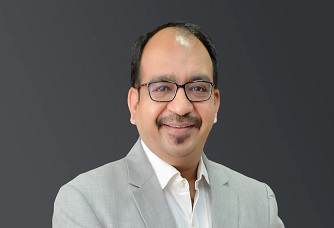
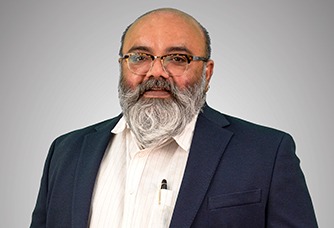
In an interview on “Building a Greener Future from Waste,” Manoj Kumar Rustagi, Chief Sustainability and Innovation Officer at JSW Cement, shares how sustainability in traditionally resource-intensive industries has evolved from fragmented operational efforts into a structured, data-driven strategic priority. He outlines the shift from isolated efficiency initiatives to integrated ESG frameworks, enabling better visibility, benchmarking, and decision-making. As regulatory pressures and climate commitments intensify, he highlights how aligning growth with sustainability, fostering innovation through collaboration, and embedding environmental thinking into core business processes are becoming critical to building resilient and future-ready industrial operations.
Having spent decades in heavy industries where sustainability wasn’t a priority, what shifts were needed to move toward greener and more sustainable practices?
The transition toward sustainability in heavy industries is rarely abrupt. It tends to evolve gradually, often beginning with isolated operational improvements before taking the shape of a structured strategic priority.
A defining moment in this journey emerged during an annual business planning discussion roughly six years ago. The conversation at the time was focused on performance reviews and future planning when a reference was made to a cement company positioning itself strongly around sustainability. That reference triggered a broader internal question—where does the organization stand in this context, and how should sustainability be approached in a more structured and measurable way?
At that stage, several sustainability-aligned practices were already in place. Efforts around energy efficiency, waste heat recovery, alternative fuels, and resource optimization were being carried out across operations. However, these initiatives were largely fragmented. They existed as independent efforts without being consolidated under a unified framework or measured against standardized benchmarks.
The initial shift, therefore, was not about introducing entirely new practices but about creating visibility and structure. A comprehensive data collection exercise was undertaken to map existing initiatives across different functions. This exercise proved to be more extensive than anticipated, as it required not only gathering historical data but also validating it for consistency and relevance.
As the data began to take shape, it provided a clearer understanding of the organization’s environmental footprint as well as its strengths. More importantly, it helped identify gaps that were not immediately visible earlier. This phase marked the transition from assumption-driven understanding to evidence-based assessment.
Aligning this data with established sustainability frameworks and ESG metrics was the next step. This required a shift in perspective, as operational practices had to be translated into measurable indicators that could be tracked and reported. Over time, these frameworks began to serve not just as reporting tools but as guiding mechanisms for decision-making.
Benchmarking against industry peers further strengthened this approach. It enabled a comparative view of performance and highlighted areas where improvements could be accelerated. It also brought attention to best practices that could be adapted and scaled.
Another important shift was the integration of sustainability into mainstream business discussions. Instead of being treated as a parallel initiative, it gradually became part of core planning processes. This ensured that decisions related to expansion, investment, and operations were evaluated through both financial and environmental lenses.
Over the past five to six years, the approach has continued to evolve. The focus has been on aligning growth with long-term sustainability objectives. In a fast-growing environment, this balance becomes critical. Expansion needs to be supported by efficient resource utilization, reduced emissions, and responsible practices.
This shift also reflects broader industry dynamics. Sectors that were traditionally considered hard to abate are now under increasing pressure to adopt sustainable practices. Regulatory expectations, stakeholder awareness, and global climate commitments are all contributing to this transition.
Ultimately, the shift has been as much about mindset as it has been about systems. Moving from isolated actions to a structured, impact-driven approach has been central to navigating this transition.
Also Read: Hybrid Energy Systems: Shaping India's Industrial Power Landscape
How do you create a culture where new ideas are encouraged, even when they don’t always succeed?
Creating a culture of innovation in a traditional industry requires a deliberate and sustained effort. Unlike sectors that are inherently dynamic, industries such as cement tend to operate within established processes that have remained largely unchanged for decades.
This stability, while beneficial from an operational standpoint, can also lead to a cautious approach toward experimentation. As a result, encouraging innovation requires a shift in how problems are defined and addressed.
One of the key approaches has been to focus on fundamentals. Instead of attempting to solve complex challenges in a single step, problems are broken down into smaller, more manageable components. This allows for multiple pathways to be explored simultaneously.
A portfolio-based approach to innovation has been particularly effective. Rather than relying on individual solutions, a range of ideas is developed and tested. This reduces dependency on any single initiative and increases the likelihood of achieving meaningful outcomes.
Investment in research capabilities has also played a critical role. Strengthening in-house infrastructure provides the ability to test and refine ideas in a controlled environment. Dedicated research facilities enable systematic experimentation, which is essential for scaling innovations.
At the same time, external collaboration has been actively pursued. Partnerships with academic institutions, particularly leading engineering institutes, have brought in new perspectives and technical expertise. These collaborations help bridge the gap between theoretical research and practical application.
Working with academic partners allows access to specialized knowledge and emerging technologies. It also creates opportunities for co-development, where solutions are designed with both technical feasibility and operational relevance in mind.
An important aspect of this approach is the recognition that not all innovations need to be complex. In many cases, incremental improvements or process optimizations can deliver significant impact. The emphasis is on identifying solutions that are practical, scalable, and aligned with long-term objectives.
To ensure consistency in evaluation, ideas are assessed against three key parameters—sustainability, economic viability, and scalability. This ensures that innovations are not only environmentally beneficial but also commercially feasible.
Failure is an inherent part of this process. Not every initiative leads to a successful outcome, and that is expected. A portfolio approach helps manage this by balancing risk across multiple initiatives. Even if a majority of ideas do not succeed, a few successful ones can create substantial value.
Over time, this approach contributes to a gradual cultural shift. Teams become more open to experimentation, and failure is seen as a learning opportunity rather than a setback. This change in mindset is critical for sustaining innovation in the long run.
Can you highlight an innovation that stood out in terms of impact or learning?
One notable example relates to carbon capture and utilization, an area that is gaining increasing importance within the cement industry.
A call was issued by the Department of Science and Technology in India to develop solutions focused on carbon utilization. The objective was to encourage the development of homegrown technologies that could address emissions in a practical and scalable manner.
This initiative provided an opportunity to explore how captured carbon could be integrated into the construction value chain. Instead of treating carbon capture as an isolated process, the focus was on identifying ways to utilize it within existing systems.
The approach involved collaborating with multiple academic institutions. A series of discussions and brainstorming sessions were conducted to evaluate different possibilities. These interactions brought together diverse perspectives, combining academic research with industry experience.
Based on these discussions, two proposals were developed. Both focused on practical applications of carbon utilization and were designed to align with industry requirements.
In total, 18 applications were submitted under this initiative. Out of these, only five were selected for pilot projects. Both proposals developed through these collaborations were among those selected.
While the outcome itself was significant, the process provided deeper insights. It demonstrated the value of collaborative problem-solving and highlighted the importance of integrating research with real-world application.
This example also reflects a broader shift within the industry. Addressing complex challenges such as emissions requires coordinated efforts across multiple stakeholders. Solutions are no longer developed in isolation but through partnerships that leverage complementary strengths.
It also reinforces the importance of staying grounded in fundamentals. Even when dealing with advanced technologies, a clear understanding of basic principles remains essential.
Also Read: Sustainable Practices in Ferro Alloy Smelting for Future Growth
Looking back on your career, what advice or principles have stayed with you and continue to guide your approach?
Over the course of a career spanning multiple sectors, including steel, mining, and cement, several lessons emerge. Among these, one principle that consistently stands out is the importance of staying grounded.
In industrial environments, there is often a tendency to introduce complexity, whether in processes, systems, or decision-making. However, experience shows that simplicity and clarity often lead to better outcomes.
A minimalistic approach, in this context, is not about limiting ambition but about optimizing resources. It involves focusing on what is essential and eliminating inefficiencies. This approach naturally aligns with sustainability, as it emphasizes responsible resource utilization.
Another key principle is the perspective on waste. Rather than viewing waste as an endpoint, it is seen as a potential resource. This shift in thinking opens up opportunities for reuse, recycling, and value creation.
These ideas are not entirely new. They are often rooted in early experiences and everyday practices. Concepts such as minimizing waste, extending the life of resources, and prioritizing efficiency have long been part of traditional thinking.
Translating these principles into an industrial context requires adaptation, but the core idea remains the same. Whether at an individual level or at a large scale, the objective is to use resources more effectively and reduce unnecessary consumption.
The current generation of professionals brings a different perspective. There is greater awareness of sustainability issues and a stronger inclination toward responsible practices. While consumption patterns have evolved, there is also a growing recognition of the need for balance.
This creates an opportunity to combine traditional principles with modern approaches. By integrating these perspectives, it becomes possible to build systems that are both efficient and sustainable.
Ultimately, the emphasis remains on maintaining simplicity, ensuring efficiency, and aligning actions with long-term goals. These principles may appear straightforward, but their consistent application can drive meaningful and lasting impact.
.jpg "AR Enterprises: Building The Supply Networks Behind India's Construction Growth")
.jpg "Industrial Packers: Engineering Industrial Packaging for India's Manufacturing Future")

We use cookies to ensure you get the best experience on our website. Read more...