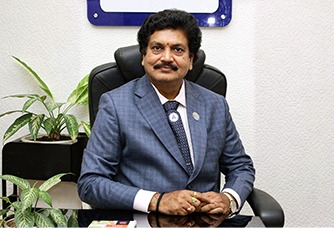
In an exclusive interview with Thiruamuthan, Assistant Editor at Industry Outlook, Prasanna Kumar Motupalli, CMD, NLC India Limited, shared his views on the need to balance lignite-based power with renewable energy to meet India’s rising demand and ensure energy security. He also highlighted emission reduction technologies, sustainable mining practices, and energy storage as key enablers of a reliable and low-carbon energy transition.
Given lignite’s role in India’s base load power mix, what practical steps are being taken to reduce emissions while maintaining reliable and uninterrupted power supply?
While decarbonization and the increasing focus on green power are becoming important, it is equally essential to maintain conventional power capacity to meet the country’s growing energy requirements. A balanced approach between the two is essential, it is not a matter of choosing between conventional and renewable capacity.
However, the key challenge lies in effectively integrating both to meet India’s energy needs. Currently, our per capita energy consumption stands at around 1,300 kilowatt-hours per year, compared to the global average of 3,500, while developed countries average nearly 12,000. As India seeks to achieve developed nation status by 2047, it is crucially important to increase this significantly, if not to 12,000, at least to 6,000, implying nearly a fourfold rise in per capita consumption.
Therefore, unlike many other countries, the focus should not solely be on transitioning from conventional to green power. We must simultaneously cater to the needs of a large population of 1.5 billion people. This makes it imperative to maintain a careful balance between conventional and renewable energy capacity.
This is the approach we at NLC India are following. While we are actively expanding green power generation through solar, wind, and other renewable sources, we are also strengthening conventional capacity. Several projects and mining developments are currently in the pipeline, reflecting our belief that both are essential for supporting the country’s growth trajectory.
At the same time, environmental impact remains a key concern, particularly emissions. However, there are effective ways to manage and reduce emissions in thermal and lignite-based power generation. Improving operational efficiency is one such measure, as it directly contributes to emission reduction.
Additionally, renovation and modernization of existing plants play a crucial role. Upgrading older facilities with the latest technologies, including artificial intelligence and machine learning-enabled control systems, enhances efficiency and helps reduce emissions. This is an area where we are actively investing, focusing on continuous system improvements and advanced control mechanisms.
Through these efforts, we aim to ensure that even lignite-based power generation can remain viable and sustainable for years to come.
India’s energy transition is not a choice between green and conventional power, but a necessity to harmonize both while meeting the aspirations of a growing nation.
How are lignite-based power plants adapting to evolving environmental regulations and emission norms, and what operational changes are becoming most critical in this transition?
India is targeting net zero emissions by 2070, which means achieving carbon neutrality within this timeframe. To support this transition, it is essential to continuously expand renewable energy capacity.
At the same time, reducing emissions from thermal power stations remains equally important and highly challenging. In this regard, several measures are being implemented. At our latest thermal power plants for instance, we are equipping it with Flue Gas Desulphurization (FGD) units and NOx control technologies, which will significantly reduce SOx and NOx emissions.
In addition, FGD systems are also being installed in existing thermal power stations, ensuring that emission reduction is not limited to new capacity alone.
Another key initiative is the adoption of Circulating Fluidized Bed Combustion (CFBC) technology in one of our thermal power plants.
This technology enables emissions to be reduced to nearly one-fourth of those from conventional power stations. Owing to its inherent technological advantages, it is considered among the greenest thermal power generation approaches in the country.
These measures collectively reflect our commitment to making lignite-based power generation more sustainable by significantly reducing emissions while continuing to meet the country’s energy demands.
Also Read: Reducing Mining's Carbon Footprint with Renewable Energy Solutions
With lignite being more carbon-intensive, how feasible are solutions like carbon capture technologies in India, and what challenges do companies face in adopting them?
India’s primary natural energy resource is coal. Unlike several other countries that are innate with abundant reserves of gas, oil, or strategic minerals, considering India’s resource base is relatively limited. We also do not have extensive hydro potential or large gas reserves. Therefore, coal and lignite remain the most critical resources available to us.
Given this reality, it is essential that we utilize these resources effectively while progressing towards our net zero target by 2070. Additionally, it is important to recognize that net zero does not mean coal zero. Even beyond 2070, coal-based power generation can continue to play a role, provided it is supported by advanced technologies such as carbon capture and sequestration (CCS).
Typically, emissions from thermal power plants consist of three primary components: carbon dioxide (CO₂), sulphur oxides (SOx), and nitrogen oxides (NOx). Of these, NOx emissions are already being controlled through the deployment of NOx reduction technologies, while SOx emissions are managed using appropriate control systems such as flue gas treatment solutions.
The remaining challenge lies in addressing carbon emissions, especially carbon dioxide and carbon monoxide. The most viable solution for this is carbon capture and sequestration. Recognizing its importance, we at NLC India have partnered with IIT Madras to undertake research in carbon capture, absorption, and sequestration technologies.
This initiative is currently at an advanced stage, and we are planning to establish a pilot project at one of our thermal power stations. The main focus is to capture and process carbon emissions effectively, ensuring that the final emissions have minimal or no carbon content.
Such initiatives will play a significant role in enabling a balanced energy transition and supporting India’s journey towards achieving its net zero target by 2070.
As renewable energy capacity continues to grow, how are lignite-based plants repositioning themselves to remain relevant in India’s changing energy landscape?
As of today, nearly 70–75 percent of our energy mix is dependent on coal and lignite, while the remaining 25 percent comes from hydro, nuclear, and renewable sources. Going forward, this proportion is expected to rise. However, even by 2047, coal and lignite will continue to play a dominant role in the energy landscape.
India’s energy demand is expected to grow multifold. It is not feasible to completely move away from coal and lignite-based power generation, when there is huge surge on it.
A few years ago, there was a strategic view at the apex level that new coal and lignite plants may not be necessary in the future. However, with a more realistic assessment of the country’s energy needs, it has become evident that sustaining India’s growth trajectory without coal and lignite-based power is not practical.
Therefore, while renewable capacity is being added aggressively, conventional capacity is also being expanded in parallel. At the same time, it is important to recognize that most renewable energy sources are intermittent in nature. Unlike thermal power plants, which can provide continuous 24/7 power, renewable sources such as solar generate electricity only during specific hours. For instance, typically from morning to evening.
This highlights the critical importance of energy storage systems. Without adequate storage, renewable energy alone cannot ensure round-the-clock power availability. Recognizing this, we have been actively investing in storage solutions.
In fact, we were among the first in the country to implement grid-scale energy storage in Andaman, which was earlier heavily dependent on diesel-based power generation. Today, due to these initiatives, the region largely relies on a combination of solar power and storage systems.
Currently, we are expanding our focus on integrated solar-plus storage solutions. We have already secured a 500 MWh project in Tamil Nadu and have also received orders from Gujarat, along with participating in several other opportunities across the country.
Going forward, our strategic focus will be on scaling both renewable energy capacity and energy storage systems to ensure a reliable and sustainable power ecosystem.
Also Read: Why These 7 CleanTech Founders Are the Face of Green Transition
Beyond carbon emissions, how is the lignite sector addressing environmental concerns such as water usage, land restoration, and sustainable mining practices?
Since beginning, even before the stringent regulations, NLC has consistently given the highest priority to sustainability. The organization has adopted Surface Miner Equipment (SME) technology for mining operations, which is inherently blast-free, dust-free, and diesel-free. At this scale, no other mining company in the country has implemented such technology.
We currently operate three major mines, including Mine-II, which is Asia’s largest opencast mine, along with two other mines. In addition, we operate four lignite-based thermal power stations. Despite this scale of operations, we have been able to maintain an Air Quality Index (AQI) of around 30, which is comparable to hill stations such as Gangtok.
This achievement is primarily due to our sustainable mining practices. Our operations involve no blasting and no truck-based transportation. Both overburden removal and lignite transport are carried out entirely through conveyor systems, eliminating dust emissions. As a result, while AQI levels in cities such as Delhi can reach 600 and Chennai around 300, we consistently maintain levels close to 30.
Another key focus area has been progressive mine reclamation. Although none of our mines have reached closure yet, we strictly adhere to the Ministry’s mine closure guidelines on a progressive basis. We have developed two eco-parks on reclaimed land, representing complete ecological restoration.
The success of these initiatives is reflected in biodiversity outcomes. Our afforested areas attract around 180 species of birds annually, including migratory birds and three rare species, indicating a well-restored ecosystem.
In addition, we were the first in the country to establish a 50 MW solar power plant on reclaimed mine land. While most projects on reclaimed land are typically in the range of 5–10 MW, this large-scale implementation demonstrates our commitment to integrating sustainability with renewable energy development.
These initiatives collectively reflect our continued focus on sustainable mining practices and our responsibility towards preserving and enhancing the environment. The companies operating in the lignite sector can effectively balance energy security with the mentioned practices, thereby making long-term growth and net zero targets both practical and achievable.
Looking ahead, how do you see lignite fitting into India’s broader energy transition, and what steps are needed to ensure a balanced and sustainable shift?
For meeting the future energy requirements of the country, both conventional and renewable capacities must progress together. It is not a question of choosing one over the other, but rather of effectively integrating both to meet India’s growing energy demand and achieve the vision of energy independence and Viksit Bharat by 2047.
As an organization, we are following a balanced approach by strengthening both conventional and renewable capacities, while continuing to advance our sustainability efforts.
For emerging leaders in the power sector, the key advice is to maintain this balance. It is important not to assume that conventional capacity can be entirely replaced by renewable energy. Instead, leaders must adopt an integrated approach that supports the energy needs of a large and growing population.
At the same time, energy storage systems will play a critical role. With the increasing share of renewables, variability in generation is inevitable; there will be periods of surplus as well as shortfall. Therefore, giving utmost importance to storage solutions is essential to ensure reliable and continuous power supply in a sustainable manner.
Beyond this, sustainability must remain a core focus. Our experience at Neyveli demonstrates that mining and power generation can coexist with strong environmental stewardship. Through progressive mine reclamation, afforestation, and ecological restoration, we have developed green ecosystems, with nearly 3 crore trees and temperatures 4–5°C lower than surrounding regions.
We are also expanding into critical minerals, securing blocks in Chhattisgarh for phosphorite and limestone. A key breakthrough is extracting rare earth elements from 6,000 tonnes of lignite ash daily, in collaboration with BARC, including lutetium for cancer treatment. Additionally, joint ventures across states are scaling renewables. Overall, integration, innovation, and sustainability remain central to future growth.
.jpg "AR Enterprises: Building The Supply Networks Behind India's Construction Growth")
.jpg "Industrial Packers: Engineering Industrial Packaging for India's Manufacturing Future")


We use cookies to ensure you get the best experience on our website. Read more...