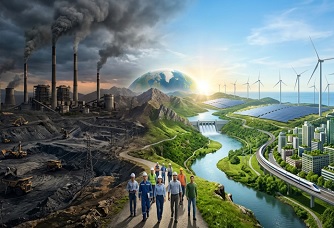
The world is at a breaking point. The ongoing Energy Crisis has made one thing clear—the need for a Global Energy Shift is no longer a distant idea.
Energy is no longer just about keeping the lights on. It now shapes economies, politics, and daily life. This Energy Crisis has exposed one clear truth: the current system is fragile. It depends too much on fossil fuels that are expensive, unstable, and harmful to the planet.
This is why the global conversation is shifting fast. The Global Energy Shift toward a Green Economy is no longer optional. What once felt like a long-term climate goal is now an urgent economic need. The move to a Green Economy is essential for survival, stability, and long-term growth.
The past few years have forced countries to rethink their energy strategies. The 2021-2025 Energy Crisis Legacy has shown how risky it is to depend on fossil fuels.
Prices went up suddenly. Supply chains broke down. Conflicts between countries made things worse. Nations that relied heavily on imported fuel suffered the most. This period made one thing clear: energy security matters just as much as energy supply.
Governments now see renewable energy differently. It is not just about reducing emissions. It is about reducing dependence on unstable markets. Clean energy is now linked to national security.
Another important shift is the idea of "Green Flexibility" vs. Raw Capacity. Earlier, the focus was simple—build more solar panels and wind farms. But that is not enough anymore. Energy systems must be smart. They must adjust quickly to changes in demand and supply. This is where storage, digital tools, and intelligent grids come in.
The year 2026 is being seen as a turning point. It marks the shift from planning to action. Policies are moving faster. Investments are increasing. Countries are now focusing on execution—building infrastructure, scaling manufacturing, and speeding up approvals.
These changes define the energy transition trends in 2026.
The ongoing West Asia crisis has once again exposed how deeply the global energy system is tied to geopolitics. A large share of the world’s oil and gas supply passes through this region. Any conflict, disruption, or uncertainty immediately affects global prices and supply chains.
This situation has made the Energy Crisis even more severe. Sudden spikes in oil prices, shipping risks in key routes, and supply uncertainty have forced countries to rethink their energy strategies. Nations that depend heavily on imported fossil fuels are the most vulnerable. Even short-term disruptions can lead to inflation, slower economic growth, and energy shortages.
These events are accelerating the Global Energy Shift. Governments are realizing that relying on fossil fuel imports is not just an economic risk, but also a strategic weakness. Renewable energy, on the other hand, is local. Solar and wind resources cannot be disrupted by international conflicts in the same way.
This is where the Green Economy becomes more important than ever. Investing in clean energy is now seen as a way to protect national interests. Countries are pushing harder for domestic renewable capacity, energy storage, and diversified supply systems.
The West Asia crisis has also highlighted the importance of energy independence. It has strengthened the case for faster adoption of renewables, better grid systems, and stronger regional energy cooperation. In many ways, geopolitics is now acting as a trigger, pushing the world toward faster execution of the energy transition.
“India stands at a crossroads in its battle against air pollution and climate change, as well as in the urgent pursuit of Net Zero and national energy security. With over 33 crore petrol and diesel vehicles on our roads, an outright ban or phase-out is not feasible in the short term. By incentivizing and streamlining retrofitment to Auto LPG, we can convert millions of vehicles into clean, low-emission alternatives almost overnight. said Suyash Gupta, Director General, Indian Auto LPG Coalition.
Auto LPG is not only cost-effective for consumers but also delivers immediate, significant reductions in harmful emissions, making our cities healthier and our air cleaner, while supporting the nation’s Net Zero ambitions and strengthening India’s energy security framework,” he added.
Also Read: Boosting Energy Efficiency with Low-Friction & Circular Models







We use cookies to ensure you get the best experience on our website. Read more...