Renewable energy is growing fast. But the story is not just about growth. It is about how technology is evolving.
Solar & Wind Dominance
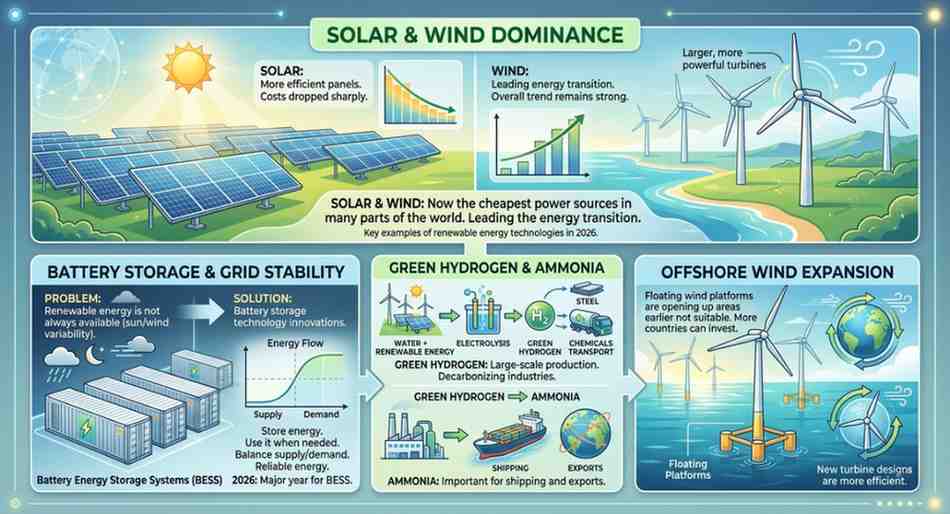
Solar and wind energy are now the cheapest sources of power in many parts of the world. Costs have dropped sharply over the last decade. Even though some regions have seen slowdowns in manufacturing, the overall trend remains strong.
Solar panels are more efficient. Wind turbines are larger and more powerful. Together, they are leading the energy transition.
These are key examples of renewable energy technologies in 2026.
Battery Storage and Grid Stability
One of the biggest problems with renewable energy is that it is not always available. The sun does not always shine. The wind does not always blow.
This is where battery storage becomes important.
Battery storage technology innovations are making it possible to store energy and use it when needed. 2026 is expected to be a major year for Battery Energy Storage Systems (BESS). These systems help balance supply and demand, making renewable energy more reliable.
Offshore Wind Expansion
Offshore wind is gaining attention. New turbine designs are more efficient. Floating wind platforms are opening up areas that were earlier not suitable for wind farms.
This means more countries can invest in offshore wind, even if they do not have shallow coastlines.
Kuldeep Jain – Founder & Managing Director, CleanMax says, “I think, as a nation, we should first be proud of the pace at which we have advanced our green transition and adoption of renewables.”
Green Hydrogen & Ammonia
The green hydrogen market is moving from small pilot projects to large-scale production.
Green hydrogen is made using renewable energy finding itself usage across industries like steel, chemicals, and transport. Ammonia, derived from hydrogen, is also becoming important for shipping and exports.
This shift is crucial for industries that cannot easily switch to electricity.
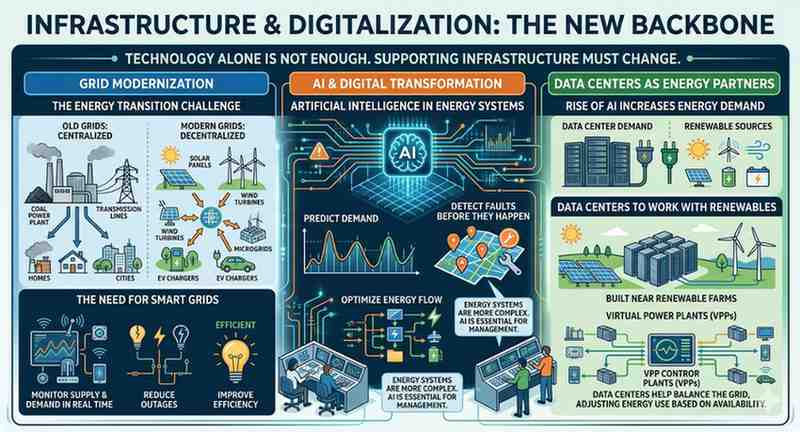
Technology alone is not enough. The infrastructure that supports it must also change.
Grid Modernization
One of the biggest challenges today is outdated power grids. Grid modernization challenges are slowing down the energy transition. Old grids were designed for centralized systems, where power came from a few large plants. Today, energy is decentralized. Many small sources feed into the grid.
Smart grids are needed. They can handle this complexity. They can monitor supply and demand in real time. They can reduce outages and improve efficiency.
AI and Digital Transformation
Artificial intelligence is playing a major role in energy systems. AI helps predict demand. It can detect faults before they happen. It can optimize how energy flows through the system.
This is important because modern energy systems are more complex. They involve many sources and users. Managing them manually is not possible.
Data Centers as Energy Partners
The rise of AI is also increasing energy demand. Moreover, Data centers require huge amounts of electricity. This has created a new trend: AI energy demand data centers to work closely with renewable energy sources.
Many data centers are now built near solar or wind farms. Some even help balance the grid through Virtual Power Plants (VPPs). They can adjust their energy use based on availability, helping stabilize the system.
Also Read: Why Energy-Efficient Pumps Are the Future of Water Solutions

.jpg "Devising Future-Proof Sustainable Industrial Packaging Solutions")
.jpg "Daifuku Intralogistics India: Global Warehousing Automation Capabilities Tailored for Indian Industries")



We use cookies to ensure you get the best experience on our website. Read more...