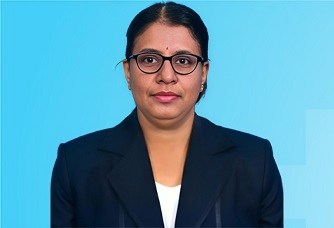
Shubha Rao, Technical Director at Praalter Resources, brings deep expertise in advanced wastewater treatment and sustainable water solutions. Drawing from her experience in handling complex industrial effluents, she discusses the growing limitations of conventional treatment systems and the urgent need for next-generation technologies. She highlights how innovative approaches like electrocoagulation and silicon carbide membrane filtration are reshaping the industry—turning wastewater treatment from a cost burden into a strategic driver of efficiency, sustainability, and long-term value.
Water scarcity and pollution are pressing global issues exacerbated by urbanization, industrialization, and ineffective wastewater management.
With the growing industrialization and environmental norms tighten, conventional treatment methods are increasingly proving inadequate to handle complex contaminants, and the demand for water reuse.
Industrial wastewater treatment is no longer just a regulatory obligation. It has become a critical driver of sustainability, resource efficiency, and industrial competitiveness.
Conventional technologies are increasingly inefficient, chemical-intensive, and unable to handle complex efluents while meeting tightening environmental regulations
They are chemical- intensive, space-consuming, ineffective against complex industrial efluents, generates large volumes of sludge, drive up operating costs, and still struggle to meet tightening environmental standards.” “In short — industries are spending more, to achieve less”
Also Read: Enhancing Efficiency of Water Treatment Plants Using Smart Technologies
Today, industrial wastewater treatment is at a tipping point. Advanced next-generation technological solutions integrating electrocoagulation and silicon carbide membrane filtration offer a step-change improvement, transforming the landscape and delivering superior contaminant removal such as oils, metals, high COD in a streamlined, efficient process, reducing chemical dependence, , fouling, minimizing sludge generation by 80 percent-non-Hazardous, and maintains high flux with aggressive cleanability and unmatched durability.
The outcome is stable, resilient and efficient treatment architecture for modern industrial wastewater challenges, high-quality effuent suitable for reuse (70-90 percent), with lower chemical dependency and improved process reliability.
The result is not just compliant discharge but also translates directly into lower OPEX (30-50 percent), faster payback as little as two to three years, low life cycle cost while upfront cost may be higher, and strong ESG alignment opening the door for an economy, and opportunity. In essence, this is a transition from wastewater treatment as a cost center to water recovery as a value-generating asset, aligned with circular economy principles and ESG priorities.
Most of these solutions succeed when solution providers conduct site-specific pilot trials, provide transparent operating cost data, and demonstrate integration with existing treatment infrastructure. Addressing these objections early in the evaluation stage significantly improves adoption.
Most myths about electrocoagulation arise from earlier designs or limited awareness of modern EC systems. When properly designed and applied to the right wastewater streams, EC can be a reliable and cost-effective component of industrial wastewater treatment strategies.
.jpg "AR Enterprises: Building The Supply Networks Behind India's Construction Growth")
.jpg "Industrial Packers: Engineering Industrial Packaging for India's Manufacturing Future")



We use cookies to ensure you get the best experience on our website. Read more...