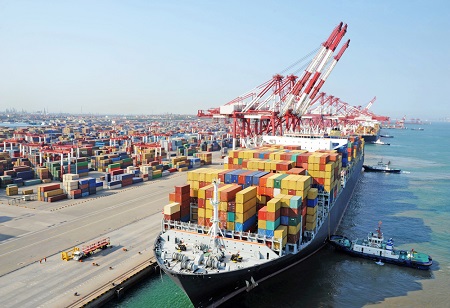
Producing more steel is no longer India's biggest challenge. Building the ecosystem behind it is. From securing critical raw materials and unlocking low-grade iron ore to modernizing logistics and accelerating green manufacturing, the country's global competitiveness will depend on how these structural gaps are addressed in the years ahead.
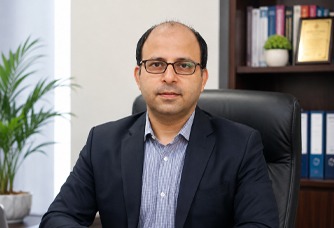
In an interaction with Thiruamuthan, Assistant Editor at Industry Outlook, Madhur Gupta, Executive Director, Lloyds Metals & Energy Limited, discusses the priorities that could strengthen India's mining-to-metals value chain while driving long-term industrial competitiveness.
Madhur Gupta has been associated with Lloyds Metals & Energy Limited for over a decade, contributing to the company's growth across mining and metals through a strong focus on mineral beneficiation, sustainable operations, and integrated resource development.
Read the full interview below to gain deeper insights into India's mining value chain.
As India targets 300 MTPA steel production by 2030, what structural gaps and changes need to be addressed to build a globally competitive, self-reliant mining-to-metals ecosystem?
As India scales towards 300 MTPA, we need to focus on raw material security, which means solving for both critical raw materials, coal and iron ore.
India is abundant in iron ore reserves and much of what the country holds is low-to-medium grade material that requires beneficiation before it becomes usable. At Lloyds, this is exactly what our BHQ beneficiation push is aimed at: unlocking over 700 million tons of reserves by upgrading ore from 30-35 percent Fe to about 67 percent Fe, converting what was long treated as waste rock into usable feedstock. Policy is also beginning to move in step with this shift.
The Ministry of Mines' 2026 revision to royalty and pricing norms for sub-45 percent Fe ore has made large-scale beneficiation of India's low-grade reserves commercially viable for the first time.
For coal, nearly 95 percent of the sector's coking coal requirement is still met through imports, a challenge that will only deepen as capacity expands. Moreover, the bulk movement of ore and coal remains slow and expensive in practice and adds significant cost before the ore even reaches a furnace, which needs to be improved.
None of this is a demand problem, because India is already the world's second-largest steel producer, running well below full capacity utilization. It's a question of whether infrastructure can keep pace as the industry scales.
The most competitive steel companies of the future will build low-carbon ecosystems, not just low-carbon factories, by embedding sustainability across the entire value chain.
With the MMDR Amendment Act, PM Gati Shakti, and the National Steel Policy driving sectoral reforms, what policy priorities should come next?
The release of the Green Steel Taxonomy is a crucial step for the near future, as it gives India a common language to define and measure low-carbon steel. It lays the groundwork for the National Mission on Green Steel and reflects the industry's collective shift toward a low-carbon economy.
This will not only drive operational efficiency, but it will also reward compliant companies by giving their products a clear market preference.
Also Read: Reducing Mining's Carbon Footprint with Renewable Energy Solutions
As global markets increasingly value low-carbon manufacturing, how should Indian steel producers balance decarbonization with growth, affordability, and long-term competitiveness?
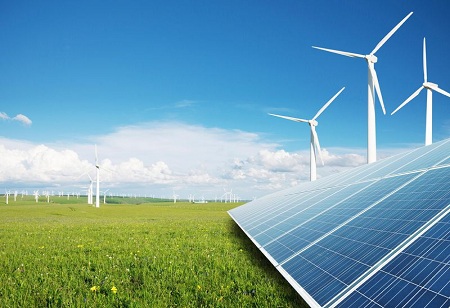
The goal is not to choose between growth and sustainability, but to engineer both together. In many areas, sustainability is no longer a premium choice but a more efficient and commercially sensible one. Renewable energy, alternative fuels, and process optimization are increasingly proving that cleaner operations can also support better economics.
For instance, we at Lloyds & Thriveni are actively investing in this transition through green mining initiatives, solar, wind, and battery energy storage systems. Across our group, we are taking multiple steps toward greener operations. In most of our mines, 80% of the equipment and machinery is electrified, which reduces our overall Scope 1 emissions.
In addition, with BHQ beneficiation, the cleanest ore with negligible gangue will significantly lower coke and power requirements. We are also strengthening cleaner logistics through CNG trucks and iron ore slurry pipelines (85 km operational and another 195 km in progress).
At Lloyds, we are focused on reducing our Scope 1 and Scope 2 emissions significantly, and our priority now extends to Scope 3. In our example-ranging from using EV HEMMs and the EAF route for steelmaking to employing LNG in pellet making and utilizing slurry pipelines for transportation, we are addressing Scope 1 and 3 emissions holistically, recognizing that meaningful decarbonization requires seamless alignment across our entire value chain, from suppliers and transporters to our end customers.
In the long run, the most competitive steel companies will be those that build a low-carbon footprint ecosystem, not just a low-carbon factory.
Beyond expanding production capacity, how critical will mineral beneficiation and value-added steel manufacturing be in strengthening India's position in global markets?
India has huge reserves of low-grade iron ore, some of which is exported to countries like China, as they are able to utilize this with their advanced technology. This number was almost 25 MT in FY26. In return, however, we still import high-grade ore, thus creating a value asymmetry in trade.
Investing in technology for beneficiation is going to be critical to achieve our steel production targets. Iron ore beneficiation is yet to get some serious attention from policymakers. Tailings and heaps of low-grade ore lie unutilized due to the lack of technology, investments and incentives.
Similar is the case with finished goods. Although we export commodity-grade steel, we rely on imports for several specialty grades. This drains our vital forex reserves. However, with the PLI scheme now incentivizing domestic players to invest in value-added steel, our external dependency will definitely reduce.
With logistics remaining a significant cost across heavy industries, where can India unlock greater efficiencies to build a more integrated steel value chain?
Logistics is one of the biggest cost centers for companies like ours. Government pipeline SOPs for dedicated freight corridors, port-linked rail connectivity, and last-mile links from mines to plants need to keep getting fast-tracked.
Rail wagon availability also needs to scale further; schemes like the General Purpose Wagon Investment Scheme and the newer Wagon Leasing Scheme already let private players invest in and lease wagons, and deepening these would ease logistics costs significantly.
Alongside this, actively promoting EV and alternative-fuel trucking for heavy-haul segments would draw fresh investment into fleet electrification, bringing down both emissions and per-ton hauling costs over time. These are a few of the levers that can make heavy-industry logistics genuinely more efficient.
Also Read: Sustainable Practices in Ferro Alloy Smelting for Future Growth
Driven by rapid advances in digital technologies, where do you see AI, automation, and predictive analytics delivering the greatest impact across mining and steel manufacturing?
These are no longer buzzwords but a reality shaping the present and future of manufacturing. However, the way we look at it, human-in-the-loop is non-negotiable, AI in mining and steel isn't about replacing people, it’s about assisting and amplifying what they can do. Nobody asks whether a calculator replaced an accountant; it just lets them do far more, far faster.
AI in our industry is really the same shift, just at a bigger scale. The clearest impact area is manpower productivity: decision support that lets fewer people supervise more of the process without losing control over quality or safety. Vision AI is another space we're investing and researching heavily in, both in mining and steelmaking, using it for real-time safety monitoring on the shop floor and for identifying quality defects.
However, the speed of access to relevant data with Large Language Models (LLMs) is getting cheaper and more customizable to a company's own processes; teams can now pull insights out of operational data in minutes instead of days, which changes how quickly decisions actually get made on the ground.
At a time when industrial operations are becoming increasingly technology-intensive, how should organizations prepare their workforce for long-term success?
As industries become increasingly tech and data-driven, the industry's ability to compete will depend as much on how fast its people adapt to the advancements in technology as on how well it delivers value when the workforce operating it keeps pace with it.
That's why at Lloyds, upskilling and L&D are treated as core infrastructure. We ran over 100 learning and development programs this past year alone, spanning technical, functional, leadership, AI, safety and compliance. We have also developed an internal L&D tool to upgrade employee capabilities and regularly organize AI workshops to train teams on using AI tools across different functions.
Equally central is absorbing local workforce into our core ecosystem, most of them from tribal communities, and skilling them on high-tech HEMMs and other advanced equipment used across our mining and plant operations.
This isn't just a talent-access initiative, it reflects a deliberate effort to build technical capability within the communities we operate in, so that local employment moves beyond entry-level roles into skilled, operations-critical positions.
5 Key leadership principles for emerging leaders from Madhur:
Adopt technology early rather than defensively. Industry 5.0 and AI in manufacturing are no longer optional efficiency tools, they're becoming the difference between companies that scale and those that stagnate, and leaders who treat adoption as a proactive investment rather than a reaction to competitors are the ones who end up setting the pace for the industry.
Sustainability has to be treated as a necessity rather than a choice. The market is already rewarding low-carbon, resource-efficient operations, and that shift will only accelerate, so businesses that see sustainability as a compliance checkbox will eventually find themselves priced out of global markets, while those that build it into their core strategy will find it becomes a genuine competitive advantage.
Embrace Continuous Learning & Humility: Every day, provide a new learning opportunity, especially in a dynamic environment such as manufacturing. True leadership means accepting that there is always more to master; valuing the expertise of operators, engineers, and partners across the value chain while treating every day as a chance to optimize, innovate, and improve.
Real resilience comes from building a self-sustaining ecosystem, one where the local workforce is employed, skilled, and eventually entrusted to run the operations themselves. That, to me, is the real marker of leadership in this sector, not just building businesses that survive the next cycle, but ones that leave the ecosystem around them stronger than they found it.
Teamwork & Collective Strength: Individual growth is neither possible nor sustainable in isolation. The true strength of an organization will always far exceed that of any single individual. The sooner we recognize, embrace, and leverage this collective power, the faster and more sustainably we can scale.
.jpg "Saksham Enterprises: Optimizing Mission- Critical HVAC Infrastructure For The High Precision Sector")
.jpg "JDS Group of Companies: Innovating Smart Solutions For Modern Power Transmission & Distribution Infrastructure")

We use cookies to ensure you get the best experience on our website. Read more...