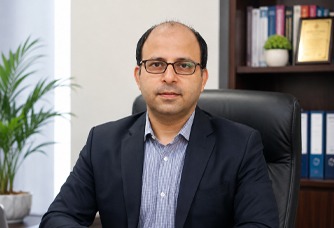
Ankur Vaidya, Partner, Sprint Testing Solutions, engaged in a conversation with Industry Outlook, highlights the evolving role of material characterization and analytical testing in driving innovation across advanced manufacturing industries. He also shares how testing has progressed from a quality-control function to a strategic enabler of product development, reliability, and commercialization.
Having worked extensively in material characterization and analytical testing, how have you seen the role of testing evolve from a quality-control function to a strategic enabler of innovation and product development?
Over the years, I have witnessed a significant shift in how material characterization and analytical testing are perceived across industries. Traditionally, testing was largely a quality-control function focused on verifying specifications and ensuring compliance after production. Today, it has evolved into a strategic enabler of innovation, supporting decision-making from the earliest stages of product development.
Advanced characterization techniques such as SEM, XRD, XPS, Raman spectroscopy, and thermal analysis provide critical insights into material structure, composition, and performance. These insights help researchers and manufacturers optimize materials, improve processes, reduce development cycles, and address potential failures before commercialization.
This evolution is particularly important in sectors such as semiconductors, energy storage, advanced materials, and electronics, where product performance is directly linked to material behavior at micro- and nanoscale levels.
At Sprint Testing Solutions, we believe testing is not just about generating data—it is about generating knowledge. By transforming analytical results into actionable insights, testing laboratories are becoming innovation partners that help organizations accelerate R&D, improve reliability, and create next-generation products with greater confidence and speed.
Material insights are increasingly shaping critical engineering and business decisions, making characterization a cornerstone of modern product development.
As industries strive for higher performance, reliability, and sustainability, how important has material characterization become in modern manufacturing and research environments?
Material characterization has become a cornerstone of modern manufacturing and research, particularly as industries pursue higher performance, greater reliability, and sustainable product development. Today’s advanced materials are increasingly complex, and understanding their structure, composition, and properties is essential for achieving desired performance outcomes.
Characterization techniques provide critical insights into materials at the micro- and nanoscale, enabling researchers and manufacturers to establish clear relationships between material structure and product performance. Whether it is improving battery efficiency, enhancing semiconductor reliability, developing lightweight aerospace components, or optimizing sustainable materials, characterization plays a vital role in innovation.
Beyond product development, it is also a powerful tool for quality assurance, process optimization, and failure analysis. Early identification of material inconsistencies can significantly reduce production costs, minimize waste, and improve product lifecycle performance.
As industries move toward smarter manufacturing and accelerated R&D cycles, data-driven material insights are becoming increasingly valuable. In my view, material characterization is no longer a supporting activity—it is a strategic capability that enables organizations to innovate faster, manufacture more efficiently, and build products that meet the evolving demands of global markets and sustainability goals.
India is making significant investments in advanced manufacturing, electronics, semiconductors, and clean energy technologies. What role do testing and failure analysis play in supporting these emerging sectors?
India’s push toward advanced manufacturing, semiconductors, electronics, electric mobility, and clean energy technologies presents a tremendous opportunity for innovation-led growth. However, the success of these sectors depends not only on design and manufacturing capabilities but also on robust testing, characterization, and failure analysis ecosystems.
Testing plays a crucial role in validating material performance, ensuring product reliability, and meeting stringent quality standards required for global competitiveness. Equally important is failure analysis, which helps identify the root causes of performance degradation, defects, and reliability issues. Understanding why a material, component, or device fails is often the key to improving future designs and manufacturing processes.
In sectors such as semiconductors, batteries, fuel cells, and advanced electronics, even microscopic defects can significantly impact performance and lifespan. Advanced analytical techniques help uncover these issues at an early stage, reducing development risks and accelerating commercialization.
As India strengthens its position in high-technology manufacturing, testing laboratories will play a strategic role by providing the scientific insights needed to improve reliability, optimize processes, and support the development of globally competitive products and technologies.
Your career spans research, technical applications, scientific training, and entrepreneurship. How has this diverse experience shaped your approach to solving complex material and engineering challenges?
My journey across research organizations, technical applications, scientific training, and entrepreneurship has given me a holistic perspective on solving complex material and engineering challenges. Each phase has helped me understand a different aspect of the innovation ecosystem—from generating scientific knowledge in the laboratory to translating that knowledge into practical industrial solutions.
My research background taught me the importance of scientific rigor and data-driven decision-making. Working in technical applications exposed me to real-world industrial challenges, where solutions must be not only technically sound but also practical, timely, and cost-effective. Through scientific training and knowledge-sharing initiatives, I learned how to communicate complex concepts in a way that enables better decision-making across teams and organizations.
As an entrepreneur and founder of Sprint Testing Solutions, I have combined these experiences to build a customer-centric approach focused on solving problems rather than simply delivering test reports. I believe the most effective solutions emerge when scientific expertise, application understanding, and business objectives are aligned. This multidisciplinary perspective allows us to identify root causes faster, provide meaningful insights, and help clients accelerate innovation with confidence.
Many organizations focus heavily on product performance, but failure analysis often receives less attention. How can a deeper understanding of material failures help improve product quality and reliability?
Failure analysis is one of the most valuable yet often underutilized tools for improving product quality, reliability, and long-term performance. While organizations naturally focus on developing high-performing products, understanding why materials or components fail provides critical insights that can prevent recurring issues and drive continuous improvement.
Every failure contains valuable information about material behavior, design limitations, manufacturing inconsistencies, or environmental influences. Through advanced characterization and analytical techniques, engineers can identify root causes rather than simply addressing visible symptoms. This enables organizations to implement targeted corrective actions, optimize material selection, refine manufacturing processes, and improve product design.
In industries such as electronics, automotive, aerospace, energy, and advanced manufacturing, even minor defects can lead to significant reliability concerns, warranty costs, or operational failures. A systematic failure analysis approach helps reduce these risks while improving customer confidence and product lifespan.
I often say that failures are not setbacks—they are opportunities to learn. Organizations that embrace failure analysis as a strategic learning tool are better positioned to build more robust products, accelerate innovation, and achieve sustainable improvements in quality and reliability.
Techniques such as SEM, EDS, and EBSD have become critical tools for researchers and manufacturers. How are these technologies helping industries gain deeper insights into material behavior and performance?
Advanced characterization techniques such as SEM, EDS, and EBSD have transformed the way industries understand materials and solve engineering challenges. These tools provide insights at the micro- and nanoscale, enabling researchers and manufacturers to investigate material behavior with a level of detail that was previously difficult to achieve.
SEM allows detailed examination of surface morphology, defects, fracture features, and microstructural characteristics. EDS complements this by providing elemental composition information, helping identify contamination, inclusions, corrosion products, or compositional variations. EBSD further enhances understanding by revealing grain structure, crystallographic orientation, phase distribution, and deformation mechanisms within materials.
Together, these techniques help establish direct relationships between microstructure and performance. Industries use them to optimize manufacturing processes, improve material selection, investigate failures, and validate product quality. Applications span sectors such as aerospace, automotive, semiconductors, energy storage, metals, and advanced materials.
As products become more sophisticated and performance requirements more demanding, these technologies are becoming essential decision-making tools. They enable organizations to move beyond observation and gain scientific insights that drive innovation, reliability, and continuous improvement.
As products become more complex, particularly in sectors such as aerospace, electronics, automotive, and energy, what new challenges are emerging in material testing and characterization?
As products become more advanced and multifunctional, the challenges in material testing and characterization are growing significantly. Industries such as aerospace, electronics, automotive, and energy are increasingly utilizing complex material systems, miniaturized components, multi-layer structures, and novel manufacturing processes, all of which require deeper analytical understanding.
One of the biggest challenges is characterizing materials across multiple length scales—from bulk properties down to micro- and nanoscale features that can directly influence performance and reliability. In electronics and semiconductors, for example, extremely small defects can impact device functionality. Similarly, advanced batteries, fuel cells, and lightweight aerospace materials require comprehensive analysis of degradation mechanisms over time.
Another challenge is the need for faster testing and data-driven decision-making to keep pace with accelerated product development cycles. Industries are seeking more predictive insights rather than simply identifying failures after they occur.
To address these challenges, laboratories must combine advanced characterization techniques, failure analysis expertise, and emerging tools such as automation, AI, and data analytics. The future of testing lies in delivering actionable insights that enable faster innovation, improved reliability, and reduced development risk.
Research institutions and industries often operate with different priorities. How can stronger collaboration between academia, testing laboratories, and manufacturers accelerate innovation and technology development?
Innovation is most effective when academia, testing laboratories, and industry work together as part of an integrated ecosystem. While research institutions focus on generating new knowledge and developing novel materials or technologies, industries are driven by scalability, reliability, commercialization, and market needs. Testing laboratories serve as a critical bridge between these two worlds by providing the analytical insights needed to translate research into practical applications.
Stronger collaboration enables researchers to align their work with real industrial challenges, while manufacturers gain access to emerging technologies and scientific expertise. Advanced characterization and testing help validate research findings, optimize materials, and accelerate the transition from laboratory-scale concepts to commercial products.
Such partnerships are particularly important in strategic sectors like semiconductors, energy storage, advanced materials, aerospace, and clean energy technologies, where innovation cycles are becoming increasingly complex and interdisciplinary.
In my view, the future belongs to collaborative innovation models. By fostering closer engagement between academia, testing laboratories, and industry, we can reduce development timelines, improve technology readiness, strengthen India's innovation ecosystem, and accelerate the creation of globally competitive technologies and products.
Access to advanced analytical infrastructure has traditionally been a challenge for many researchers and smaller organizations. How do you see this changing in India's evolving R&D ecosystem?
Access to advanced analytical infrastructure has historically been a significant challenge in India, particularly for startups, MSMEs, and academic researchers with limited resources. High-end characterization tools require substantial investment, specialized expertise, and ongoing maintenance, making them difficult for many organizations to acquire and operate independently.
However, this landscape is changing rapidly. India's growing focus on research, innovation, advanced manufacturing, semiconductors, clean energy, and deep-tech entrepreneurship is driving greater investment in shared research facilities, testing laboratories, and technology centers. Government initiatives, industry partnerships, and private-sector investments are helping expand access to world-class analytical capabilities across the country.
At the same time, specialized testing service providers are making advanced characterization more accessible by offering expertise and infrastructure on demand. This allows organizations to focus on innovation without the burden of significant capital expenditure.
I believe the future of India's R&D ecosystem will be defined by greater collaboration, shared infrastructure, and democratized access to advanced testing capabilities. This will empower researchers, startups, and manufacturers to innovate faster, reduce development risks, and compete more effectively on a global scale.
Data generated from material testing is increasingly influencing critical engineering and business decisions. How can organizations make better use of analytical insights throughout the product development lifecycle?
In today’s technology-driven environment, material testing data has evolved from a validation tool into a strategic asset that influences both engineering and business decisions. The true value of analytical testing lies not in generating reports, but in converting data into actionable insights that guide product development, process optimization, and risk management.
Organizations can maximize this value by integrating characterization data throughout the entire product lifecycle—from material selection and design validation to manufacturing, quality assurance, and failure analysis. Early-stage analytical insights help identify potential challenges before they become costly problems, reducing development time and improving product reliability.
Equally important is the ability to correlate material properties, microstructure, and performance outcomes. When testing data is combined with engineering expertise, process knowledge, and digital tools, it enables more informed decision-making and faster innovation.
As industries increasingly adopt data-driven approaches, testing laboratories will play a larger role as knowledge partners rather than service providers. Organizations that effectively leverage analytical insights will be better positioned to improve product quality, accelerate development cycles, reduce risks, and gain a sustainable competitive advantage in the market.
Looking ahead, how do you see the material testing and characterization industry evolving over the next 5–10 years, particularly with the rise of advanced materials, clean energy technologies, and next-generation manufacturing?
The material testing and characterization industry is poised for significant transformation over the next 5–10 years, driven by advances in clean energy, semiconductors, advanced materials, additive manufacturing, and next-generation manufacturing technologies. As materials become more sophisticated, the demand for deeper, faster, and more precise characterization will continue to grow.
Future testing will move beyond traditional quality assessment toward predictive and data-driven insights. Organizations will increasingly rely on advanced characterization to understand material behavior, optimize performance, predict failures, and accelerate product development. Technologies such as AI, machine learning, automation, and digital data management will play a larger role in extracting meaningful insights from complex analytical datasets.
We will also see growing demand for specialized testing in areas such as batteries, hydrogen technologies, fuel cells, semiconductors, nanomaterials, and sustainable materials. At the same time, greater collaboration between industry, academia, and testing laboratories will be essential to support rapid innovation.
I believe testing laboratories of the future will function as strategic innovation partners, helping organizations reduce development risks, accelerate commercialization, and build the advanced technologies that will shape the next generation of global industry.
.jpg "Saksham Enterprises: Optimizing Mission- Critical HVAC Infrastructure For The High Precision Sector")

.jpg "JDS Group of Companies: Innovating Smart Solutions For Modern Power Transmission & Distribution Infrastructure")



We use cookies to ensure you get the best experience on our website. Read more...