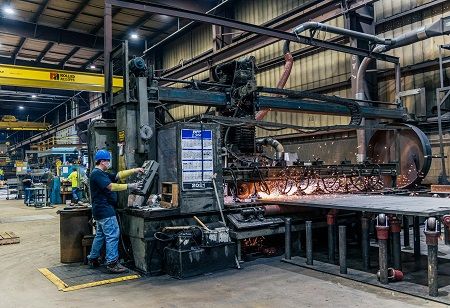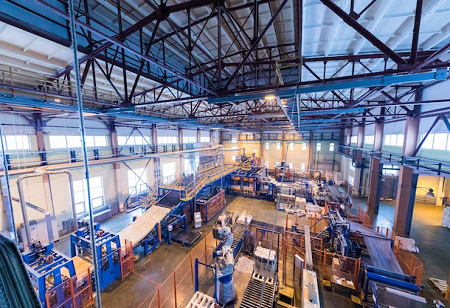
India’s industrial momentum accelerated sharply in July as manufacturing expansion, clean energy investments, semiconductor ambitions, and infrastructure megaprojects reshaped growth.
The month saw multi-billion-rupee investments across energy, electronics, defense, and mobility, while policy interventions strengthened domestic production and reduced import dependence.
Companies and governments pushed aggressive localization strategies, scaled renewable capacity, and unlocked new global partnerships.
From Adani Green’s 20 GW milestones to India’s Rs 1.27 lakh crore semiconductor push, July highlighted a decisive shift toward self-reliance and industrial competitiveness.
These developments position Indian industry for sustained long-term growth while addressing supply chain vulnerabilities and energy security challenges.
India strengthened its energy security strategy through diversification and domestic capacity expansion.
Adani Green achieved 20 GW renewable capacities, making it one of India’s largest clean energy operators. With this expansion, the company moves closer to global leadership in renewable energy while contributing significantly to India’s 500 GW non-fossil fuel target by 2030.
Also Read: Why India's Mobility Future Depends on Leadership and Innovation
India continued its aggressive transition toward sustainable energy:
These developments align with India’s 500 GW non-fossil fuel target by 2030.
India accelerated its manufacturing expansion and semiconductor ambitions, driven by policy support and global demand shifts.
|
Company / Entity |
Sector |
Investment / Value |
Key Development |
|
Indian Oil |
Energy |
Rs 61,077 crore |
Mega manufacturing project in Odisha |
|
Tata Group |
Manufacturing |
Rs 1 lakh crore target |
Revenue expansion roadmap by 2030 |
|
Avaada |
Renewable |
3 GW facility |
Solar cell manufacturing expansion |
|
Adani Group |
Energy |
20 GW capacity |
Renewable milestone achieved |
|
Siemens Energy |
Energy |
Rs 2,800 crore |
Heavy capital investment expansion |
|
PepsiCo |
FMCG |
Rs 1,266 crore |
Flavor plant in Madhya Pradesh |
|
Paras Defence |
Defense/Tech |
Rs 6,200 crore |
Chip and defense project |
|
BPCL |
Energy |
NA |
EV charging infrastructure expansion |
India strengthened its defense manufacturing ecosystem and space ambitions.
These moves indicate a strong push toward strategic autonomy and exports.
Infrastructure development remained a key growth driver.
EV & Mobility
Digital, AI & Data Infrastructure
India saw strong growth in AI, data centres, and digital infrastructure investments.
These developments support India’s ambition to become a global digital infrastructure hub.
India strengthened global ties and trade strategies.
July clearly demonstrated that Indian industry has entered a scale-driven growth phase:
1. Energy Transition Is Now Structural
India no longer treats renewable energy as a parallel sector. Companies integrated clean energy into core business strategies. The 20 GW milestone and 297 GW capacity show measurable progress.
2. Manufacturing Gains Strategic Depth
The semiconductor push, electronics expansion, and China+1 advantage indicate that India is moving beyond assembly into high-value manufacturing.
3. Infrastructure Spending Drives Multiplier Effects
Mega infrastructure projects are not standalone investments. They enable logistics efficiency, urban mobility, and industrial clustering.
4. Defense & Space Become Growth Engines
India is scaling defense exports and private participation. Space startups are unlocking new commercial opportunities.
5. Policy-Led Growth Is Accelerating Execution
Government initiatives such as import substitution, EV policy, and semiconductor incentives are translating into real project execution, not just announcements.
July emerged as a defining month for Indian industry as energy transition, manufacturing expansion, infrastructure investments, and global partnerships converged to drive growth. India demonstrated strong execution capability across sectors, supported by policy clarity and private sector participation.
The combination of large-scale capital deployment, localization strategies, and technological advancement positions India as a leading global industrial hub. If this momentum continues, India will not only strengthen domestic capabilities but also play a larger role in global supply chains and emerging industries.
.jpg "Textile Special")






We use cookies to ensure you get the best experience on our website. Read more...