India’s industrial landscape is witnessing rapid developments across energy, logistics, semiconductors, and automation.
Clean energy capacity is set to cross a major milestone, while refiners are actively diversifying crude sourcing amid geopolitical risks.
In infrastructure and aviation, Adani Enterprises has clarified its strategic stance, while logistics players are strengthening MSME supply chains.
Meanwhile, India’s semiconductor ecosystem is advancing with indigenous design tools, and global firms like Epson are deepening their industrial automation presence.
Together, these updates reflect a broader shift toward energy security, supply chain resilience, and technology-led manufacturing growth.
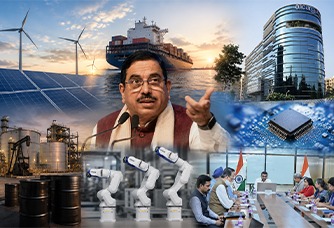
India’s clean power capacity is on track to cross 300 GW, marking a significant milestone in the country’s energy transition journey. Union Minister Pralhad Joshi stated that the country’s renewable energy capacity has already reached over 200 GW, with strong growth in solar and wind segments.
“In another month or so, India will reach 300 GW of non-fossil sources. This figure was 81 GW, including hydro power, when PM Modi took over. Solar capacity was 2.66 GW in 2014 and today, it is 162 GW. This too is likely to touch 175 GW in another two to three months,” said Pralhad Joshi, Union Minister.
He emphasized that India is progressing rapidly toward its 500 GW non-fossil fuel target by 2030. The minister highlighted ongoing government initiatives, policy support, and investments that are accelerating capacity additions. He noted that this expansion reflects India’s commitment to sustainability while ensuring energy security and meeting rising power demand across sectors.
Also Read: Driving Profitable Growth in India’s Automotive Manufacturing Sector
The rapid expansion in clean energy capacity is being driven by a combination of policy support, private investments, and infrastructure development. Government schemes such as production-linked incentives and renewable energy auctions are attracting both domestic and global investors.
Solar installations continue to dominate new capacity additions, supported by falling costs and technological advancements. Wind energy is also witnessing renewed momentum, particularly in offshore projects. Officials emphasized that grid integration, storage solutions, and transmission infrastructure are being strengthened to support this growth. The government remains focused on balancing sustainability goals with economic development.
Indian refiners are actively scouting for alternative crude oil sources as geopolitical tensions in the Gulf region increase supply risks. Companies are exploring supplies from regions such as Africa, the United States, and Latin America to reduce dependence on Middle Eastern imports. Industry executives noted that diversification is essential to ensure supply stability and mitigate price volatility.
The shift comes amid concerns over potential disruptions in key shipping routes. Refiners are also adjusting procurement strategies and strengthening trading relationships to maintain operational continuity in a volatile global energy market.
The move to diversify crude sourcing underscores a broader focus on energy security among Indian oil companies. Firms are optimizing supply chains, renegotiating contracts, and leveraging spot markets to secure competitive pricing.
Industry sources indicated that logistical flexibility and storage capabilities are being enhanced to manage supply uncertainties. The government is also monitoring global developments closely to ensure adequate domestic supply.
This strategic shift highlights the importance of resilience in energy procurement, especially as global geopolitical tensions continue to impact oil markets and trade flows.
Adani Enterprises has officially denied speculation about entering the airline business, clarifying that it has no plans to launch or acquire an airline. The company stated that such reports are unfounded and do not align with its current strategic priorities.
Adani Group already has a significant presence in airport infrastructure, operating multiple airports across India. The clarification comes amid market speculation linking the group to potential aviation ventures. Through addressing these rumors, the company aims to provide clarity to investors and stakeholders regarding its business focus and expansion strategy.
Adani Enterprises reiterated its commitment to strengthening its existing infrastructure portfolio, particularly in the airport sector. The group continues to invest in expanding airport capacity, improving passenger experience, and enhancing operational efficiency.
Officials emphasized that the company’s strategy is centered on infrastructure development rather than airline operations. The focus remains on leveraging its airport network to drive long-term growth. This approach aligns with the group’s broader vision of building integrated infrastructure ecosystems across transportation, logistics, and energy sectors.
Allcargo Logistics is expanding its network to strengthen supply chains for micro, small, and medium enterprises (MSMEs). The company is enhancing its logistics infrastructure to improve connectivity and reduce transit times for smaller businesses.
This expansion includes increasing warehousing capacity and optimizing transportation routes. The initiative aims to address key challenges faced by MSMEs, such as high logistics costs and limited access to efficient distribution networks. This aims to improve supply chain efficiency. Allcargo seeks to enable MSMEs to scale operations and compete more effectively in domestic and global markets.
The network expansion by Allcargo Logistics is designed to create a more resilient and efficient supply chain ecosystem. The company is leveraging technology to streamline operations, improve tracking, and enhance delivery reliability.
“By combining nationwide reach, digital visibility and consultative logistics expertise, we are enabling businesses across India's specialised clusters to build more agile, resilient and future-ready supply chains,”said Ketan Kulkarni, Managing Director & CEO, Allcargo Logistics.
Industry experts note that such initiatives are critical for supporting India’s manufacturing and export sectors. Through focusing on MSMEs, Allcargo is addressing a crucial segment that contributes significantly to economic growth. This move is expected to reduce bottlenecks, improve turnaround times, and enhance overall supply chain performance across industries.
Epson has launched a new range of industrial robots along with a software platform at Automation Expo Mumbai 2026. The company introduced advanced robotic solutions designed to enhance precision, efficiency, and flexibility in manufacturing processes.
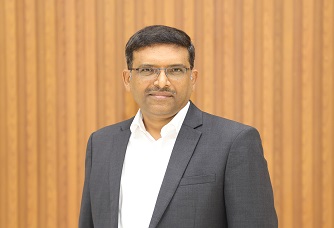
"India is rapidly emerging as a global manufacturing hub, and automation will play a pivotal role in shaping its future. With our new industrial robot lineup and RC plus 8.0 platform, Epson is delivering the speed, precision, and intelligence manufacturers need to compete in an increasingly dynamic marketplace,” said Siva Kumar, Senior General Manager, Sales and Marketing, Epson India.
The new software platform enables seamless integration and control of robotic systems, improving productivity and reducing operational complexity. Epson highlighted that these solutions are tailored to meet the evolving needs of industries such as electronics, automotive, and pharmaceuticals. The launch underscores the growing importance of automation in driving industrial efficiency and competitiveness.
NIELIT and SCL Mohali have made an indigenous semiconductor design kit available on the e-ChipHub platform, marking a significant step in strengthening India’s semiconductor ecosystem.
The design kit enables researchers, startups, and academic institutions to develop and test semiconductor designs domestically. Officials stated that this initiative will reduce dependence on foreign tools and promote innovation in chip design.
Through providing access to critical resources, the platform aims to accelerate research and development in the semiconductor sector. This move aligns with India’s broader strategy to build a self-reliant and globally competitive semiconductor industry.
.jpg "Textile Special")



We use cookies to ensure you get the best experience on our website. Read more...