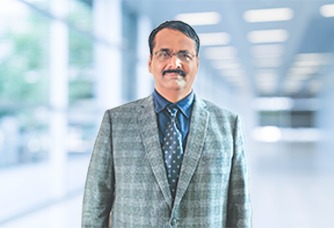
In an exclusive interaction with Thiruamuthan, Assistant Editor at Industry Outlook, K A Unni Nayar, Manufacturing Director, JK Tyre & Industries Ltd (NSE Symbol: JKTYRE & BSE Code: 530007), discusses how India’s tyre industry is entering a new phase shaped by changing vehicle preferences, electrification, and rising expectations from manufacturers.
He shares his perspective on how tyre makers can stay competitive as engineering demands evolve and manufacturing moves towards greater technology adoption. He also reflects on the importance of building resilience and maintaining a culture of continuous improvement in a changing industry.
Unni Nayar is a seasoned manufacturing leader with over 40 years of experience across JK Tyre, MRF, and CEAT. He has led large-scale tyre manufacturing operations, greenfield projects, production teams, and multiple manufacturing facilities across India, with expertise spanning radial and bias tyres, OEM supply, exports, operational excellence, and technology-led manufacturing.
You have seen India’s tyre industry evolve across several cycles and vehicle segments. What is fundamentally different about today’s mobility market compared with a decade ago?
The fundamental difference is that mobility today is becoming more diverse, technology-led and value-oriented. A decade ago, the conversation around tyres was largely driven by mileage, durability, safety and cost.
Today, the shift towards SUVs and premium vehicles, electrification and connected mobility is changing what customers and OEMs expect from a tyre. Utility vehicles, for instance, now account for over 60% of India's domestic passenger-vehicle market, creating demand for larger rim sizes and higher-performance tyres.
For example, at JK Tyre we see this evolution across premiumisation, EVs, smart tyres and low-rolling-resistance technologies. Our R&D focus is increasingly on advanced materials, tyre dynamics and application-specific solutions that can contribute to vehicle efficiency.
With EVs, SUVs and premium vehicles raising new demands on tyres, what engineering priorities will define the next generation of tyre design and manufacturing?
The impact of these shifts is not just about developing a different tyre for a different vehicle; it is changing the engineering trade-offs that go into tyre development. The rise of SUVs and premium vehicles is driving larger rim sizes, higher load capacities and stronger expectations around handling and ride comfort. At the same time, EVs add another layer of complexity, with higher vehicle weights and instant torque increasing the demands on traction and wear, while low rolling resistance and noise become more important for efficiency and refinement.
This is where our R&D capabilities are increasingly focused, on application-specific engineering, advanced compounds, lightweight materials and tyre dynamics. The next phase will be about optimising the complete performance envelope, durability, efficiency, grip, comfort and cost for each vehicle platform. EV tyre development is still evolving, particularly as vehicle architectures, battery sizes and driving patterns continue to change.
The industry is still working to optimise the balance between range, grip, durability, noise and cost. The next phase of tyre engineering will therefore be about developing products that can meet these competing requirements without compromising safety or performance.
The changing mobility landscape is moving tyre development beyond mileage and cost towards products engineered for specific vehicle needs and performance expectations
As vehicle platforms become more technology-driven, are OEM expectations from tyre manufacturers also moving beyond price, quality and volumes toward greater engineering collaboration?
The shift is quite clear. As vehicle platforms become more technology-driven, OEMs are increasingly looking for tyre manufacturers who can contribute to vehicle development, rather than simply supply a component.
At JK Tyre, our engagement with OEMs is increasingly supported by our in-house product development, validation and vehicle-dynamics capabilities. Our Raghupati Singhania Centre of Excellence (RPSCOE) – Global Tech & Innovation Centre works across the complete product-development cycle, including tyre mechanics and vehicle dynamics. We also work with OEMs in developing application-specific products, including EV tyres.
The relationship is increasingly evolving from supplier to technology and engineering partner. The ability to engage early, co-develop application-specific solutions, and validate them for evolving vehicle platforms will become an important differentiator.
India's tyre industry expands in radialisation, premiumisation, and specialized segments. Where is the biggest opportunity for Indian manufacturers to move up the value chain instead of competing mainly on scale and cost?
We see the opportunity in moving from volume to value by building stronger capabilities in premium and technology-led products. The market is already moving in that direction, with premiumisation, electrification and exports becoming important drivers of the industry's next phase of growth. Industry projections suggest that exports could account for 32–34% of tyre industry revenue by FY47, highlighting the opportunity beyond the domestic market.
For Indian manufacturers, the real opportunity is to combine our manufacturing strength with deeper R&D, advanced materials, application-specific engineering and stronger OEM partnerships. This means competing on performance, safety, efficiency and technology, not simply on cost.
The ambition should be to make India not just a large-scale manufacturing base, but a global source of high-value, technology-led tyre solutions.
With raw-material costs, energy use, and supply-chain volatility affecting manufacturing, what are the key operational changes tyre makers must implement to stay competitive?
The industry needs to move from managing cost volatility to building structural resilience. Natural rubber is a critical input, accounting for around a third of tyre input costs, while India’s domestic supply-demand gap makes imports an important part of the sourcing equation. This makes procurement flexibility, supplier resilience and better supply-chain visibility increasingly important.
At JK Tyre, this is reflected in our focus on disciplined sourcing, alternate suppliers, planned purchases, selective inventory build-up and deeper supplier partnerships. During FY2025-26, we also progressed localisation through Project INROAD, while strengthening traceability and responsible sourcing across critical inputs.
The other important shift is towards smarter and more efficient manufacturing. Our multi-year smart-factory roadmap is leveraging data, AI/ML-enabled monitoring and process analytics to improve uptime, visibility and shop-floor decision-making, complemented by automation and process optimisation.
Ultimately, competitiveness will come from absorbing volatility while improving productivity, quality and resource efficiency making resilience part of the operating model.
Technology enters factories via automation, data and AI. From your experience managing manufacturing, where can these technologies truly improve productivity or quality instead of just adding layers?
From my experience, technology creates real value in manufacturing only when it solves a business problem and delivers a measurable improvement in productivity, quality, reliability or cost.
At JK Tyre, we are using data, automation and AI to strengthen process control and enable faster, better decision-making. Around 11 million data points a month are being used across connected systems for control, analysis and operational decisions. AI/ML-led simulation, virtual testing, digital process monitoring and structured control of critical process parameters are helping improve process consistency, product quality and operational reliability.
The real opportunity is to make technology work alongside people and processes. If it helps teams identify issues earlier, make better decisions and improve outcomes, it is creating value. Otherwise, it risks becoming technology for its own sake.
After decades on the manufacturing side, what is one change you believe the Indian tyre industry needs to make now that could have the greatest impact on its long-term competitiveness?
I believe the biggest shift needs to be towards a culture of continuous improvement and technology-led operational excellence. Manufacturing competitiveness cannot depend only on scale or cost. It has to come from consistently improving productivity, quality, cost and delivery, while investing in technology, people and processes.
At JK Tyre, our total quality management journey and lean six sigma-led initiatives continue to reinforce this approach. For me, this has to become part of the industry's everyday operating culture from the shopfloor to the leadership team with digital capabilities helping make that improvement faster and more measurable.
India is becoming a more important manufacturing and export base for tyres. What will it take for Indian tyre makers to build a stronger global edge over the next five to ten years?
Going forward, it cannot be only about competing globally on cost. India has the opportunity to build a much stronger global position by combining manufacturing efficiency with technology, quality, product differentiation and sustainability.
For Indian tyre makers, moving up the value chain will be important through premium, technology-enabled and application-specific products, while continuing to improve manufacturing productivity and process consistency.
At JK Tyre, our R&D focus includes advanced compounds, virtual modelling and simulation, high-end measurement technologies, AI/ML and embedded sensors. We also need resilient supply chains and responsible sourcing, particularly as global customers place greater emphasis on quality, traceability and sustainability.
With JK Tyre's presence across 100+ countries, our experience reinforces that global competitiveness ultimately comes from consistent quality, innovation and a deep understanding of customers across markets.
Over the years, he has learned that sustainable success in manufacturing comes from balancing operational discipline with the ability to adapt. While markets, technologies and customer expectations continue to evolve, he believes that values such as quality, integrity, continuous learning and respect for people remain constant. His leadership philosophy is rooted in the belief that consistent, incremental improvements made every day ultimately create lasting results.


We use cookies to ensure you get the best experience on our website. Read more...