India's automotive industry is moving beyond conventional manufacturing, with clean mobility, connected vehicles, smart factories and advanced technologies reshaping the competitive landscape. For businesses navigating this shift, the ability to combine operational excellence with strategic transformation will be critical to building sustainable growth.
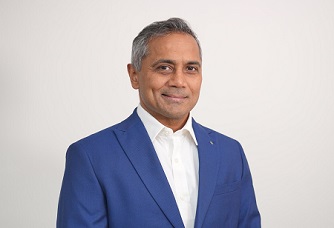
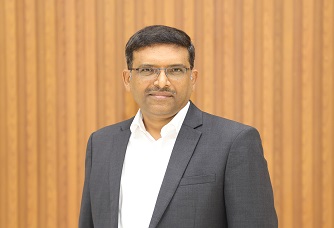
In an interaction with Thiruamuthan, Assistant Editor at Industry Outlook, Arvind Chandra, CEO, Tenneco Clean Air India, discusses India's evolving automotive ecosystem, business transformation, technology-led growth and the strategic priorities shaping the future of mobility.
Arvind Chandra is a transformative business leader with around 30 years of experience across the automotive and industrial sectors in four continents. He has held CEO and senior leadership roles at Tenneco, Spark Minda, Aliaxis, ZF/WABCO, FORVIA and Delphi/PHINIA, leading large teams, manufacturing operations, R&D centers and business transformations.
Read the full interview below to gain deeper insights into India's automotive transformation and the future of clean mobility.
You’ve led global mobility businesses across multiple transformations. How has your leadership approach evolved in navigating disruption today?
The mobility industry is going through a fundamental transformation, driven by electrification, evolving regulations, technology and changing customer expectations. In this environment, our approach has evolved from simply managing change to building an organization that can anticipate change, adapt quickly and create opportunities from it.
Over the last few years, we have focused strongly on operational excellence, productivity, quality, and engineering capabilities, which have created a strong foundation for the next phase of growth. Today, we are increasingly focused on leveraging these capabilities to drive innovation, increase content per vehicle, develop differentiated technologies and expand into new opportunities.
At the same time, we believe that navigating disruption requires close collaboration across engineering, manufacturing and supply chains, as well as with our customers. Our ability to combine Tenneco’s global technology and engineering capabilities with a strong understanding of local market requirements is an important advantage.
Ultimately, our focus is on balancing long-term investments in technology, talent and capabilities with the agility to respond to changing market needs, so that we are not only resilient to disruption but are able to shape the opportunities that emerge from it.
India’s opportunity is not to become the next low-cost manufacturing destination, but to build the technology and engineering capabilities that shape global mobility.
Across turnarounds and scale-ups, what principles guide your decisions when balancing growth with long-term value creation?
Sustainable growth, in our view, is built on a strong foundation of operational excellence, customer trust and the right investments in technology and capabilities. The key is to balance near-term performance with the capabilities required to remain competitive over the long term. At Tenneco, our experience has shown that disciplined execution and productivity create the foundation, while innovation, customer collaboration and the ability to anticipate market needs create the next phase of growth.
There are three principles that guide this approach. First, we invest in technologies and engineering capabilities that address evolving customer and regulatory requirements. Second, we build the right capacity, strengthen localization and improve supply-chain resilience as our programs scale. Third, we maintain financial and operational discipline while investing ahead of demand where we see structural opportunities.
Ultimately, value creation in mobility is not just about growing volumes; it is about building differentiated technology, strengthening our manufacturing and engineering footprint, and creating capabilities that allow growth to compound sustainably over time.
As India positions itself as a key player in the global mobility ecosystem, what factors are driving its emergence as a competitive manufacturing hub?
India’s emergence as a competitive global mobility manufacturing hub is being driven by a combination of market scale, engineering capabilities, a strong supplier ecosystem and increasing integration with global automotive value chains. India today offers both a large and growing domestic market and the ability to develop and manufacture increasingly sophisticated products. For companies like Tenneco, the depth of engineering talent and the growing capabilities of local R&D and manufacturing ecosystems are important enablers of this opportunity.
Another important factor is India’s potential to serve not only domestic customers but also as an export hub for global markets. We are seeing this opportunity through increasing exports from India to Tenneco entities globally, as well as to third-party OEMs. As localization deepens and manufacturing and engineering capabilities scale, India can become increasingly competitive on cost, responsiveness and technology, strengthening its role within the global mobility supply chain.
Also Read: How Advanced Filtration Driving the Future of Sustainable Mobility
With the rapid shift toward electric, connected, and autonomous mobility, how is India’s manufacturing landscape evolving to meet global standards and demand?
India’s manufacturing ecosystem is rapidly moving beyond cost competitiveness to become technology-driven and globally integrated.
The industry is investing in advanced manufacturing, automation, digital tools, engineering capabilities, and localized R&D to support evolving mobility technologies. At the same time, India continues to build strengths across multiple powertrain technologies, including electric, hybrid, alternate fuels, and highly efficient ICE platforms.
An important aspect of India’s evolution is its ability to support diverse mobility pathways. The transition to new mobility will not follow a single trajectory, and manufacturers are adapting by creating flexible, future-ready operations that can cater to changing market requirements while maintaining global quality and compliance standards.
In the context of global supply chain realignments, how is India capitalizing on the “China+1” strategy to strengthen its mobility manufacturing capabilities?
The global supply chain realignment is creating a meaningful opportunity for India, but the opportunity goes beyond being an alternative manufacturing location. India has the combination of a large and growing domestic market, established manufacturing capabilities, engineering talent and a strong supplier ecosystem to serve global customers competitively. For Tenneco, we are increasingly seeing India’s role expand through exports to other Tenneco entities as well as third-party OEMs, across both clean air and suspension businesses.
The next phase will be about deepening these capabilities through localization, technology development, engineering and capacity expansion. As programs scale and new technologies gain adoption, India can increasingly serve as an integrated manufacturing and engineering hub within Tenneco’s global network. This creates an opportunity not only to participate in the China+1 shift, but to build India into a long-term source of technology, manufacturing and exports for global mobility markets.
While policy initiatives like PLI schemes and localization push are gaining momentum, how effective have they been in attracting investments and building domestic capacity?
Policy initiatives such as the PLI scheme, localization measures, infrastructure investments and regulatory reforms have played an important role in strengthening India's position as a global automotive manufacturing hub. These initiatives have encouraged investments in advanced automotive technologies, improved domestic value addition and supported supply chain resilience. At a broader industry level, supportive measures such as GST rationalization, Free Trade Agreements and localization incentives are helping increase India's competitiveness within global automotive value chains.
At Tenneco, this environment has enabled deeper localization, with approximately 90% of procurement sourced locally, supported by a strong supplier ecosystem and dual-sourcing strategies that improve supply continuity and responsiveness. As India's manufacturing and engineering capabilities continue to scale, sustained policy support can help accelerate investments in advanced technologies, exports, and local R&D, positioning India as a preferred global sourcing and manufacturing destination.
At a time when cost competitiveness alone is no longer sufficient, how are Indian manufacturers moving toward value-added, innovation-led production?
Indian manufacturing is increasingly moving from a cost-led proposition to a capability-led proposition, where quality, technology, engineering depth, and the ability to develop and scale products are becoming equally important. Cost competitiveness will remain an advantage, but the real opportunity lies in combining it with technology readiness and strong execution. According to the ACMA–BCG joint study, the next phase of growth for India’s auto-component sector will require world-class manufacturing systems capable of delivering greater speed, productivity and resilience, with smart factory adoption becoming an increasingly important enabler.
At Tenneco, we are seeing this shift firsthand. Our India engineering teams work closely with our global engineering network to develop and adapt technologies for different markets. A good example is our suspension business, where technologies such as DaVinci and semi-active suspension are enabling higher content per vehicle and creating a new dimension of differentiation for OEMs. DaVinci took around three years to develop and perfect, while the experience gained has helped accelerate subsequent applications and customer programmes.
We are also seeing growing interest from Indian and global OEMs, demonstrating that innovation developed for the Indian market can have relevance well beyond India. This is the direction in which we see Indian manufacturing evolving combining cost competitiveness with technology, engineering and execution to become a global source of innovation and manufacturing capability.
Also Read: Zero-Emission Mobility: India's Path to Cleaner Urban Transport
As global OEMs increasingly look for reliable partners, how are Indian manufacturers ensuring quality, scalability, and compliance with international benchmarks?
The definition of a competitive supplier is changing. For global OEMs, it is no longer enough to offer the right price; suppliers need to demonstrate quality, consistency, engineering depth, scalability, compliance and resilience across the entire program lifecycle. At Tenneco, we see quality as an integral part of product development and execution from engineering and validation to supplier management, manufacturing and delivery.
This becomes particularly important as programmes become more technology-intensive and customers increasingly look for partners who can support them through the entire product lifecycle.
Our approach combines a strong manufacturing footprint with engineering and technology capabilities, enabling us to support both domestic and global programs. We are also increasingly using India as an export and engineering hub, with our teams working closely with Tenneco’s global engineering network to develop and localize solutions for different markets.
The growing adoption of technologies such as DaVinci and semi-active suspension, along with our expanding programme pipeline and capacity investments, reflects the depth of capability being built in India. As India’s role in global mobility supply chains grows, the opportunity is to make quality, engineering excellence, scalability and delivery reliability systemic capabilities across the ecosystem, rather than advantages limited to individual companies.
Given the ongoing advancements in automation and Industry 4.0, how are manufacturers balancing technological adoption with workforce readiness and skill development?
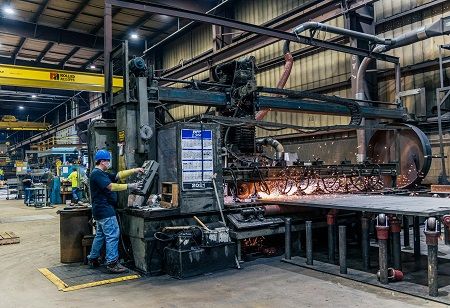
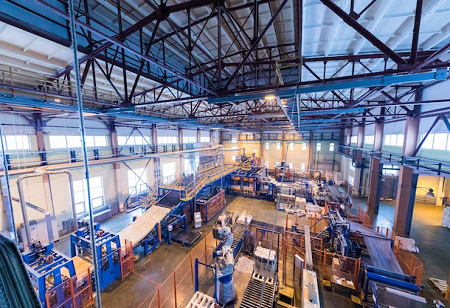
Industry 4.0 is not simply about introducing new technologies; it is about building a smarter, more capable manufacturing ecosystem. At Tenneco, we have integrated advanced manufacturing technologies including robotics, laser welding, automation, digital quality systems and data-driven manufacturing processes across our operations. These technologies support improved precision, quality, productivity and safety while creating greater operational visibility and control.
Our manufacturing operations are guided by the P3 (People, Performance, Pride) operating model, which embeds continuous improvement, standardization and performance management across all facilities. A dedicated Continuous Improvement team drives ideation, implementation and validation initiatives, contributing to productivity improvements, operational efficiency and quality enhancements.
Today, 11 plants are P3 bronze certified, which itself requires a very high caliber of performance across 3 assessment pillars of EHS, Operating Standards, and 5S and is measured via 20+ KPIs covering 8 world-class best practice modules. Now, 4 of these plants have recently attained silver certification and are aiming for gold this year.
Equally important is workforce development. Through Tenneco University, the Emerging Leaders Program, NextUp Plant Leadership Development Program and apprenticeship initiatives such as NAPS, Flexi Apprenticeship, WILP and Weld Labs, we are building future-ready capabilities across leadership, technical and manufacturing domains. We also ensure that 100% of new workers receive health, safety and skill development training, reinforcing our commitment to a highly skilled and safety-focused workforce.
We believe the combination of advanced technology, disciplined execution through P3, and continuous investment in people development will be essential for creating globally competitive manufacturing organizations.
Also Read: Optimizing Production Processes for Zero-Defect Auto Manufacturing
Looking ahead, what strategic priorities will determine India’s ability to transition from a cost-efficient base to a global manufacturing leader in mobility?
India’s transition from a cost-efficient manufacturing base to a global mobility manufacturing leader will depend on five interconnected priorities: technology, talent, localization, quality and resilience. First, India needs to continue investing in engineering and R&D so that more products and technologies can be conceptualized and developed here.
We also need to build a future-ready workforce capable of working across mechanical, electronics, software, data and sustainability disciplines. Deeper localization will be equally critical. The recent increase in auto-component imports, particularly in EV-related components, highlights that there is still significant headroom to build domestic capabilities in emerging technologies.
As reported by Mint, India became a net importer of auto components in FY26, with imports rising 13%, while exports grew 5%. At the same time, Indian suppliers must continue raising quality and compliance standards across the ecosystem, while building greater resilience as geopolitical shifts, tariffs and supply-chain disruptions reshape global sourcing.
The opportunity, however, is substantial. NITI Aayog has identified the potential for India to increase its share of global automotive component value chains from around 3% to 8% by 2030. India’s auto-component industry recorded Rs 7.60 lakh crore in turnover in FY26, growing 12.7%, and ACMA expects the sector to grow another 8–10% in FY27, supported by domestic demand and exports.
For India to realise this opportunity, the ambition should go beyond simply “Make in India” towards “Design, Develop, Make and Export from India.” That means building the engineering, manufacturing and technology capabilities to not only serve India’s growing mobility market, but also develop products here that can compete and scale across global markets.
Finally, for emerging leaders in this space, what skills and mindset will be essential to build globally competitive and future-ready manufacturing organizations?
The leaders who will shape the next phase of Indian manufacturing will need to combine manufacturing discipline with an innovation mindset.
Technical knowledge will remain important, but leaders will increasingly need to understand technology, data, sustainability, global supply chains and evolving customer expectations, while translating these trends into practical business outcomes. Equally important will be the ability to build and lead multidisciplinary teams, as mobility increasingly brings together mechanical engineering, electronics, software, materials science, data and sustainability.
At Tenneco, our culture is built around The Tenneco Way, anchored in our values of Radical Candor, Simplify, Organizational Velocity, Tenacious Execution and Win, while operating through our P3 (People, Performance, Pride) framework. Emerging leaders must combine global thinking with local execution, continuous learning, ownership and a No Boundaries mindset.




We use cookies to ensure you get the best experience on our website. Read more...