Electric mobility is changing more than how India drives; women leaders are challenging conventional thinking about automotive leadership and innovation.
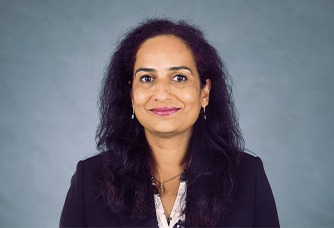
In an exclusive interaction with Thiruamuthan, Assistant Editor at Industry Outlook, Reeti Nageshri, Head of Business Operations, Electric SUVs at Mahindra Group, discusses how women leaders are reshaping India’s electric mobility future. She explores the role of customer-focused innovation and desirable electric SUVs in challenging conventional automotive thinking and building confidence in EV adoption.
With over 15 years of professional experience spanning software engineering, digital transformation, product strategy, marketing, and business operations, Reeti has played a key role in shaping Mahindra’s Born Electric portfolio, advancing EV business strategy, and developing customer-focused mobility solutions.
What has your journey taught you about moving EVs from early adoption to wider acceptance?
Honestly. That people don't adopt technology. They fall for products.
EVs in India used to be sold as the sensible choice: small, practical, good for short city runs, easy on the wallet. Nobody's heart beat faster.
With BE and XEV, we flipped that. We set out to build SUVs people want first, that just happen to be electric. They look like nothing else on the road, they drive beautifully, and with 500+ km of real-world range and a lifetime battery warranty, you stop thinking about the battery and start enjoying the drive.
The proof is in who's buying. About 80% of our EV customers are completely new to Mahindra, and many come from luxury cars. They use these as their main family car, not the second one in the garage. We've gone from zero to 13% of our own portfolio being electric, and we're number one in revenue market share in electric passenger vehicles.
People don't adopt technology. They fall for products. We set out to build SUVs people want first, that just happen to be electric.
Where are women leaders making the biggest difference?
A few months ago, I visited one of our all-women EV workshops, and it took me straight back to Mangalyaan. Women scientists were at the heart of India's Mars mission. And up there in orbit, the spacecraft had no idea who built it. It only knew that it worked.
That's how I see this. I'm interested in capability, not gender. EVs are quietly breaking a lot of old "this is a man's job" thinking — I see women on our manufacturing lines, in our battery plant, in our service workshops, on the showroom floor and leading sales and marketing. A new category doesn't come with old baggage, so there are fewer doors to knock down. The car doesn't care who built it. The customer only cares that it's brilliant.
Also Read: Developing EV Tyres: Adapting to India's Road Conditions
What's still missing to make electric mobility more accessible?
I'd gently push back on the question. From where I sit, adoption is far less uneven than people think. Some of our most exciting growth is coming from tier 2 and 3 cities, and from very different kinds of buyers. One family picks the BE 6, another the XEV 9e, another the XEV 9S, whose more familiar SUV shape is doing especially well in smaller towns.
What was missing was confidence, and that's building fast. With the range our cars give, most customers charge only about twice a month, mostly at home. We're also building our own fast charging network, so the "what if" moments on a long drive keep shrinking. If anything is still missing, it's more people trying it out. One test drive does more than ten articles on range anxiety.
How should companies rethink products around real Indian needs rather than adding more tech?
We don't chase features. We chase desire. And desire is much bigger than looks. It's how the car drives, how it feels when you step in, how comfortable your family is on a long trip, and what it says about your taste. Tech only earns its place if it makes one of those moments better.
That's been our position since day one, and we're sticking to it. We've helped move EVs in India from purely functional to genuinely emotional, and our revenue market share leadership tells us customers agree. Other brands coming in are welcome. A bigger category is good for everyone, including us.
Where does India need stronger collaboration to build a complete EV ecosystem?
The customer sees one car, but lives with five industries: the carmaker, the battery, the software, the charger and the power grid. When any one of them has a bad day, the customer blames the car.
So the collaboration India needs most is around making all of this feel like one smooth experience. Carmakers, charging companies, energy players and government need to plan together, especially on the busy highways where people drive long distances. That's why we're putting our own ultra-fast chargers on high-traffic routes, alongside our own network. The goal is simple. The customer should never have to think about who owns the plug.
What policy change could have the biggest impact on the next phase?
Consistency and credit where it's due. The government has clearly crafted a series of policies to support EV adoption — the PLI scheme for advanced battery and auto manufacturing, FAME and state-level incentives that kickstarted the market, and CAFE norms that are now pushing the wider industry toward electrification. That momentum has done its job. What the next phase needs is a long, predictable runway: when carmakers, charging companies and investors can see several years ahead, they build with confidence.
The other big lever is the highway. Home charging already handles daily life. A policy that fast-tracks ultra-fast charging on key intercity corridors would unlock the next wave of buyers: the ones who want to drive Mumbai to Delhi without a second thought.
What needs to change within companies to build a stronger, more diverse talent pipeline?
Hiring diverse talent is the easy part. Keeping it is where most companies struggle. People rarely leave because they lose ambition. They leave because life happens, like a baby, an aging parent or a move, and the system makes them choose.
So build the system around real life. That means flexible hours, creche support close to work, and promotion cycles that don't quietly pause during parenthood. Make the way back into a big role clear and structured, not a favor. Automation helps too, because it opens up shop floors to everyone.
And then there's culture. The best talent pipeline is a place where a 26-year-old can tell a senior leader, "this isn't working" and get thanked for it.
Where should Indian automakers focus to build products better suited to India?
Start from a clean sheet. Turning a petrol or diesel car into an EV means living with its old compromises. A dedicated electric platform gives you a flat floor, more cabin space, a bigger boot and smarter battery packaging.
Then solve for how Indians actually drive. That means real 500+ km range, 20 to 80% charging in under 20 minutes, and features for real life, like camp mode for the long family trip. And bring the goodies down: auto parking, head-up displays and premium audio shouldn't be locked behind a luxury price tag. Global tech is great, but Indian judgment on what matters is what makes it work here.
What do companies need to get right as they move from launching EVs to building sustainable businesses?
I would state three things. First, a business that stands on its own feet. Subsidies can start the engine, but pricing has to give customers strong value and still make money. Second, service that keeps pace with sales. Every car you sell is a promise, and the service network has to keep it quickly and everywhere. Third, speed of learning. This category changes every quarter, and the winners will be the ones who learn faster than the market.
Also Read: Optimizing Production Processes for Zero-Defect Auto Manufacturing
What change will have the biggest impact on India's premium auto market?
The rules of "premium" are being rewritten. Design and features that used to belong to ₹1 crore+ cars are now available at mainstream prices, and customers have noticed. People who've driven luxury cars for years are moving to Mahindra electric SUVs, and they see it as an upgrade in tech, performance and everyday comfort, not a compromise. We're also seeing business leaders and celebrities choose brands they'd never have looked at before. Premium used to mean the badge. More and more, it means the experience.
What is your personal leadership mantra?
Debug, don't defend.
I started out as a coder, and I still think like one. When code breaks, a good engineer doesn't argue with the bug. She finds it and fixes it. I run everything that way: campaigns, launches, team decisions and my own ideas. The first version of any plan is a guess. What matters is how fast you spot what's broken and how honestly you fix it.
That's also why I want my team to challenge me. Every time someone says, "Reeti, this isn't working," they've just saved us a month. I'll push hard on standards, and I'll protect the people who tell me the truth.
Drop the prefix. You're not a woman leader. You're a leader. The moment you add the label, you agree to be marked on a different scale. Refuse the scale.
Be hard to lose, not just easy to like. Many of us were raised to be liked. In a boardroom, being liked is nice, but being hard to replace is power. Build the skill nobody else in the room has.
Pick problems, not titles. I was a techie who got handed sales and marketing, and I said yes before I felt ready. Walk towards the messiest problem in the company. The titles follow.
Speak in numbers. A spreadsheet doesn't know who built it. When your case is backed by data, the conversation stops being about you and starts being about the answer.
Say it in the room. Not in the corridor after the meeting, and not in a message that night. The idea you hold back is the one someone else gets credit for.




We use cookies to ensure you get the best experience on our website. Read more...