India’s manufacturing competitiveness is no longer about cost alone. Manufacturers now need to raise quality, strengthen resilience and adopt new technologies while building the capabilities needed to serve global OEMs.
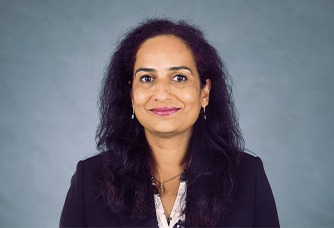
In an exclusive interaction with Thiruamuthan, Assistant Editor at Industry Outlook, Aditi Sharma, President and Chief Manufacturing Excellence Officer, Uno Minda, discusses the changing priorities of manufacturing capability, from quality and resilience to digital adoption and talent. She also shares her perspective on building stronger supply chains, adapting manufacturing for software- and electronics-driven vehicles, and helping Indian component makers earn the trust of global OEMs.
Read the full article below for deeper insights.
After leading quality, supply chain, and business transformation across industries, what has becoming Chief Manufacturing Officer changed about the way you view manufacturing excellence?
It’s been 30 years since I started working, and every experience I have gone through, starting from quality, then moving to plant operations, various factory operations, and later leading it from the corporate level, has shaped my perspective. When I came to work as a Chief Manufacturing Excellence Officer, it became an amalgamation of all the experience I had gained.
What helped shape the role I’m doing right now is the understanding that manufacturing is no longer only about factories. It is about the end-to-end product lifecycle, from my supplier to my customer. Manufacturing has a much wider scope and infrastructure than just thinking about the plant. It requires a more integrated view of operations, quality, supply chain, and customer value.
The other thing is that Indian manufacturing must move beyond cost competitiveness. It is no more about making cheap products. It is about making excellent-quality products faster, with world-class quality, consistency, and operational efficiency. Likewise, digital is also so important. Are we using technologies to really drive manufacturing? Technology can make it lean, agile, and fast.
Then, people and culture remain the ultimate differentiator. The earlier school of manufacturing used to be people-dominated, and we were not even looking at skilled people. Today, with Gen Z and the next generations, it’s very important that people come first, whichever industry we are in. As a CMO, I’m looking at how we can sustain business value by focusing on these three or four aspects of manufacturing.
Manufacturing is no longer only about factories; it is about the end-to-end product lifecycle, from the supplier to the customer
You've worked across automotive, mining, industrial automation, and technology. Which leadership lessons have remained timeless, regardless of the industry or business environment?
I have worked across diversified fields, and that has shaped me into a more agile leader. It has also taught me that it doesn’t matter what you manufacture or which industry you are in; your customer is supreme. Customer centricity should be the starting point for any business model and any leader.
Anything a factory, company, or service industry provides is ultimately for a user. Hence, keeping the customer first, understanding what they want, and anticipating what they could want or what can be a value addition will keep you ahead of the game. That is one thing I have consistently learned across industries.
The other thing I have learned is that technology can be acquired and processes can be replicated, but culture cannot be copied. Culture is the biggest differentiator of any company. People get attracted to culture, and when I say culture, I am not only talking about empathy; it is also a culture of high performance.
Another thing I have learned is that agility is more important than predictability. How agile you are in changing or adapting your decisions according to changing scenarios is critical because so many things are changing—geopolitics, technology, weather, and people from generation to generation.
So, if we are very rigid about who we are and how we will be, the chances of becoming redundant are very high. Therefore, decision-making, resilient supply chains, and agile manufacturing systems are critical.
One more learning is how we move from making short-term gains through cheaper products to creating brand equity by being responsive to customers, building trust, delivering the highest level of quality, and developing sustainable green supply chains. Quality is a growth strategy, not a compliance requirement. That is why we have moved from quality control to quality assurance, and from customer satisfaction towards being obsessed with the customer.
These are a few things that remain common critical growth factors across industries. They are important levers for staying ahead in the game and creating sustainable business value.
Now that you're responsible for end-to-end manufacturing, which business decisions do you view very differently than you did in your previous leadership roles?
In previous leadership roles, we used to replicate what we knew. If we were making one factory, we replicated it at another factory, and that was successful at that time. Volumes were lesser and competition was also less.
Today, as the whole scenario is changing from mechanical to electronics and EVs, capacity investments have become very strategic. You cannot simply build a plant based on three-year volume assumptions; you have to build the capacity and capability to adopt new technologies and respond to changing requirements. You have to disrupt the market and constantly look for growth opportunities.
Supply chain resilience is another area I view differently. Earlier, we used to keep a lot of inventory and wanted everything to be done by us. Now, it is about creating the right partners, carrying less inventory, and being able to shift quickly from one part to another. Technology investment is also very important. Companies investing in digital and new-edge technologies and developing modular plants are going to be ahead in the game.
Sustainability is another game changer because green will become a differentiator in the market. Customers and OEMs will increasingly look for partners who can provide a green supply chain. Another important decision is how we invest in talent. In such a fluid world, people who are deeply grounded, knowledgeable, and committed become a critical asset. Capital is no longer only about physical assets; a significant part of capital investment should be on people.
Can zero-defect manufacturing truly be achieved, or should the industry shift its focus from eliminating defects to building systems that consistently prevent them?
We should never concentrate on making defects. Quality is very important. Every business needs to have a mindset of zero-defect manufacturing. Companies that have achieved Six Sigma or higher levels demonstrate that zero-defect manufacturing can be pursued systematically.
Being 30 years in the industry, I can tell you we can create zero-defect manufacturing. We have to have robust product design and design for manufacturability. When I’m saying my plant, I need to not look at only my plant; I need to look at the whole supply chain. It starts from the supplier and goes up to the customer.
There are times when my customer can fail my product, so we also need to look at the customer’s design and capability to incubate my part into their system. Similarly, with suppliers, we need to constantly look at process capability, critical-to-quality parameters, and the right people at those stations. We have to move from reaction to prevention and predictability. It has to happen in how we design, rather than how we later correct.
Global OEMs today expect speed, innovation, quality, cost efficiency, and resilience simultaneously. Which expectation is becoming the most difficult for manufacturers to consistently deliver?
Resilience has become the most difficult expectation to consistently deliver in today’s environment, and the reason is that there are too many dependencies. Supplier ecosystems are not always adequate, while logistics networks can be disrupted by geopolitical events, blocked tunnels, or other interruptions that prevent material from moving. We also cannot keep too much inventory with us because the world is changing every day, making redundancy a problem when excess inventory is sitting with us.
Raw material availability is another challenge. We recently had rare-earth material unavailability, and those kinds of disruptions are becoming a problem. Digital infrastructure is also critical; fiber cuts and other disruptions can make it very difficult for us to run. Workforce capability is another concern because today’s generation is very fluid and wants to keep moving between companies. Hence, the knowledge we used to call tribal knowledge is becoming difficult to retain. Risk management is also becoming more critical as everything moves into cyber, bringing risks around scams, fraud, and data fudging.
The solution is how we put the right checks and balances in place and have better analytics to understand how to navigate this whole VUCA moment. Building resilience across the value chain is going to be the game-changer. If you are a resilient company, you have no problem responding to global requirements; if you remain traditional in your way of working, it becomes a roadblock.
As vehicles become increasingly software and electronics driven, how should automotive component manufacturers rethink their manufacturing strategies to stay ahead of changing OEM requirements?
From mechanical excellence to intelligent manufacturing is going to be the game changer. Automotive component manufacturers need to change their mindset.
Even today, I see that every conversation starts with cost; it doesn’t start with capability. Am I capable of creating zero-defect production? Are validations and testing happening at the right time? Is software-hardware integration correct? Have functional safety requirements been taken care of? Everything has to move in the direction of not only looking at what is failing today, but how reliable my parts are going long term.
Earlier, mechanical parts could be tested through repeated cycles to understand at what stage they would fail. Electronics is not like that; predictability is much lower. Hence, robust design is very important. Quality systems have to expand beyond physical defects and look at system-level performance and reliability.
There also needs to be strong collaboration with OEMs to understand their expectations and our limitations. It is not only suppliers or Tier 2s; customers and suppliers need to work together to build this expertise.
We need to invest aggressively in digital manufacturing and new-edge technologies, while moving repetitive work into electronics or digital systems. Strategic sourcing will also become important. OEMs can join hands with suppliers on common semiconductor chips and PCBs, while dual sourcing should be a requirement to avoid dependency.
Critical component dependencies should be localized, with better supply-chain visibility, so we are not hand-to-mouth. These will become key differentiators.
Looking ahead, what will ultimately determine whether Indian component manufacturers become preferred global partners rather than alternative sourcing destinations?
Trust will be the ultimate differentiator, and I’ll give you a very recent example. All of us used to think China was a cheap-product country. We used to say, “Oh, this is Chinese,” meaning the quality and reliability would be poor.
Today, China has taken over the world because it worked on one parameter called trust. That trust came from innovation, reliability, resilience, and becoming a market leader in certain areas. If you look at electronics, semiconductors, and rare-earth materials, they are leaders.
Customer needs to know that if they go to a company, they will get quality, supply, delivery, and cost at the right level.
Second is innovation. Let us not give customers only what they want. Let us also show customers how they can become a differentiator in the market and take market leadership. How we participate with customers, understand their needs, and give them one level up will determine whether we become a preferred partner.
Third is resilience. Customers are willing to pay a premium as long as you do not fail them on supply, reliability, and quality.
Digital-smart companies will have information faster and respond to changing customer expectations faster, building trust and dependability. Leadership and talent are equally important: having people who understand what it means to be global, are agile in changing ways of working, and can scale and sustain long-term growth.
What’s your personal mantra?
My personal mantra has been: build people, build capability, and build the future. Very simple. Before building all of it, build yourself.
In the last 30 years, every single year, I have invested in keeping myself relevant to today. I learn from what is changing, and that is what I tell everybody: if you are not learning one new thing in your personal or professional life every year, you are going to become redundant.
Sustainable success comes from combining courage, competence, and continuous learning with a commitment to create value for people, customers, and society.
Key Advice for Emerging Women Leaders:
Aditi Sharma brings over three decades of experience across manufacturing, supply chain, quality, and business transformation, with leadership experience at Uno Minda, Schneider Electric, Vedanta Resources, Cummins, Ford, General Electric, Dell Technologies, and Vodafone. Her expertise spans manufacturing excellence, supply chain strategy, quality, digital manufacturing, ESG, P&L management, and organizational capability building across complex, multinational operations.




We use cookies to ensure you get the best experience on our website. Read more...