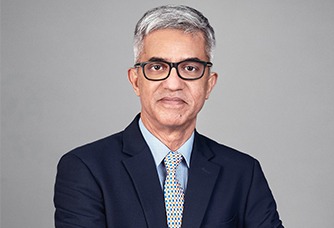
In an exclusive interaction with Thiruamuthan, Assistant Editor at Industry Outlook, Arnab Banerjee, MD & CEO, CEAT Limited, discusses how tyre manufacturers are redesigning EV tyres for India’s road conditions. He highlights innovations in material technology, tread design, durability, noise reduction, and performance optimization to address EV load, torque, climate conditions, and road challenges while ensuring efficiency and compatibility across multiple powertrains. Arnab Banerjee is a seasoned business leader with over 3 decades of experience across automotive and consumer sectors. His expertise includes global business strategy, sales and marketing, customer-centric innovation, leadership development, and performance management.
As EV adoption accelerates in India, how are tyre manufacturers adjusting their design and technology to address challenges like load distribution and tyre wear on EVs?
As India accelerates toward large scale electric mobility, tyre technology is evolving to meet the distinct performance requirements of electric vehicles. The key engineering priorities for EV tyres are low rolling resistance, lower noise levels and higher durability.
Low rolling resistance is achieved through new generation material technologies and cavity designs that reduce heat build-up, improving efficiency without compromising performance.
Noise reduction is addressed through advanced tread pattern designs, aerodynamic sidewalls and noise-cancellation technologies such as foam. Since EVs operate more quietly, tyre noise becomes more noticeable. For instance, CEAT’s calm technology further enhances the EV driving experience by reducing cabin noise.
EVs also carry higher loads due to battery weight and deliver instant torque, which can accelerate tyre wear. To address this, EV tyres incorporate extra-load or reinforced constructions along with durable tread compounds.
At the same time, tyre technology is moving towards convergence across vehicle types. As the market evolves into a multi-fuel ecosystem—petrol, diesel, BEV, HEV, CNG and hydrogen-tyres designed for EV requirements will increasingly support multiple powertrains, enabling common solutions across EV and ICE vehicles.
As India accelerates toward electric mobility, tyre technology is evolving to deliver lower rolling resistance, reduced noise levels and greater durability for EV performance.
With India’s road infrastructure posing challenges, what innovations in tread design and material technology are tyre manufacturers using to improve EV tyre durability?
Indian road conditions present a unique operating environment for tyres, shaped by both condition-led and conditioning-led challenges.
Condition-led challenges include sharp edges, potholes and mixed surfaces such as concrete and tar, while Conditioning-led challenges arise from behavioral factors such as tyres often running under-inflated due to inconsistent pressure maintenance.
To address this, manufacturers are strengthening both tread design and material technology. Durability is enhanced through highly reinforced tread compounds with improved cut resistance and lower heat build-up. Silica carbon material dispersions further improve heat management, wear consistency and resistance to cuts.
At the same time, tread patterns are evolving with higher tangential stiffness to handle EV loads and torque. In addition, 3D sipe technologies improve tread stability and durability, while groove geometries are designed to reduce crack initiation and minimize chipping on coarse aggregates.
From a construction perspective, tyres incorporate stronger reinforcing fabrics and reinforced sidewalls, improving resistance to potholes, pinch impacts and sidewall damage.
Leader's Thoughts: Balancing Efficiency and Innovation in R&D Operations in Automotive Sector
Considering the increasing focus on sustainability, how are tyre manufacturers in India addressing the growing demand for eco-friendly materials and improving the recyclability of EV tyres?
Sustainability has become a parallel priority as tyre manufacturers support India’s green mobility goals. Across the industry, there is growing use of sustainable materials such as rice husk silica, recovered carbon black, bio-based oils, recycled steel and textiles. These materials must be integrated without compromising grip or durability, requiring advanced polymer systems and precision filler dispersion.
Manufacturing processes are also evolving, with plants reducing boiler dependence, adopting solar energy and improving thermal efficiency. Regulatory frameworks such as Extended Producer Responsibility (EPR) are further strengthening recyclability and circularity.
This commitment is echoed in CEAT’s commitment, which is reflected in the CIRCL range—CIRCL 50 tyres with 50 percent sustainable materials already available for consumers and CIRCL 90 tyres with 90 percent sustainable material content tested for road readiness. Achieving road-ready performance at this level places CEAT among a small group of global innovators. Beyond materials, CEAT also participates in the INROAD project, which focuses on developing sustainable rubber plantations.
As demand for EV-specific tyres grows in India, how are manufacturers addressing the unique challenges of material optimisation and tyre performance to meet EV standards?
EV tyres must address multiple engineering parameters simultaneously, including heat management, noise reduction, grip, rolling resistance and wear. Instead of relying on a single EV specific compound, manufacturers optimize several factors such as compound chemistry, belt stiffness, sidewall geometry, footprint design and tread patterns.
Another key factor is that vehicle characteristics also influence tyre development. EVs deliver sharper torque curves than ICE vehicles, requiring tyres to remain stable under higher instantaneous loads. In India’s diverse market, manufacturers are therefore prioritizing EV capable tyres rather than EV-exclusive ones, enabling compatibility across multiple powertrains.
Also Read: Inside India's Push for Sustainable Tyres and Green Mobility
With the impact of extreme heat and heavy monsoons in India, how are manufacturers optimising tyre composition to ensure EV tyres offer both heat resistance and wet traction?
Indian climatic conditions require tyres to perform reliably in extreme heat and heavy monsoon rainfall. To address high-temperature conditions, heat resistance is achieved through tread compound technologies and structural design that reduce tyre flexing and heat build-up, improving both durability and efficiency.
For wet road stability, wet traction is delivered through compound tuning and contact patch optimization. Additionally, new generation silica and nanotechnologies in reinforcing fillers help maintain wet and dry grip while controlling heat build-up and rolling resistance.
Tread patterns incorporate optimized grooves and sipe designs to improve water evacuation and wet grip. To balance these requirements, achieving high wet braking performance while maintaining low rolling resistance requires careful simulation and validation during development and manufacturing.
As electric vehicle adoption grows, how are tyre manufacturers addressing the need for low rolling resistance without compromising grip and handling for Indian road conditions?
Indian roads require tyres that deliver efficiency, grip, durability and sustainability simultaneously. Low rolling resistance and grip are achieved through reinforcing fillers such as carbon black and silica combined with next-generation polymers like SSBR.
Hardening the tread is not a customer-friendly scientific direction. Instead, manufacturers focus on structural optimization, compound engineering, footprint design, reduced internal friction and improved material dispersion to enhance stability and performance.
At CEAT, Design Studio capabilities translate customer keywords into sketches and 3D tread visualizations, combining emotional design with engineering functionality. The modern EV tyre has evolved into a sophisticated technology product designed to meet global standards while addressing uniquely Indian operating conditions.


We use cookies to ensure you get the best experience on our website. Read more...