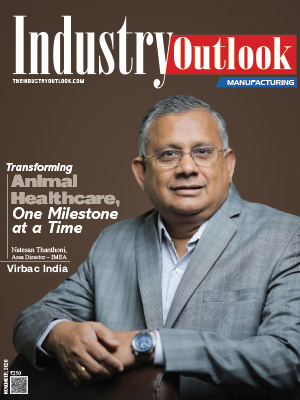
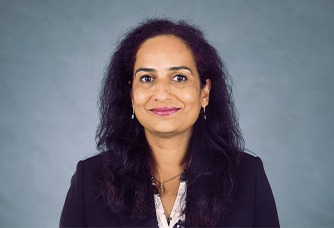
Vaneet Kumar, Chief & Executive Director (Batteries), PCBL Chemical (NSE: PCBL & BSE: 506590), engaged in a conversation with Thiruamuthan, Assistant Editor at Industry Outlook, discusses the technological and market forces reshaping India’s battery industry and the evolving opportunities around next-generation battery materials. He shares insights into the rise of silicon anodes, the growing demand for higher energy density, manufacturing localization, supply-chain resilience, cost optimization and the factors that could shape India’s position in the global EV battery ecosystem.
Read the full conversation to understand how silicon-based anode materials could redefine EV range, charging speed and affordability while creating new opportunities for India’s battery manufacturing ecosystem.
From your experience in the battery industry, where do you see the biggest shift happening today – in battery technology, the way batteries are made, or the markets and applications driving demand?
I believe the transformation is happening across both market development and technology. New markets are emerging rapidly, particularly with advancements in artificial intelligence and the growing energy requirements of data centers. Earlier, a significant proportion of battery consumption was associated with mobility. Today, the stationary energy-storage market is also evolving rapidly, and we have seen strong growth in the storage segment in recent months.
At the same time, several new application areas are developing quickly, including drones, aerial vehicles, portable devices, and wearables. These segments are creating additional opportunities for battery adoption and are also introducing new technology requirements.
Traditionally, lithium-ion batteries were initially developed for consumer electronics before expanding into automotive applications, where large-scale commercialization subsequently took place. However, emerging applications such as data centers, drones, aerial vehicles, and wearable devices require batteries with different performance characteristics.
We need technologies that offer higher energy density, lower weight, greater flexibility, faster charging, and the ability to provide uninterrupted power for longer durations.
Therefore, both the product and the market are evolving faster than before. What was previously a relatively gradual transformation, partly because demand from several industries was limited, is now accelerating significantly.
A combination of new technologies, newer battery chemistries, and greater reliance on reused materials can help India build a more sustainable and resilient battery supply chain
With battery technologies evolving so quickly, how has your experience in the industry shaped the way you evaluate and make decisions around new technologies?
Decision-making around any new technology requires a holistic evaluation, irrespective of whether the market is changing rapidly or gradually.
Before making an investment decision, companies need to evaluate whether the technology is scalable, sustainable, and commercially viable. They also need to assess the supply chain and determine whether the technology is compatible or fungible with existing technologies.
Earlier, individual battery technologies could remain dominant for a relatively long period, which made these evaluations comparatively straightforward. Today, the environment is much more dynamic. Within the lithium-ion ecosystem itself, multiple technologies are evolving, while technologies beyond lithium are also developing rapidly.
Therefore, technology decision-making has also become more dynamic. In this environment, having the right set of data points is critical.
My approach has always been to evaluate a technology beyond whether it is technically proven. I look at whether it can be scaled, whether it can be produced with a de-risked supply chain, and whether it can meet the commercial expectations of customers. These factors are essential in determining whether a technology can move successfully from development to commercialization.
Silicon anodes are increasingly being positioned as a next-generation battery technology. What makes silicon particularly promising for improving EV range and charging speed?
Silicon is an extremely interesting material because of two unique properties. First, its capacity is significantly higher than that of conventional anode materials. Second, silicon is widely available, which means there are no major geographical constraints on its production.
This combination creates a significant opportunity, particularly for electric mobility, where driving range remains an important consideration for consumers. With graphite, the theoretical maximum capacity is around 350 milliampere-hours per gram, whereas silicon has the potential to reach approximately 2,000–2,500 milliampere-hours per gram.
This substantial difference in capacity makes silicon a highly attractive material for next-generation batteries. It has its own inherent challenges, but these are being addressed, and silicon can potentially become a stable and reliable alternative to graphite-based anodes.
Beyond range, silicon also offers an opportunity to improve charging speed. Conventional graphite anodes have limitations when charging rates are increased beyond a certain point because lithium can accumulate on the anode side, creating challenges for further improvements in charging speed.
Silicon provides an opportunity to overcome some of these limitations and enable faster charging.
Therefore, silicon has the potential to address two important challenges simultaneously — longer driving range and faster charging. This makes it a potentially important material for the next generation of batteries.
The move beyond graphite is becoming an industry-wide conversation. Do you think alternative battery materials are becoming increasingly important for India?
It is not only India that needs alternative battery materials; the industry as a whole needs them.
From a technical perspective, graphite is approaching the limits of the capacity that can be achieved from conventional anode materials. On the cathode side, significant progress has already been made through high-nickel chemistries and LFP. Therefore, further improvements in battery energy density increasingly require innovation on the anode side and the adoption of newer materials.
This is where silicon fits particularly well.
There is also a supply-chain and sustainability consideration. Producing artificial graphite and carrying out the graphitization process requires significant energy. Silicon, as an alternative material, has the potential to be produced with lower energy requirements and is widely available.
Therefore, for geographies where battery industries are developing, alternative materials such as silicon can provide both technological and supply-chain advantages.
Also Read: Sustainable Battery Materials Driving Clean Energy Transition
If silicon anodes prove viable at scale, what does India need to do to adopt silicon-based anodes and build the manufacturing ecosystem around them?
India is relatively new to large-scale battery material and battery manufacturing, although the industry is growing rapidly. Silicon itself, however, is not a new material. It has already been commercially produced and has been part of industrial supply chains for a long time.
The challenge has been its application in batteries. Silicon-based batteries require additional design considerations to manage the swelling of silicon particles during operation. This challenge has been addressed to a significant extent, enabling materials with better stability and cyclability.
Commercial products incorporating silicon are already available, which indicates that the technology is becoming increasingly viable.
For India, the next step should be to work with early adopters and applications that require very high energy density. This would allow the industry to begin developing the necessary supply chain.
While silicon is widely available, battery-grade silicon requires very high-purity feedstock. Establishing reliable sources of high-purity silicon will therefore be an important challenge for India.
India also needs to scale up the equipment and manufacturing capabilities required to produce silicon-based anode materials. This requires coordinated efforts from industry and policymakers to localize the technology and make it commercially affordable.
Apart from higher range and faster charging, what other advantages can silicon anodes bring to EV batteries?
The improvement in range comes primarily from the higher energy density of silicon. Within the same weight and physical space, we can incorporate more energy by increasing the proportion of active material.
When more active material can be incorporated into a battery system, the relative contribution of passive materials can be reduced. This creates an opportunity to optimize the overall cost of the battery.
Once silicon becomes a commercially scaled product, it has the potential to become more cost-effective than graphite-based products on a dollar-per-kilowatt-hour basis. The increase in energy capacity can be significantly greater than the corresponding increase in material cost.
Silicon can therefore potentially deliver a significant improvement in energy density, while the increase in cost remains comparatively marginal. This creates an important opportunity for cost optimization.
In addition, silicon can potentially be produced locally and with lower energy requirements. This creates advantages in terms of both sustainability and localization.
Therefore, cost optimization, sustainability, and localization are three important advantages that silicon-based anodes can bring to EV batteries. As adoption increases manufacturing scales, these benefits could become even more significant.
What are the key challenges preventing silicon-based batteries from achieving mass production and wider adoption?
One of the primary challenges is cyclability. Silicon can provide higher energy density and power capabilities, but historically this has involved a trade-off with battery life.
Therefore, improving the cycle life of silicon-based batteries is critical. The technology needs to deliver higher performance while maintaining an acceptable product life. Once the cyclability challenge is sufficiently addressed, adoption can accelerate.
The second challenge is that the overall supply chain for silicon-based batteries is still relatively small because current adoption remains limited. The industry needs specialized fillers, materials, solutions, and form factors to support large-scale production.
These challenges need to be addressed together. We need to improve cyclability while also developing production for specific applications so that the associated supply-chain ecosystem can mature.
Early adoption could come from applications such as wearables, mobile phones, drones, and aerial vehicles. These segments can provide an initial opportunity because their expected product life is generally shorter than that of electric vehicles and energy storage systems.
Once the technology is proven in these applications, the next step would be wider adoption in EVs and energy-storage systems.
Do you expect silicon anodes to make EV batteries more affordable, or will they remain a premium technology?
In the long term, I believe silicon-based anodes will make EV batteries more affordable.
However, this is a journey that requires commercial-scale production of silicon-based anode materials, improvements in battery cycle life, and the development of a localized supply chain.
Once these challenges are addressed, silicon-based anode materials have the potential to contribute significantly to making batteries more affordable.
Also Read: How Battery-as-a-Service Is Reshaping India's EV Economics
When can we expect EVs equipped with silicon-anode technology to reach Indian roads?
I believe it could happen relatively quickly. There are already materials under testing, and early-stage prototypes are currently being developed.
If these initial prototypes deliver positive results, silicon-based battery technology could enter the Indian market through specific vehicle models and segments.
Adoption could also accelerate alongside the broader growth of electric mobility. As EV adoption increases, the penetration of newer battery technologies is likely to increase as well.
It is also important to note that silicon-based batteries are already being used in certain EVs in global markets.
India is still developing its advanced battery ecosystem, while countries such as China, the US, Japan, and South Korea have moved ahead. What needs to change, particularly in the context of critical-mineral dependence?
India's electric-vehicle adoption has historically been slower than in some of the countries mentioned, but the pace is now increasing rapidly.
The growth of electric two-wheelers over the last few years has been significant. We are also seeing substantial electrification of three-wheelers used for last-mile connectivity, along with strong growth in electric buses.
Passenger-car adoption has been comparatively slower, partly because battery prices were previously high. However, battery prices are declining, making EVs increasingly affordable and competitive with conventional gasoline and diesel vehicles.
Electric powertrains also offer opportunities to add more features while maintaining a comparatively simple powertrain architecture. As concerns around range and safety continue to diminish, EV adoption is likely to accelerate further in India.
Critical minerals remain a major challenge, and newer battery chemistries can play an important role in creating a more sustainable long-term roadmap.
India needs to prioritize technologies that can be produced locally and support a more sustainable supply chain. At the same time, existing battery technologies provide significant opportunities for developing a domestic circular ecosystem.
Any critical minerals entering the country through batteries — including nickel, cobalt, manganese, and lithium — should ideally remain within the domestic ecosystem rather than leaving the country.
If this can be achieved, there is significant potential to reuse these materials. LFP batteries, for instance, use materials that are largely available locally, with lithium being the notable exception.
Lithium itself can be sourced from multiple countries. The challenge is that processing capacity is concentrated in particular geographies. Therefore, a combination of new technologies, newer battery chemistries, and greater reliance on reused materials can help India build a more sustainable and resilient battery supply chain.
Looking ahead, do you see silicon anodes giving India a real advantage in the global EV battery market?
Silicon is still an emerging technology, and there is currently no single geography that has complete dominance over it. Western countries have been developing silicon technologies for some time and therefore have technological advantages, while companies in Eastern markets are also developing the technology.
The important opportunity for India is that the dependence on a single geographical source for silicon inputs is relatively limited. The material and the technology are accessible across multiple geographies.
This creates an opportunity for India to develop silicon as a mainstream battery material and establish a stronger position in the global battery value chain.
The accessibility of both the material and the technology gives silicon an important advantage compared with technologies that are heavily concentrated in a particular geography.
On a personal note, what is your personal mantra?
My personal mantra is centered around three key passions.
The first is health. I believe in maintaining an active lifestyle and staying engaged beyond work through activities such as working out, walking, and running. Health is therefore an important personal priority for me.
My second passion is batteries and the development of a strong battery industry in India. I am a strong believer that India has significant potential to develop batteries not only for the domestic market but also for the rest of the world. This belief is one of the reasons I came back to the country, and contributing to the development of this industry and building it into one of the world's leading industries is an important personal goal for me.
My third passion is spending time with my family, particularly during vacations, and traveling. I enjoy exploring new places with my family and children. Traveling has also given me the opportunity to experience different cultures, countries, people, and cuisines, which has provided me with a broader perspective.
These are the three key passions that remain an important part of my personal priorities.
What advice would you like to share with emerging leaders in the battery and EV industry?
My key advice would be to believe in yourself and focus on creating something meaningful.
Emerging leaders should not limit themselves to achieving short-term success. They should think about what they want to create and the kind of legacy they want to leave behind, along with creating something that benefits the country as well as the people in it.
The primary objective should be to build something that creates lasting value and continues to be remembered in the years to come.
About the Spokesperson:
Vaneet Kumar brings over 15 years of battery technology and energy storage experience, with leadership across battery systems, product development, R&D, customer business, and industrialization. His career spans PCBL Chemical, Adani New Industries, SVOLT Energy Technology, GreatWall Motors, Samsung SDI, Maruti Suzuki, and DRDO. He has worked across EV and energy storage applications, advancing lithium battery technologies while focusing on safer, more sustainable next-generation battery solutions.




We use cookies to ensure you get the best experience on our website. Read more...