India's Critical Minerals strategy is becoming a key part of its foreign policy. The country is signing agreements with mineral-rich nations to secure supplies for future industries.
Critical Minerals are essential for electric vehicles, semiconductors, renewable energy, and defense manufacturing. As global competition grows, India wants to reduce its dependence on imports and build stronger supply chains.
The latest agreement came during Prime Minister Narendra Modi's visit to Melbourne. Australia agreed to export uranium to India for power generation. The deal adds to India's growing list of mineral partnerships with the United States, France, Indonesia, and Quad members.
According to the Ministry of Mines, critical minerals face a high risk of supply disruptions. However, they remain essential for the economy and national security.
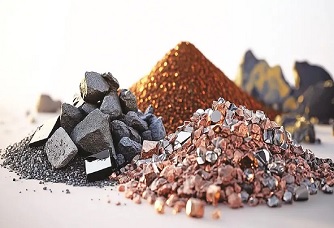
These minerals include lithium, cobalt, nickel, copper, graphite, and rare earth elements. They are used to make:
The International Energy Agency says these minerals are vital for clean energy technologies. Demand is expected to grow as countries expand green energy and high-tech manufacturing.
One major concern is China's dominance. China controls about 70 percent of global rare earth mining. It also handles nearly 85 to 90 percent of global processing. This gives Beijing significant influence over global supply chains.
Also Read: Greener Chemical Manufacturing: The Industry's Push for Sustainability
India has identified 30 critical minerals under the National Critical Mineral Mission (NCMM). The mission aims to boost exploration, mining, processing, and recycling.
Official data shows India has the world's third-largest rare earth resources. It has around 13.15 million tonnes of monazite. This contains an estimated 7.23 million tonnes of rare earth oxides.
The Geological Survey of India has also found a 5.9-million-tonne lithium deposit in Jammu and Kashmir's Reasi district. Smaller deposits have been identified in Karnataka, Rajasthan, and Chhattisgarh.
Despite these reserves, commercial mining remains limited. India imported about 12.47 million tonnes of critical minerals during 2024-25. The import bill was led by platinum group elements, phosphorus, nickel, molybdenum, and tin.
India also remains fully dependent on imports for lithium, cobalt, and nickel. These minerals are essential for battery manufacturing.
The Institute for Energy Economics and Financial Analysis says China dominates India's synthetic graphite imports. Other suppliers include Australia, Chile, Finland, Belgium, Japan, and Tanzania.
India's electric vehicle plans are increasing demand further. The government wants EVs to account for 30 percent of new vehicle sales by 2030. S&P Global Mobility estimates demand for EV lithium-ion batteries could rise nearly 35 times between 2023 and 2035.
India is strengthening ties with several mineral-rich countries. The goal is to secure long-term supplies and reduce geopolitical risks.
Recent agreements include:
India is also expanding cooperation with Japan, the United Kingdom, the European Union, Brazil, Canada, Germany, Vietnam, and South Africa. Discussions are also underway with Chile, the Democratic Republic of Congo, Mongolia, Morocco, Mozambique, and Saudi Arabia.
At home, the NCMM is driving domestic exploration. The Geological Survey of India will undertake 1,200 exploration projects between 2024-25 and 2030-31. The government also plans to auction more than 100 critical mineral blocks.
The Union Budget FY27 announced rare earth corridors in Odisha, Kerala, Andhra Pradesh, and Tamil Nadu. These hubs will support mining, processing, research, and magnet manufacturing.
India is also encouraging companies to acquire overseas mineral assets. Hyderabad-based Midwest Ltd recently became the first Indian private company to secure critical mineral resources abroad through an agreement with Indonesia's state-owned PT Perusahaan Mineral Nasional (PERMINAS).
By expanding global partnerships and strengthening domestic production, India aims to secure the minerals needed for its clean energy, technology, and manufacturing ambitions.




We use cookies to ensure you get the best experience on our website. Read more...