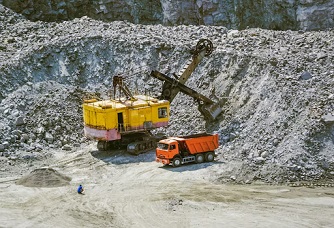
India may not need to dig deeper to find its next big source of critical minerals. Instead, the answer could already be lying above the ground in old mine dumps, waste rock, and tailings.
Critical minerals are at the center of a new policy being prepared by NITI Aayog, which plans to recommend a framework for recovering valuable resources from mining waste.
The move aims to strengthen India's mineral security, reduce import dependence, and support the country's growing demand for electric vehicles, renewable energy, and advanced manufacturing.
The proposed framework will focus on extracting valuable minerals that remain trapped in mine waste generated over decades. Many old mining sites still contain usable quantities of minerals that were earlier considered uneconomical or difficult to recover due to limited technology.
India's demand for critical minerals is rising rapidly as industries shift towards clean energy and modern technologies. These minerals are used in batteries, solar panels, wind turbines, semiconductors, and electronic devices.
Instead of relying only on new mining projects, the government wants to make better use of existing mining waste. This approach can unlock hidden resources while reducing the environmental impact of fresh mining activities.
The framework is expected to identify different types of mine waste that may contain valuable minerals, including:
The recovered minerals may include lithium, cobalt, nickel, graphite, copper, and rare earth elements, all of which are considered essential for India's energy transition and manufacturing sector.
Also Read: Localization Without Isolation: India’s Semiconductor Strategy
The proposed recommendations are expected to create a structured system for assessing, recovering, and processing minerals from mine waste. This could encourage both public and private sector investments in advanced recovery technologies.
The initiative is also expected to support the government's broader goal of building a secure domestic supply chain for critical minerals. India currently depends heavily on imports for many of these resources, making supply vulnerable to global disruptions.
Key objectives of the proposed framework include:
Recovering critical minerals from mine waste offers both economic and environmental advantages. Since the material has already been extracted from the ground, processing it can reduce the need for new mining in certain cases.
The approach can also help lower the volume of mining waste stored at sites, reduce land degradation, and improve the management of old waste dumps. At the same time, companies could generate additional value from resources that were previously discarded.
The proposed framework complements India's wider efforts to strengthen the critical minerals ecosystem through exploration, recycling, and domestic processing. As demand continues to grow, recovering minerals from mine waste could become an important part of ensuring long-term resource security.
If implemented effectively, the policy could transform mining waste from an environmental burden into a valuable source of essential minerals. For India, what was once considered waste may soon become one of its most important resources for supporting industrial growth and the clean energy transition.






We use cookies to ensure you get the best experience on our website. Read more...