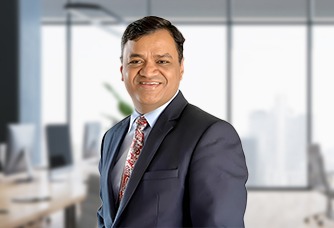
In an exclusive interview with Thiruamuthan, Assistant Editor at Industry Outlook, Sanjay Gupta, India Country Head & Chief Development Officer, L&T Semiconductors Technology, discusses how India’s energy transition is driving a shift from traditional engineering roles to advanced skills in semiconductors, software, and AI, requiring continuous workforce transformation. He emphasizes blending legacy expertise with new talent, supported by flexible models, partnerships, and sustained skilling efforts.
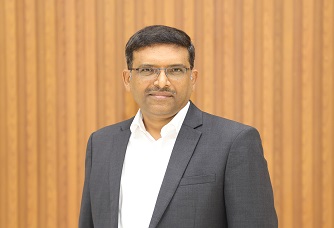
Sanjay Gupta is a seasoned leader with over 3 decades of experience, specializing in semiconductor design, embedded systems, and automotive technologies. Currently with L&T Semiconductor Technologies, he has held leadership roles at Motorola, Freescale, NXP, and Minda Corp., excelling in innovation, P&L management, and team building.
With energy companies operating across conventional, renewables, and emerging segments, how are workforce strategies adapting to manage vastly different skill, safety, and operational requirements?
The energy sector is undergoing significant transformation in India. Since independence, India’s total energy consumption is projected to grow 3 to 4 times over the next 15–20 years—an expansion that is unprecedented in modern history.
Even in renewables today, the country is clocking around 100 gigawatts, and this is expected to grow, as per the Prime Minister's target, to 500 gigawatts of renewable energy. If one does the math, it means that every single day about 50 megawatts of power needs to be added to reach that target, which seems almost next to impossible. However, the country is taking strides in that direction.
On one hand, there is traditional power generation from standard hydro plants. Power is generated, then transmitted, then distributed, and eventually reaches last-mile connectivity to homes through energy meters or smart energy meters. The entire power ecosystem, therefore, has a multi-dimensional implementation with technology as a core focus area.
Another key angle in the power segment is generation. In renewables, solar is the most prevalent option. Almost 50 percent of the renewable targets are expected to come from solar. If traditional coal and hydro are kept separate, wind and waste-based power generation emerge as secondary sources, followed by new-age, smaller categories focused on reducing carbon footprint and generating power from waste.
The question then is how workforce strategies are dynamically changing across traditional, renewable, and futuristic segments. The answer lies in understanding why the dynamics of talent and workforce are evolving.
In traditional power plants, the required skills were largely engineering-driven—primarily electrical engineering and high-voltage power engineering—along with mechanical and civil engineering capabilities for large-scale plant setup.
With the transition to new-age power generation such as solar, energy is generated in DC and then converted into AC at the required frequency. This AC-DC-AC conversion involves rectifiers and inverters, which rely heavily on power semiconductors such as MOSFETs. As voltage levels increase, semiconductor technology is evolving from silicon to silicon carbide and gallium nitride.
These new-age semiconductor technologies require very different skill sets. There is a need for device physics experts with strong material science understanding, as well as process engineers who can work at the foundational level with fabrication units—controlling doping levels, transistor dimensions, and enabling the required power, current, and voltage for advanced semiconductor and power electronics design.
In the case of wind energy, power is generated in AC, but at a different frequency. To make it usable, it is first converted into DC and then back to AC at the desired frequency.
Energy stands at an inflection point where semiconductors, renewables, and policy alignment can transform India into a global technology leader.
Another important aspect is geography. Renewable generation is concentrated in states such as Rajasthan and Madhya Pradesh, while high-demand regions include Ladakh, Kashmir, and parts of the northeast, including Bihar and nearby areas. To transfer power across such long distances, emerging technologies like High Voltage Direct Current (HVDC) are becoming critical.
HVDC helps reduce transmission losses over distances of thousands of kilometers. AC transmission leads to higher losses, whereas DC minimizes such losses. While HVDC is already well established in Europe and China, India is still at an early stage of adoption.
However, this technology is capital-intensive. Each HVDC terminal requires a rectifier to convert AC to DC and an inverter to convert DC back to AC. Power generated in AC is converted to DC, transmitted over long distances—sometimes up to 2000 kilometers—and then converted back to AC for distribution. Each such terminal can cost between $1 to $2 billion.
These developments highlight the need for new-age electronics and semiconductor capabilities. The requirement is no longer limited to traditional civil or electrical engineers. There is a growing need for power semiconductor designers, power electronics experts, and professionals who understand device physics and microelectronics—right down to how transistors such as MOSFETs function and how voltage levels can be scaled from 650 volts to 6500 volts.
In addition, power is increasingly becoming a software-driven domain. Grid infrastructure now integrates both renewable and traditional sources. For instance, a solar plant may feed the grid at peak capacity during midday, but generation drops sharply during mornings and evenings. This fluctuation can destabilize the grid.
To address this, systems such as STATCOM are used to maintain grid stability and ensure consistent performance within defined thresholds. Battery storage systems are also essential to store excess power when generation exceeds transmission capacity.
This introduces the need for new skill sets in chemical technologies for battery development, as well as strong embedded software capabilities. These systems require seamless integration of hardware and software, ensuring reliability and protection against cyber threats.
Cybersecurity is becoming increasingly important as energy infrastructure becomes more digitized. The risk of hacking and system manipulation is real, making secure software a critical requirement. AI is also emerging as an important component in managing and optimizing these complex systems.
Overall, the workforce is undergoing a complete transformation. What existed in the 1970s is vastly different from what is required today. Over the past 50 years, the sector has evolved from being driven by traditional brick-and-mortar skills to highly sophisticated, niche capabilities driven by AI, software, and semiconductor technologies, which define and protect the next generation of energy systems.
Also Read: Why These 7 CleanTech Founders Are the Face of Green Transition
As the energy transition accelerates, how are organizations reskilling legacy workforce segments while simultaneously building capabilities in areas like renewables, digital, and grid modernization?
There are different ways to address this problem. One approach is to assume that whatever exists today is redundant and that a completely new set of people needs to be recruited. However, the reality is that the tribal knowledge of energy and power—the legacy knowledge—is a very strong foundational element that cannot be ignored.
Whatever is built for the future must therefore be based on this legacy knowledge as a foundation, with advanced skill sets layered on top. It becomes a combination of the old and the new. There are different ways of enabling this.
One approach is building teams with the right mix. Team structure is a very important part of this. A team cannot consist only of traditional workforce segments, nor can it be made up entirely of new-age talent. It must have the right balance, where experienced professionals contribute lessons learned and deep domain insights, while newer talent brings energy, innovation, and familiarity with emerging technologies. This creates the right fusion. Team structure and the mapping of people become critical.
The second aspect is understanding the natural strengths of the existing workforce. Through a structured and scientifically driven mapping exercise, individuals can be aligned to roles that suit their capabilities—some may be better suited for software-related work, others for semiconductor-focused roles, and others for process and automation. All these roles are essential pieces of a larger puzzle, and they must work together seamlessly.
The third aspect is leveraging the ecosystem for skilling. India has one of the largest university ecosystems in the world, producing nearly 15 lakh engineering graduates every year. However, not all of them receive the right training, internships, or mentorship. The “finishing school” layer is often missing.
This gap cannot be addressed in isolation by creating separate institutions. It must be an integral part of the broader ecosystem. Organizations need to build strong industry-academia partnerships, engaging with students early—during their second or third year—through innovation programs, incubators, and design challenges. This “catch them young” approach helps in building a strong pipeline of talent that is already trained by the time they graduate.
To make this scalable, models such as “train the trainer” can be implemented. Once academic staff in partner universities are trained, they can continuously transfer knowledge to students as part of their core responsibilities. This reduces dependency on industry bandwidth while ensuring consistent skill development.
Universities, colleges, and schools are also hubs of innovation and energy. Tapping into this ecosystem intelligently is not only effective but also cost-efficient. It allows organizations to identify and nurture talent early, rather than hiring at a later stage and discovering skill gaps.
In addition, partnerships with government institutions play a crucial role. For example, CDAC, one of India’s largest government-owned R&D institutions, offers opportunities for joint collaborative projects. Such institutions have access to funding and are actively seeking industry partnerships, making them valuable contributors to capability building.
Another important aspect is scaling and diversity in skill development. Some organizations have implemented internal university models, where volunteer-driven training programs are conducted within the company. This creates a culture of continuous learning, where employees with interest and bandwidth participate and build new skills over time.
This approach helps in developing a pipeline of future-ready capabilities within the existing workforce itself.
Additionally, there are government-backed semiconductor initiatives such as the facility in Mohali. This is the only fab in the country and represents a strong ecosystem with advanced infrastructure. With the right partnerships, such facilities can be leveraged to provide hands-on training for engineering talent, particularly in semiconductor technologies relevant to energy applications—such as MOSFETs, silicon carbide devices, high-power electronics, and power electronics systems.
These combined approaches can go a long way in building the right skill sets and ensuring diversity across emerging areas in the energy sector.
Also Read: Cost Reduction Strategies for Manufacturing Plants
With operations spanning remote sites, offshore assets, and urban offices, how are companies addressing workforce engagement, safety, and retention across such diverse working environments?
Post-COVID, one key realization across Indian industries has been the need to change the mindset that work is not just something done physically in an office. Work, especially in intellectual roles, increasingly resides in the mind and extends beyond the workplace into homes. In contrast, manual labor roles still require a higher proportion of physical presence at the workplace.
As industries transition from traditional manual labor-oriented roles to more intellectual and knowledge-driven roles, a larger portion of work naturally extends beyond physical locations. This shift necessitates workforce engagement across diverse environments. The days of 10,000 people working on a single floor in one building are no longer the norm.
Drawing from experience across multinational companies, operations today span multiple sites, often across 10–12 different countries, with teams working seamlessly through digital technologies. With the advent of high-speed networks, geographical barriers have largely diminished. Even interactions like this demonstrate that location is no longer a constraint.
Work, therefore, needs to be structured based on what can be done flexibly and what requires physical, face-to-face presence. A commonly cited perspective is that when most work happens over digital platforms—such as Teams calls, emails, or document sharing—it is effectively limited only by the speed of light, as internet communication operates at near-light speed through optical fiber. Whether a colleague is sitting 10 meters away or 2000 kilometers away, the experience can be nearly identical.
As a result, physical barriers are no longer the defining factor in work environments. Companies must adopt flexible work arrangements—not as an option, but as a necessity—allowing employees to work from home or their hometowns where feasible. At the same time, face-to-face interactions cannot be entirely replaced, as they bring distinct advantages. A balanced hybrid approach becomes essential.
Most organizations today, including the current one referenced, have adopted flexible work environments.
From a safety and security standpoint, these aspects remain non-negotiable. Security primarily relates to data protection—covering personal data, enterprise data access, and cybersecurity—enabled through advanced technologies and frameworks.
Furthermore, safety related to physical well-being, particularly for employees working in high-risk environments such as high-voltage plants, silicon validation labs, or power semiconductor facilities operating at very high voltages. In such scenarios, access to appropriate safety equipment and infrastructure is critical and is consistently provided across organizations. There is both a moral and professional obligation for companies to ensure safety in life-critical operations.
On the retention front, the shift from manual labor to intellectual and technology-driven roles introduces new challenges. Different generations—baby boomers, millennials, Gen Z, and those born in the 2000s—have fundamentally different experiences and expectations.
Individuals born in the 1980s had a different upbringing compared to those born in the 1990s who witnessed the rise of the internet, while those born post-2000 have grown up with mobile technology, and more recent generations are exposed to AI tools by default. As a result, motivations, expectations, and tolerance levels differ significantly across generations.
Retention strategies, therefore, cannot be uniform. What works for one generation may not work for another. HR practices, policies, and engagement models must continuously evolve to address these differences.
Flexible work environments are one aspect, but not the only one. Organizations must provide the right tools for motivation, enable employees to identify and develop their areas of interest, and foster collaboration and teamwork. This is particularly important as remote work and increasing reliance on AI tools can sometimes reduce opportunities for brainstorming and collaborative thinking.
While compensation plays a role in retention, it is only one of several factors. Long-term incentives such as employee stock ownership plans help create a sense of ownership and encourage employees to think beyond their immediate roles and contribute more collaboratively.
Training and development also play a crucial role. When employees see continuous growth in their knowledge, skills, and competencies—including soft skills—it creates a strong intrinsic motivation to stay engaged and committed to the organization.
Overall, workforce engagement, safety, and retention in such diverse environments require a balanced, adaptive, and continuously evolving approach aligned with the changing nature of work and workforce expectations.
Also Read: Evolution of Compensation and Benefits in Industrial Machinery Manufacturing
As contractual and gig-based roles increase in project-driven energy businesses, how are companies balancing flexibility with workforce stability and compliance requirements?
This is a critical aspect to consider because there are many roles across the value chain that are required only for certain months of the year, while others are needed throughout the year. From a business perspective, hiring everyone as full-time employees for all 12 months would mean paying for low or even zero productivity during certain periods. In economics, any model is sustainable only if it ensures productive use of assets.
Therefore, such a model becomes non-sustainable. As a result, most technology and knowledge-driven companies have an inbuilt contractual model, where the right skills are utilized only when required. A simple analogy would be traveling once a month between two cities, such as Delhi and Bangalore. Instead of buying an aircraft, it makes more sense to purchase a ticket and use the service only when needed. The same principle applies in the knowledge industry, where talent is high-cost and must be deployed efficiently.
The key question then is how to balance flexibility with workforce stability and compliance requirements. One important aspect is defining a core framework applicable to all employees. Certain basic benefits and principles are not differentiated between full-time and contractual employees, ensuring that everyone feels part of the team. Teamwork and collaboration are critical, and creating a biased environment is avoided. Policies related to employee health, safety, and access to basic needs are treated as universal and fundamental.
When building teams, the first step is to establish a strong core team consisting of full-time experts. Once this core is in place, teams are extended with a mix of permanent and flexible resources. This allows each core team to scale up or down based on project requirements and peak workloads.
From a compliance perspective, safety and security standards apply equally to both full-time and contractual employees. Safety training is mandatory for all, as there can be no differentiation when it comes to life-critical aspects. Digital platforms are used to track certifications and training related to safety and security in a structured and scientific manner. Automated reminders, dashboards, and portals ensure that there are no gaps in training coverage.
Another important aspect is the model for conversion from flexible to permanent roles. As individuals demonstrate strong performance, values, and competencies, there is a structured pathway to absorb them into full-time employment. This approach serves two purposes: it provides flexibility in managing attrition-related vacancies and enables organizations to evaluate talent over a longer duration before making full-time commitments.
From a compliance standpoint, all statutory requirements—such as health coverage, certification standards, provident fund contributions, and gratuity—are strictly adhered to, whether managed directly by the company or through partner organizations. This ensures full alignment with government regulations, without any gaps or shortcuts.
Overall, this approach enables companies to effectively balance flexibility with workforce stability and compliance, while maintaining strong workforce management practices across both contractual and full-time roles.
Also Read: Hybrid Energy Systems: Shaping India's Industrial Power Landscape
With generational diversity becoming more pronounced, how are energy firms aligning leadership, culture, and communication strategies to meet evolving workforce expectations?
There are different generational cohorts—baby boomers who built India’s power infrastructure, individuals born in the 1970s and early 1980s, followed by Gen X who drove the IT revolution. Then came millennials who grew up during the internet era, and finally Gen Z, who bring a completely different mindset.
When this generational diversity combines with diversity of regions—North, South, East, West—along with diversity of religion, gender, and backgrounds, it creates a highly heterogeneous culture. The strength of any organization lies in bringing the best of all these elements together. Much like a symphony, where multiple musical instruments come together to create harmony, an organization thrives when diverse perspectives align effectively.
A healthy culture is built when individuals are respected irrespective of their background and are given equal opportunities to contribute and grow based purely on performance. This creates an environment where people are motivated to excel.
Organizations are actively working towards this by introducing structured programs. For instance, young leadership programs help identify and nurture talent at an early stage. Across industries, there is a strong focus on engaging talent early through internships during the third year of education—essentially a “catch them young” approach.
Within organizations, multiple career pathways are being created to cater to diverse strengths. There are technical ladders for individuals focused on innovation and patents, managerial ladders for those inclined toward leadership and team management, and program management tracks for those skilled in handling large data sets, automation, and AI-driven decision-making.
Providing these varied growth paths ensures that workforce development is driven by structured processes rather than arbitrary factors. It also enables effective integration of different generations, ensuring that despite age differences, there is alignment on expectations, performance metrics, and definitions of success.
In addition, modern approaches are being adopted to manage this diversity. Flexible work arrangements, such as work-from-home models, are one example. However, equally important are strong motivational tools, effective recognition systems, and clear mechanisms to reward innovation and risk-taking.
Communication plays a critical role in this ecosystem. Leadership communication, both at an individual level and across teams, helps build transparency and trust. When leaders communicate effectively and consistently, many organizational challenges are naturally mitigated.
Another key factor is purpose-driven work. While compensation is important, it is often not the primary driver of engagement. Teams aligned with a clear purpose consistently outperform those driven purely by tasks. Creating a larger mission—sometimes even linking it to national progress in sectors like energy—can significantly enhance motivation and resilience.
Finally, the use of technology and data acts as a unifying force. A data-driven approach ensures clarity and objectivity, minimizing ambiguity and emotional bias in decision-making. Leveraging automation and analytics across both operational and strategic areas helps align diverse teams on common goals.
These combined approaches enable organizations to effectively align leadership, culture, and communication strategies, allowing them to navigate the complexities of a highly diverse and evolving workforce, where talent remains the most critical asset.
Looking ahead, how will workforce models in energy businesses evolve to balance agility, specialization, and long-term talent sustainability amid ongoing energy transition shifts?
This builds on what was discussed earlier. As the industry moves away from traditional energy generation methods such as coal and hydro toward renewable sources like solar and wind, the fundamental nature of energy systems is changing. Solar generates power in DC, while wind generates AC at varying frequencies, requiring conversion into standardized grid frequencies such as 50 Hz or 60 Hz depending on the country.
As a result, the rules of the game are evolving. With this transition from conventional to renewable energy systems, the required skill sets are also changing. Future workforce models will increasingly rely on younger talent equipped with software, digital, and AI-driven capabilities. In this context, long-term talent management, retention, and motivation will become key differentiators. Organizations that manage these effectively will thrive, while others may struggle to remain competitive.
One of the most critical enablers in this transformation is building the right partnerships. There are several premier institutions in the country, such as IADs and NIDs, with which organizations can collaborate for joint development and research. Similarly, partnerships with research institutions like CDAC and IISc Bangalore can play a significant role in strengthening innovation capabilities.
A strong sense of purpose, combined with automation and data-driven approaches, will further support workforce evolution. Additionally, creating a continuous talent pipeline through structured internship programs and early engagement with students will be essential.
Government support is another major factor. Various initiatives and incentives are already in place. For instance, projections indicate a requirement of around 200,000 semiconductor jobs by 2030, with a significant portion needed in the near term. At the same time, there is a notable talent shortage, making collaboration with government-led skilling initiatives crucial.
Programs such as Production Linked Incentive (PLI) and Design Linked Incentive (DLI) are allocating a portion of their incentives toward R&D and skill development. The government’s broader investments, including large-scale funding programs and dedicated skilling departments, further reinforce this direction. Aligning industry needs with these initiatives can help develop capabilities in emerging areas such as smart meters, EV charging infrastructure, battery management systems, and other consumer-level energy technologies.
At the infrastructure level, advancements such as solid-state transformers are expected to replace traditional systems. These newer technologies, built on semiconductor advancements, are lighter, more durable, and more efficient, but they also demand a new set of technical skills.
India is also witnessing rapid growth in semiconductor manufacturing, with multiple fabrication and OSAT facilities being established across states like Gujarat and Odisha. With more than ten such facilities emerging, the competition for skilled talent will intensify. This makes skilling a top priority, as organizations will be competing for a limited talent pool that also has evolving expectations across generations.
Retaining talent within the country is equally important. Ensuring meaningful career opportunities, strong organizational culture, and long-term growth prospects will be key to preventing talent outflow and sustaining industry momentum.
Overall, India is at an inflection point. Government policies are progressive, academic institutions are evolving, and the startup and industrial ecosystem is expanding rapidly. Within this landscape, energy stands out as a critical sector, especially in the context of building sovereign capabilities in semiconductors and energy technologies.
Investing in talent development and indigenous capabilities not only strengthens the industry but also contributes to broader economic stability by reducing import dependence. This aligns with the larger vision of building a self-reliant and globally competitive India, where technological independence plays a central role.
Also Read: Crafting Enterprise Eco-Strategies For Long-Term Growth
Before we wrap up, what key message would you like to leave with our readers, and what advice would you offer to emerging leaders in this sector?
I would say that energy as a sector is one of the most promising today. Across the entire value chain—energy generation, transmission, distribution, and consumption—all four pillars are thriving and will continue to grow.
All of this growth is increasingly driven by semiconductor technologies, from silicon to silicon carbide and gallium nitride (GaN). If we bring together the right partnerships between government, industries, and multinational corporations, we can truly make this decade transformational for the country.
I strongly believe this is an opportunity for India to leapfrog from its current position. As envisioned by the Prime Minister for 100 years of independence in 2047, India should not only be among the top economic nations but also emerge as a global technology leader.
At the same time, we have limited time. We are already in 2026, which means we have about 20–21 years left, so the need to accelerate is critical.
My advice to emerging leaders is to take a leap of faith, step into this sector with conviction, and actively contribute to this journey—so that they can be part of and benefit from the growth and success that lies ahead by 2047.




We use cookies to ensure you get the best experience on our website. Read more...