 The Indian stock market is one of the biggest and fastest-growing financial markets across the world. Lakhs of investors are trading every day on the Indian stock exchanges. However, most of the investors in India are still unaware of the regulatory body of the Indian stock market and how the performance of the Indian stock market is measured.
To participate and invest wisely in the Indian stock market, all market participants should understand the fundamentals of the Indian stock market rather than only blindly following the market noise. In this blog, we are going to have a look at the institutions that run the Indian stock market and also at how the performance of the Indian stock market is measured.
Understanding SEBI
So, what is SEBI? The Securities and Exchange Board of India is a statutory body responsible for regulating the securities markets in India, under the SEBI Act, 1992. SEBI has headquarters in Mumbai and has three main functions that include protecting the interests of the investors, developing and promoting the securities market, and regulating it transparently and efficiently.
SEBI's powers are wide-ranging, which include registration and regulation of the stockbrokers, mutual funds, portfolio managers, and investment advisors.
Additionally, it also has the authority to establish regulations for listed companies, investigate insider trading and market manipulation, and has the power to penalise companies for violating any of these regulations.
The exchanges
The two primary stock exchanges in India are the National Stock Exchange (NSE) and the Bombay Stock Exchange (BSE). BSE is the oldest stock exchange in Asia, established in 1875. Both these exchanges are headquartered in Mumbai and operate under SEBI's regulatory framework.
In terms of trading volumes, NSE takes the lead, and it is the world's largest derivatives exchange. BSE has more than 5,000 listed companies, which is one of the highest numbers of companies listed on any exchange in the world.
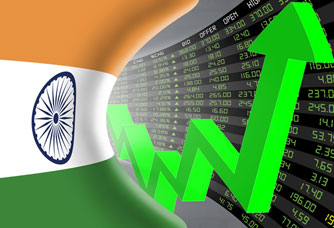
Together, both these exchanges constitute the backbone of the Indian financial market. The Indian stock market performance is often measured by the flagship indices of these exchanges, which include Nifty 50 and Sensex.
The Nifty 50
The Nifty 50 is the flagship benchmark index of the NSE. It tracks the performance of 50 large and liquid blue-chip companies across various sectors listed on the NSE. It uses a free-float market capitalisation-weighted method. It spans across 13 sectors of the Indian economy, ranging from banking, IT, energy, to FMCG, etc., and is managed by NSE Indices Limited.
The Nifty 50 serves as the barometer of India's economic health. The Nifty 50 is one of the most popular benchmark indices that institutional investors, fund managers, and global analysts refer to when they wish to gauge the performance of the broader Indian market. Now you know what is Nifty 50.
The Sensex
Sensex is the flagship benchmark index of BSE, which comprises 30 well-established and financially strong companies listed on BSE. The Sensex was first published in 1986 with a base value of 100. It also uses a free-float market capitalisation-weighted method.
Nifty 50 and Sensex often move in near-tandem as they reflect the same underlying market sentiment. Additionally, Sensex also serves as the barometer of India's economic health. But in comparison to the Sensex, Nifty 50 offers a more comprehensive representation of the Indian equity market, as it includes 50 stocks from a wide range of sectors.
Conclusion
India’s stock market operates through a structured system where SEBI protects the interests of the investors while ensuring discipline in the stock market. On the other hand, the infrastructure that facilitates the trade operations is provided by NSE and BSE. The benchmark indices, such as Nifty 50 and Sensex, are used to measure the performance of the stock market.
As the participation of Indians in equity markets increases, the importance of knowing who runs the market and how it performs further increases, enabling them to smoothly navigate their money in the Indian stock market.

.jpg "AR Enterprises: Building The Supply Networks Behind India's Construction Growth")
.jpg "Industrial Packers: Engineering Industrial Packaging for India's Manufacturing Future")




We use cookies to ensure you get the best experience on our website. Read more...