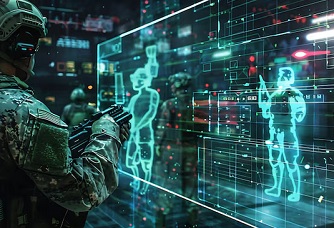
India’s armed forces could significantly reduce training expenses through virtual training and simulator-based combat exercises, according to a recent report that estimates annual savings of more than Rs 1,000 crore.
As defense forces continue to modernize operations and improve combat readiness, virtual training is emerging as a cost-effective alternative to traditional live drills that consume massive amounts of fuel, ammunition, and maintenance resources.
The growing focus on virtual training comes at a time when military forces globally are increasing investments in advanced simulators to improve operational efficiency while lowering costs. In India, the shift is gaining momentum as the Ministry of Defense pushes for wider deployment of indigenous simulator technologies across the Army, Navy, Air Force, and Coast Guard.
According to the report backed by The Energy and Resources Institute (TERI), even a 15 percent adoption of crew gunnery simulators could help India’s armed forces save nearly Rs 1,123 crore annually. The savings are expected to come from lower ammunition usage, reduced fuel consumption, fewer equipment repairs, and minimized wear and tear on expensive military platforms.
Military training exercises often require tanks, aircraft, naval systems, and artillery units to operate continuously under extreme conditions. These drills consume large volumes of diesel, aviation fuel, and live ammunition while also accelerating maintenance cycles for combat equipment. Simulator-based training addresses these challenges by recreating battlefield environments digitally, allowing soldiers and operators to train repeatedly without deploying actual combat hardware.
Also Read: Evolution of Mining Explosives: From Tradition to Smart Tech
Defense experts believe simulators also offer operational advantages beyond cost savings. Virtual combat training enables personnel to practice emergency situations, high-risk combat scenarios, and mission coordination exercises in a controlled environment. Since the systems can recreate real-time battlefield conditions, troops can undergo repeated drills with higher safety and lower logistical complexity.
India’s defense establishment has been steadily expanding simulator usage over the last few years. In 2021, the Ministry of Defense introduced a comprehensive framework for the utilization of simulators across all branches of the armed forces. The policy aimed to standardize simulator deployment and reduce dependence on expensive live exercises.
The push for virtual training also aligns with the government’s broader ‘Make in India’ strategy in defense manufacturing. Indigenous companies developing simulation technologies are increasingly benefiting from defense modernization programs as the armed forces seek locally designed systems for training and operational preparedness.
One of the companies at the center of this transition is Zen Technologies, which specializes in defense training and anti-drone solutions. The company has been supplying advanced simulators for military applications including tank crew training, driving simulators, live range systems, and combat readiness platforms.
Recent Development
The latest momentum around simulator-based military training follows a recent Rs 108 crore order awarded to Zen Technologies by India’s Ministry of Defense for the supply of integrated air defense combat simulators. The project is expected to support enhanced operational training capabilities while reducing dependency on costly field exercises.
The TERI-backed report cited by the company highlighted that wider simulator deployment could substantially optimize defense expenditure over the long term. Industry analysts believe the Indian military’s increasing focus on technology-driven training infrastructure reflects a larger transformation underway in defense preparedness and resource management.
Globally, defense forces are rapidly adopting simulation technologies as geopolitical tensions and rising military budgets push governments to seek efficient training solutions. Countries including the United States, Israel, and several NATO members already rely heavily on advanced virtual training systems for armored units, pilots, naval crews, and infantry operations.
Future Outlook
The future outlook for simulator-based military training in India appears strong as defense modernization programs continue to accelerate. Growing investments in indigenous defense manufacturing, artificial intelligence-driven combat systems, and digital warfare capabilities are expected to increase demand for advanced simulation technologies over the next decade.
Industry experts believe virtual training systems could eventually become a standard component of military preparedness, particularly for high-cost platforms such as fighter aircraft, missile systems, tanks, and naval assets. As India aims to improve operational readiness while managing defense expenditure efficiently, simulators are likely to play a larger role in future training strategies.
Additionally, the expansion of domestic defense technology companies could strengthen India’s self-reliance goals while creating opportunities for exports in the global military simulation market.






We use cookies to ensure you get the best experience on our website. Read more...