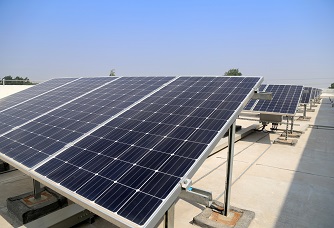
The government has extended the deadline for mandatory Bureau of Indian Standards (BIS) certification for large solar inverters until December 31. This appears to be a significant move for India’s renewable energy sector.
The decision offers relief to manufacturers and suppliers. Particularly those dealing with high-capacity solar photovoltaic (PV) inverters above 200 kW, who were facing tight timelines for compliance. The extension also includes continued allowance for self-certification during the transition period, enabling companies to maintain supply chains without disruption.
This step reflects the government’s balanced approach, ensuring quality standards. Along with addressing practical challenges faced by the industry in scaling up operations, considering rising demand for solar infrastructure.
The extension coincides with the growth of the solar market in India, which is gaining traction in the utility and industrial segments with a growing demand for large-scale solar installations.
The previous June deadline had pressured manufacturers amid apprehensions of delays in testing capacity, certification delays, and possible disruption to current projects. The government has given more time to companies to meet BIS standards, extending the deadline to December 31 without any block production or project.
This relief comes as a boon, as BIS certification is required in India for the sale of solar inverters and guarantees that they meet safety and performance specifications. The certification is a process of rigorous testing and verification, which may take a long time, particularly for a high-capacity machine.
Self-certification window continues to alleviate compliance pressure. It enables manufacturers to announce their compliance with standards without having to go through formal certification procedure. This in turn helps maintain a stable supply to the market.
Also Read: From Compliance to Value: Rethinking ESG in FMCG Operations
The extension is expected to deliver long-term benefits for the solar inverter manufacturing ecosystem. The government is enabling companies to invest in testing infrastructure, improve product design, and align with global quality benchmarks.
BIS certification plays a critical role in ensuring product reliability, safety, and performance consistency in India’s solar market. As the national standard body, BIS establishes benchmarks that help prevent technical failures, electrical hazards, and inefficiencies in solar systems.
This is particularly important for large inverters, which are central to grid stability and energy conversion in solar power plants. Companies that may have struggled to meet earlier deadlines now have an opportunity to comply without losing market access.
This encourages broader participation in the sector and supports the government’s Make in India vision by strengthening local manufacturing capabilities.
The smoother implementation of quality control orders ensures that India’s renewable energy expansion is not compromised by substandard equipment. By aligning regulatory enforcement with industry readiness, the government is facilitating both growth and quality assurance.







We use cookies to ensure you get the best experience on our website. Read more...