The mobility sector is changing at a rapid pace. From electrification and connected technologies to shifting customer expectations and supply chain challenges, businesses are adapting to an increasingly dynamic market. Behind this transformation are leaders who are not only responding to change but helping shape what comes next.
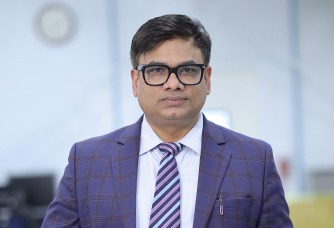
Shailendra Shukla, Managing Director – Mobility Group India, Eaton, brings more than 25 years of experience across business leadership, manufacturing, sales, and transformation. Having worked with leading global organizations, he has built and led businesses, driven growth, strengthened customer relationships, and guided teams through periods of change.
In an exclusive conversation with Thiruamuthan, Assistant Editor at Industry Outlook, Shailendra shares his perspective on what it takes to achieve profitable growth in an industry undergoing multiple transitions. He discusses balancing investments across ICE and EV technologies, scaling digital manufacturing, strengthening supply chain resilience through localization, and preparing the workforce for an increasingly technology-driven manufacturing environment.
Read the full conversation below to learn more about how India’s mobility sector is positioning itself as a strong competitor in this challenging economy.
The industry is going through multiple shifts at the same time. From your perspective, what is making profitable growth more challenging today than it was a few years ago?
The Indian automotive industry is undergoing multiple transitions simultaneously—powertrain evolution, digital transformation, and supply chain realignment—making profitable growth significantly more complex than it was a few years ago.
For component manufacturers, the challenge is balancing investments across two horizons. On one hand, we must continue strengthening existing technologies that still drive the majority of vehicle production today, requiring ongoing capital investment and capacity expansion. On the other, we must invest heavily in future technologies through R&D, product development, and manufacturing capabilities for areas such as advanced transmissions, automation, electrification, and connected systems.
At the same time, digitalization and process automation are becoming essential for competitiveness, adding further investment requirements in smart manufacturing, data analytics, and Industry 4.0 capabilities. Technology shifts also demand continuous workforce upskilling to ensure employees can effectively adopt new tools, processes, and engineering competencies. Adding to this complexity are external uncertainties such as geopolitical tensions, trade disruptions, supply chain volatility, and fluctuating input costs, which can create unforeseen expenses and increase business risk.
As a result, profitable growth today is no longer simply about increasing volumes. It is about making disciplined choices—investing in the right technologies, localizing strategically, building resilient operations, and maintaining relevance across both current and future platforms. Companies that can balance these priorities while remaining agile and customer-focused will be best positioned to deliver sustainable, profitable growth.
Industry 4.0 delivers real value only when digital initiatives become operational excellence programs owned by the business, not standalone technology projects.
Many organizations have begun their Industry 4.0 journey, but scaling it remains a hurdle. In your experience, what typically holds companies back from moving beyond pilot stages?
In my experience, companies struggle to move beyond Industry 4.0 pilots due to a combination of financial constraints, capability gaps, and ownership challenges. While pilot projects often demonstrate value, scaling requires significant investment in automation, system integration, and digital infrastructure. At the same time, many organizations are focused on maximizing returns from existing assets, making it difficult to justify further capital deployment without a clear financial payback.
Another challenge is the availability of digital skills. Industry 4.0 requires continuous upskilling of operators, engineers, and leaders to effectively leverage data and new technologies. Most importantly, digital initiatives must be owned by plant operations, not just IT. When connected to business outcomes such as productivity, quality, uptime, and energy efficiency, Industry 4.0 evolves from a technology project into a scalable business transformation. At Eaton, treating digitalization as an operational excellence initiative has been key to driving adoption and scale across our plants.
The transition from ICE to EV is clearly underway, but it also brings cost and investment pressures. Given this, how are companies managing this balance while staying financially disciplined?
The transition to EVs is underway, but in India, particularly in the commercial vehicle segment, ICE will continue to dominate for many years. At the same time, adoption of alternate propulsion technologies, especially EVs, will steadily increase. This creates a need for companies to carefully balance investments between today's business and tomorrow's opportunities.
At Eaton, we have taken a focused and disciplined approach. We continue to invest in our core ICE portfolio across passenger and commercial vehicles, where volumes and cash flows remain strong, while simultaneously investing in R&D, localization, and manufacturing capabilities for EV solutions. Our growth strategy is centered on areas where we see long-term value creation, including power distribution & protection, power connections, and ePowertrain technologies.
The key is not choosing between ICE and EV, but managing both responsibly. Companies that align investments to market realities, customer demand, and technology readiness will be best positioned to deliver sustainable growth while remaining relevant for the future.
Lean manufacturing has always been important, but the context has evolved. How do you see its role changing in today’s more complex and technology-driven production environments?
Lean manufacturing is more important today than ever because manufacturers are operating under intense cost and pricing pressures while managing increasing product and process complexity. In many ways, Lean remains one of the most effective ways to stay competitive.
What has changed is how Lean is executed. Modern manufacturing combines core Lean principles—such as Value Stream Mapping (VSM), 5S, Kaizen, Total Productive Maintenance (TPM), Six Sigma, and Standard Work—with Industry 4.0 technologies, including real-time data, IoT-enabled equipment, automation, and advanced analytics. Together, these capabilities help identify waste faster, improve decision-making, and drive gains in productivity, quality, and customer satisfaction.
At Eaton, we manufacture a wide range of products, from transmissions and gears to Engine Air Management (EAM) products and emerging technologies. In this environment, Lean is no longer just about efficiency—it is about building agile, data-driven operations. We use VSM to identify bottlenecks and eliminate waste, Kaizen events to drive continuous improvement, TPM to improve equipment reliability, 5S to create disciplined workplaces, and Six Sigma to reduce variation and enhance quality.
These Lean foundations are further strengthened through our Digital Accelerator program, model-line certifications, and Smart Factory initiatives, where Lean and digital technologies work together to accelerate problem-solving, enhance operational performance, and support sustainability goals.
Lean today is not just about reducing cost—it is about continuously improving productivity, quality, delivery, sustainability, and customer value in an increasingly complex manufacturing environment.
Also Read: Green Logistics: Driving Innovation with Hyperlocal Logistics
Recent disruptions have reshaped supply chain thinking. How are companies approaching resilience and localization without losing sight of cost competitiveness?
Recent disruptions have reinforced that the lowest-cost supply chain is not always the most competitive. Today, resilience and cost competitiveness must go hand in hand. Companies are focusing on building strong partnerships with reliable suppliers, adopting dual-sourcing strategies for critical components, and strengthening supply chain visibility beyond their direct suppliers.
Increasingly, companies are working with suppliers to improve the quality, capability, and reliability of their own supplier base, recognizing that Tier-2 and Tier-3 supplier performance can have a direct impact on end-customer delivery and product quality. Greater localization is also becoming a key differentiator, improving responsiveness, reducing supply chain complexity, and lowering overall costs.
At Eaton, we have largely localized our product portfolio in India, with many of our offerings already exceeding 95 percent localization. This has significantly improved our resilience during periods of global supply chain disruption while enhancing competitiveness and responsiveness to customers.
Digitalization is playing an equally important role through better demand forecasting, supply planning, and inventory optimization. The objective is to maintain prudent inventory levels while ensuring continuity of supply.
Ultimately, resilient supply chains are built on strong supplier partnerships, continuous development of both suppliers and their supplier networks, localization, digital planning capabilities, dual sourcing for critical components, and disciplined inventory management. When executed well, localization is not a trade-off against cost—it enhances both competitiveness and resilience.
We’re seeing India gain ground in exports, particularly in areas like two-wheelers and auto components. What do you think still needs to fall into place for this to translate into sustained global competitiveness?
India is already well positioned to strengthen its role as a global manufacturing and sourcing hub. Auto component exports have crossed USD 22 billion, and for Eaton India, over 40 percent of our mobility revenue comes from exports to North America, Europe, JSEA, and other global markets.
To sustain this momentum, three capabilities will be critical: consistent world-class quality, faster new-product industrialization, and deeper expertise in electronics, mechatronics, and precision engineering. Equally important is the adoption of digital manufacturing. Technologies such as automation, real-time production monitoring, advanced analytics, and connected factories are helping manufacturers improve quality, productivity, traceability, and responsiveness—capabilities that global customers increasingly expect.
Policy continuity around PLI schemes, trade agreements, and logistics infrastructure will also play an important role. Together, these factors can help India move beyond being a cost-competitive manufacturing base to becoming a strategically important innovation and advanced manufacturing hub for the global automotive industry.
As manufacturing becomes more technological, how is the role of the workforce evolving, particularly at the shopfloor level?
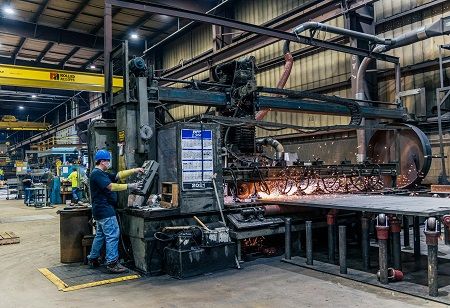
The job has shifted from "operating a machine" to "managing a process." This makes reskilling non-negotiable. At Eaton India, we are ahead of the curve in adopting digital manufacturing, and our shopfloors today are very different from those of a decade ago. Operators on manufacturing lines regularly use Human-Machine Interfaces (HMIs) to monitor and control equipment, while leveraging vision systems, SPC dashboards, and real-time production data to drive quality and productivity improvements.
As a result, the workforce must increasingly combine technical expertise with digital skills, problem-solving capabilities, and data-driven decision-making. We invest significantly in training programs covering digital literacy, AI, advanced manufacturing, safety, and continuous improvement. Attracting, developing, and retaining skilled talent—particularly in areas such as AMTs, automation, and EV technologies—is becoming a key competitive advantage.
Ultimately, future-ready factories will be built not only on advanced technology, but also on a highly skilled workforce capable of leveraging that technology to drive productivity, quality, and innovation.
Also Read: Building EV Bus Ecosystems for India's Clean Mobility Goals
When companies rethink or expand their manufacturing footprint, what factors are becoming more critical in guiding these investment decisions?
Manufacturing footprint decisions today go far beyond labor costs or land availability. Companies must evaluate a combination of proximity to customers, access to ports and logistics hubs, talent availability, infrastructure readiness, and supportive local policies and incentives.
Equally important is the ability of a facility to adapt to changing market needs. Plants must be designed to scale across ICE, hybrid, and EV programs while supporting advanced manufacturing technologies and digital operations. Access to reliable utilities, transportation networks, and a strong supplier ecosystem are becoming critical differentiators.
Sustainability is also playing a bigger role in investment decisions as OEMs and global customers become increasingly focused on decarbonization and responsible sourcing. Manufacturers are therefore looking closely at energy efficiency, water stewardship, waste reduction, and carbon footprint. At Eaton, sustainability is embedded in our growth strategy, reflected in our 59% reduction in Scope 3 emissions compared with our 2018 baseline, alongside investments in sustainable innovation and lower-impact manufacturing practices.
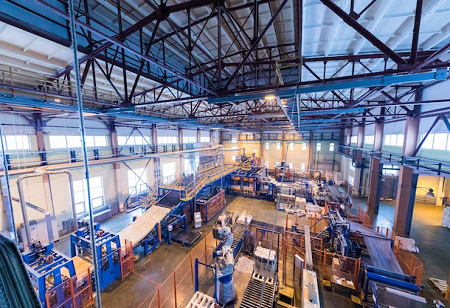
At Eaton, our Ranjangaon and Ahilyanagar plants have been developed with this multi-dimensional approach combining proximity to OEM and export markets, strong talent pools, digital manufacturing capabilities, and sustainability-focused operations. This enables us to efficiently serve both domestic customers and global export markets while remaining agile, competitive, and future-ready.
Looking ahead, with so many shifts happening simultaneously, what do you believe will truly differentiate manufacturers who sustain profitable growth from those who struggle to keep pace?
Profitable growth will be the defining differentiator in the years ahead because it gives companies the flexibility to invest in innovation, future technologies, capacity expansion, and workforce upskilling while remaining resilient through industry cycles.
The winners will be those who make sharp choices and execute them with discipline. In a market where ICE and EV will coexist for years, OEMs increasingly expect integrated solutions rather than discrete components, and global sourcing trends continue to create export opportunities, companies must stay focused on where they can create long-term value.
Three capabilities will separate leaders from followers: a future-ready product portfolio aligned to real market demand, world-class manufacturing operations that combine Lean, digitalization, and sustainability, and a workforce that can continuously adapt to new technologies. Organizations that can balance investment in today's business while preparing for tomorrow's opportunities will be best positioned to sustain profitable growth.
Ultimately, success in this decade will not come from doing more, it will come from doing the right things exceptionally well and consistently converting strategy into execution.




We use cookies to ensure you get the best experience on our website. Read more...