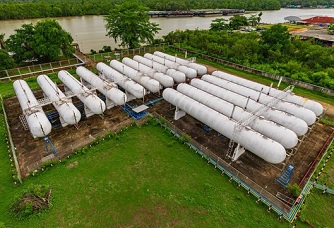
Indian biogas has reached a major milestone as it has become price-competitive with liquefied natural gas (LNG) for the first time.
The development marks a significant moment for India's clean energy sector, with Indian biogas emerging as a viable alternative to imported fuel and reducing LNG dependence.
The shift comes at a time when LNG prices remain elevated, making domestically produced renewable gas more attractive for industries and gas distributors.
The growing competitiveness of biogas could help India reduce its dependence on costly LNG imports while supporting the country's renewable energy and energy security goals.
Compressed biogas (CBG), which is produced from agricultural waste, cattle dung, municipal solid waste, and other organic materials, has long struggled to compete with conventional gas on price. However, recent market conditions have changed the equation.
Higher LNG prices and policy support for the biogas sector have narrowed the cost gap, bringing biogas prices in line with imported LNG. This has improved the business case for companies investing in CBG projects and for consumers looking for alternative fuel sources.
Key factors supporting the shift include:
Industry experts believe the latest development could encourage faster adoption of biogas across transportation, industrial, and city gas distribution segments.
Also Read: Hydrogen Storage Innovations Are Driving India's Clean Energy Push
India imports a substantial portion of its natural gas requirements, making the country vulnerable to global price fluctuations and supply disruptions. Increasing domestic biogas production can help address these challenges.
The benefits of a stronger biogas industry include:
The government's Sustainable Alternative Towards Affordable Transportation (SATAT) initiative has already encouraged investments in compressed biogas plants across the country. With biogas now becoming more cost-competitive, project developers may see improved returns and greater investor interest.
The latest pricing milestone could act as a catalyst for new investments in the renewable gas sector. Companies involved in waste management, bioenergy production, and gas distribution may benefit as demand for compressed biogas grows.
Industry participants believe sustained policy support, reliable feedstock supply, and infrastructure expansion will be critical for maintaining the momentum. If biogas remains competitive against LNG over the long term, it could play a larger role in India's energy mix.
The development also aligns with India's broader goals of promoting circular economy practices and reducing carbon emissions through cleaner energy sources.

.jpg "AR Enterprises: Building The Supply Networks Behind India's Construction Growth")
.jpg "Industrial Packers: Engineering Industrial Packaging for India's Manufacturing Future")




We use cookies to ensure you get the best experience on our website. Read more...