India has seen one of the most dramatic growth when it comes to supply chain management. According to McKinsey & Company, India has overtaken China with 40 percent share of the US smartphone supply chain. Now, India accounts for approximately 40 per cent of the smartphone supply to the United States that was formerly dominated by Chinese manufacturers.
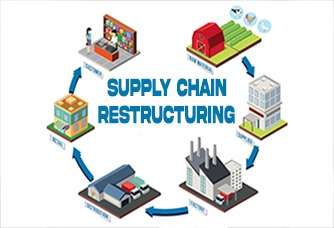
However, the growing demand also means that India must meet the global supply chain benchmarks. But for this to happen, supply chain restructuring is of utmost priority. Rather to say, it has become the imperative need of the hour - making a much-needed shift from a focus on cost-driven efficiency to a model which is prioritized by resilience, automation, and regionalization.
Kumar Mangalam Birla (Aditya Birla Group) asserts that a "decadal reshaping" is underway, moving away from global fragility. He notes, "We wouldn't look at a company or a business where you source in one corner of the world and sell in another corner of the world... [Globalization needs] a very sharp dimension of regionalization to it."
Furthermore, “Geopatriation" or "friend-shoring" is showcasing an upward trajectory with organizations moving critical data and operations to secure, local regions.
Power-of-Two Networks: Today, companies are developing regional hubs to move production closer to demand and reduce dependence on a single global source.
Logistics Control Towers: Regionalized hubs can be managed through "control towers" that leverage real-time data to handle logistics bottlenecks and improve resilience.
Shortened Supply Lines: Regionalization also allows for prompt, more predictable deliveries to meet consumer demand while reducing exposure to international transit disruptions at the same time.
The procurement is shifting from "advisory" AI to Agentic AI, which can act autonomously within pre-set, governed parameters.
Understanding the competency of teams across departments, Anand Mahindra from Mahindra Group emphasizes in connecting supply chain innovation to human capital, stating that "innovation is developed by teams with skills" and that investing in people is the key to managing such complex systems.
To foster optimal allocation modeling, modern procurement must utilize weighted sum methods to balance multiple objectives simultaneously.
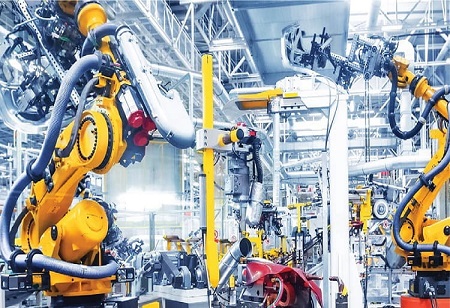
Touchless Operations: Autonomous agents are expected to handle up to 60–70 percent of end-to-end transactional procurement. This will include aspects such as issuing RFPs, evaluating supplier responses, and managing contract renewals.
Predictive Risk Monitoring: AI agents are replacing annual audits today by scanning for supplier financial, geopolitical, and ESG risks all round the clock.
Zero-Click Intelligence: Procurement teams are expected to increasingly rely on AI-generated summaries to make faster, data-driven decisions.
As these trends converge, procurement teams are transforming from cost-control units into strategic partners:
AI Risk Management: Spending on AI risk management is on the rise with the integration of AI capabilities today. This is crucial to ensure transparency, compliance, and reliability.
Total Value Over Cost: Leading organizations are focusing on total value (profitability, risk reduction, speed) rather than only unit cost.
Strategic Supplier Partnerships: Suppliers are now treated as innovation partners rather than just vendors, with deeper integration for co-innovation.
2026 represents the moment where the cost of inaction—brittle, opaque networks—becomes too high, and the technology to build superior, resilient systems finally matures, making autonomous and regionalized strategies the new standard.
READ MORE: Why Waste Must Become a Core Material in Road Construction


.jpg "Fostering High-precision, High-performance with Optimal Metal Finishing Excellence")


We use cookies to ensure you get the best experience on our website. Read more...