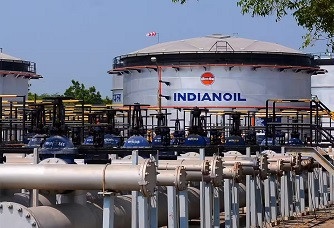
For a very long time, keeping cheap fuel affordable in India has been the Indian Oil Corporation’s (IOC) major obligation.
As West Asia tensions deepen and crude oil prices climb, the cost of delivering cheap fuel for India is increasingly being absorbed by IOC itself, squeezing the state-owned refiner's margins, earnings and long-term financial resilience in ways that ratings agency S&P Global has flagged as a growing concern.
At the centre of this challenge is a structural mismatch. Global crude oil prices are rising due to the prolonged Middle East conflict and potential disruptions at the Strait of Hormuz, one of the world's most critical oil transit chokepoints. But the domestic retail fuel prices have remained static.
India, the world's third-largest oil importer, depends heavily on imported crude to meet its energy needs, with diesel alone accounting for nearly 39 per cent of total petroleum consumption. Every surge in crude costs globally widens the gap between input costs and pump prices, directly eating into IOC's profitability.
Also Read: Synthetic Engine Oils Optimising Friction, Wear, and Fuel Economy
S&P Global commented on this situation as, “IOC faces a conundrum. Its earnings and cash flow over the next 12 months are turning increasingly uncertain as the Middle East Conflict becomes protracted. IOC has to balance its role of meeting the country's energy needs while absorbing losses due to high crude oil prices… Given the widening gap between the pump prices and crude oil input price, we cannot rule out the possibility of a material base-case revision."
Despite the situation, IOC has reported stronger earnings for the fiscal year ending in March 2026. The company has recorded an operating cash flow of Rs 40,000 Crore, and an EBITDA exceeding Rs 76,000 crore and S&P-adjusted debt of close to Rs 1.3 lakh crore. Healthy volume growth, improved refining margins and working capital gains drove the outperformance.
S&P also pointed out several structural benefits that could cushion IOC against short-term liquidity stress. The company holds minority stakes in ONGC, Oil India Ltd and Gail (India) Ltd, with a combined market value of over USD 3 billion, providing financial flexibility if needed. Its strong banking relationships and access to commercial paper markets further reinforce its liquidity position.
Crucially, S&P noted a high likelihood of government support for IOC. It notes that this support has already materialised in the form of excise duty cuts and a three to four per cent increase in petrol and diesel prices.
S&P Global Ratings believes that there is a high amount of unpredictability around the duration and scale of the Middle East war and its potential effect on commodity prices, supply chains, economies and credit conditions.







We use cookies to ensure you get the best experience on our website. Read more...