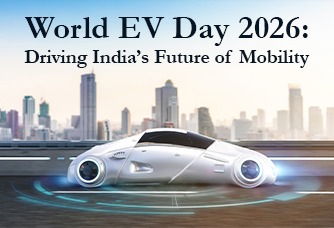
“Switching Electric: driving down the cost of motoring” — this year’s World EV Day theme cuts straight to the heart of the transition.
The 2026 theme places affordability and total cost of ownership at the center of the conversation. With volatile fuel prices and falling battery costs, the economics of running an EV versus a petrol or diesel vehicle have become decisive for both individual buyers and fleet operators.
World EV Day is observed every year on September 9 as a global platform to accelerate the shift to electric mobility. It brings together manufacturers, policymakers, charging operators and drivers to promote EV adoption through events, education and policy discussions. Lower energy and maintenance expenses, combined with a wider range of affordable models, are making the switch practical rather than purely aspirational.
For India, the EV transition is equally an industrial story. It reduces oil-import dependence, builds domestic manufacturing capacity and creates new value chains in batteries, electronics and software, positioning electric mobility as a strategic economic opportunity beyond environmental goals.
India’s electric vehicle market has moved decisively from early adoption into a phase of rapid acceleration. In August 2026, the country registered 297,820 EVs according to Vahan Dashboard data, underscoring sustained monthly momentum.
Growth continues to be led by two- and three-wheelers, which dominate absolute volumes and deliver the strongest total-cost-of-ownership advantage for last-mile and daily commuting needs. Similarly, passenger electric vehicles are gaining share, with registrations rising sharply year-on-year as more models enter the market.
Commercial EVs, particularly electric three-wheelers and emerging electric buses and light commercial vehicles, represent the next major opportunity as fleet operators prioritize operating-cost savings. Leading states include Uttar Pradesh, which topped registrations in August with 42,007 units (14.1 per cent share), followed by Maharashtra and Karnataka.
The top 10 states together accounted for nearly 72 per cent of national EV registrations, yet the geographic spread is widening. Northern markets are driven heavily by electric three-wheelers for commercial use, while southern states show stronger private two-wheeler and passenger-vehicle demand.
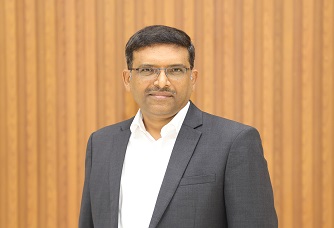
“World EV Day is a reminder that India’s EV transition will not be defined by a single segment or a handful of metro markets. Much of the next wave of adoption is being driven by Tier 2 and Tier 3 cities, where electric two-wheelers address everyday mobility needs in a practical, accessible, and affordable way. In these markets, the low-speed EV segment plays a vital role. Our journey has shown us that sustainable adoption happens when technology directly aligns with ground realities—from daily commute efficiency and low running costs to operational simplicity and dependable local service. The real opportunity lies in deepening our presence across smaller towns, turning growing consumer curiosity into long-term trust. At Zelio E-Mobility, we remain committed to engineering relevant, high-value mobility solutions that take electric two-wheelers from an emerging alternative to a mainstream choice across India”, said Mr. Divyanshu Agarwal, CEO, Zelio E-Mobility.
Consumer and fleet behavior is shifting as buyers increasingly compare lifetime running costs rather than only upfront price. The result is a market that is broader, more diversified by segment and increasingly embedded in everyday mobility.
Also Read: India Set to Cross 5 Million Car Sales in FY27: Auto Industry Growth Vision
|
Indicator |
India EV Market 2026 |
|
August 2026 EV registrations |
297,820 |
|
Major growth segments |
2W & 3W |
|
Emerging opportunity |
Commercial EVs |
|
Key ecosystem areas |
Batteries, charging, components |
India’s EV opportunity extends far beyond vehicle assemblers. The current transition is replacing the conventional ICE manufacturing model with an entirely new value chain that spans batteries, battery management systems, motors, controllers, power electronics, vehicles, charging infrastructure and software.
This shift is also opening substantial opportunities for:
Battery cells, packs, and management systems form the high-value core of this ecosystem. Electric motors, controllers and power electronics create strong demand for specialized engineering and semiconductor content. Charging infrastructure, in turn, requires hardware, software platforms and grid-integration solutions.
Connected-mobility and software companies are embedding over-the-air updates, fleet management and energy optimization services into the ownership experience. The result is a multi-layered industrial ecosystem in which value is distributed across materials, components, vehicles, infrastructure, and digital services rather than concentrated in traditional auto manufacturing.
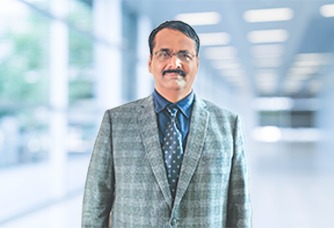
“World EV Day is a good time to look at electrification as more than a shift from one type of vehicle to another. It is also about building the energy infrastructure needed to make electric mobility work reliably in everyday life. An electric vehicle can only be as practical as the system that supports it, which makes reliable charging, efficient power use and adequate energy infrastructure increasingly important. For India, the next phase of EV adoption will require us to think about generation, charging, storage and consumption as parts of the same equation. The conversation also needs to move beyond how many EVs are being sold to whether the infrastructure around them can keep pace with everyday demand. If we get that right, particularly by making better use of renewable energy and managing demand more efficiently, electric mobility can become more than a cleaner way to travel. It can also help us build a smarter and more resilient energy system”, said Mr. Arun Bhardwaj, Managing Director, Smarten Power Systems.
For India, this represents a strategic chance to build domestic capabilities, attract investment across the supply chain and position itself as a competitive player in the global electric mobility industry.
The sustainability story of EVs cannot end with zero tailpipe emissions. As India’s EV industry continues to expand, attention is shifting towards the complete lifecycle of an EV, from raw-material extraction and battery manufacturing to vehicle use, second-life applications and recycling. This is becoming increasingly important as demand for lithium-ion batteries rises. According to NITI Aayog assessments cited in PIB, India’s annual lithium-ion battery demand could reach around 210 GWh by 2030, compared with about 40 GWh in 2025.
This growing demand indicates the circular EV economy is more important, bringing critical minerals, battery recycling and second-life batteries into the larger sustainability discussion. India has also approved a Rs 1,500-crore incentive scheme for critical-mineral recycling, with 58 companies made eligible in 2026. Alongside recycling and material recovery, renewable-energy-powered charging can further reduce the carbon footprint of electric mobility.
The direction is clear: the future EV ecosystem will depend not only on how many vehicles India sells, but also on how efficiently it recovers and reuses the resources within them.
Also Read: 10 Women Leaders Driving India’s Automotive Manufacturing Revolution
India’s EV market is growing exponentially, but there are still several bottlenecks slowing down widespread adoption. In August 2026, India recorded nearly 3 lakh EV registrations in total. However, the growth is still uneven across vehicle categories and regions.
The first challenge is the higher upfront cost of many EVs, even when their running costs can be lower over time. Charging infrastructure remains another consideration, particularly for long-distance and intercity travel. Under PM E-DRIVE, the government has allocated Rs 2,000 crore for public EV charging infrastructure across India. Additionally, battery degradation, thermal safety and consumer concerns around replacement costs can also influence purchasing decisions.
As S. Ganesh Mani, CEO, Switch Mobility and President & COO, Ashok Leyland Limited, notes, “India’s success in zero-emission urban mobility will depend on the combined strength of policy consistency, infrastructure readiness and ecosystem-wide collaboration.”
Beyond consumer-side concerns, raw-material dependence remains a big challenge for India’s EV industry today. The government has also acknowledged the country’s high import dependence on critical minerals such as lithium, exposing EV manufacturers to global supply-chain and geopolitical risks. Next in line are financing and resale values, which will also influence adoption rates. Whilst software reliability and cybersecurity are becoming increasingly important as connected EVs rely more heavily on digital systems and battery-management software. These are some very big challenges the EV industry faces today.
The next phase of electric mobility in India will be shaped not only by higher EV penetration but by how deeply electric vehicles become integrated into India’s wider mobility ecosystem. Recent market data already points towards this transition. In August 2026, alternative-fuel passenger vehicles, including CNG, hybrids and EVs, collectively accounted for nearly 42% of sales, slightly ahead of petrol vehicles at around 41%, reported in TOI.
This growing adoption, however, will require the ecosystem around EVs to develop at the same pace. Battery localisation, smart charging networks and renewable-energy integration will become increasingly important as more vehicles move onto the roads. The requirement is not simply to manufacture more EVs, but to build the infrastructure and energy systems needed to support them reliably.
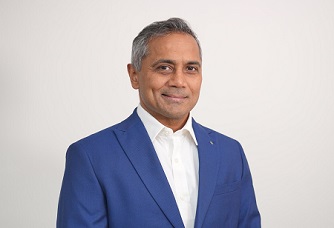
Mahesh Babu, Managing Director, Olectra Greentech Limited, says, “Electrification is not a like-for-like replacement of diesel buses. It demands a fundamental rethinking of the entire operating model.”
That is also where battery recycling becomes an integral part of India’s EV outlook. As the installed base of electric vehicles expands, more batteries will eventually reach the end of their first-use cycle. India’s Battery Waste Management Rules already place producers under Extended Producer Responsibility (EPR), covering the collection, recycling and refurbishment of batteries. This creates the groundwork for a more circular battery ecosystem while reducing the long-term pressure on critical mineral requirements.
The transition is also opening opportunities for batteries beyond their first use in vehicles. Pramod Sharma, COO, Sun Mobility, notes that “This second-life potential is actively being explored by operators as part of their business strategy, ensuring extended utilization of battery assets before recycling.”
Therefore, the broader opportunity goes beyond replacing petrol and diesel vehicles. And India is playing its part and building a new mobility ecosystem spanning vehicles, batteries, charging, software and energy. Nishant Arya, Vice Chairman & MD, JBM Group, points to this shift, noting that “The development of an end-to-end EV ecosystem has been a significant innovation that has been witnessed by the industry.”
The future of electric vehicles will depend on how effectively these interconnected systems develop together — making EV adoption not just a transport transition, but an important part of India’s next phase of energy transformation.
Thiruamuthan is an Assistant Editor with 3+ years of experience in business journalism, industry research, interviews, and editorial content. He writes about India’s evolving business and industrial landscape, with experience across manufacturing, automotive, EVs, pharmaceuticals, healthcare, technology, finance, and sustainability. He brings a strong understanding of editorial research, interviewing, content development, and translating complex industry insights into clear and engaging stories.
Fathimanoud is a Correspondent with experience covering the manufacturing and pharmaceutical sectors. She has written several articles on the pharma and manufacturing industries, with a particular focus on pharmaceutical developments and industry updates.
.jpg "Textile Special")


We use cookies to ensure you get the best experience on our website. Read more...