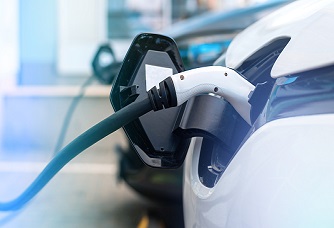
Higher charging power increases the need for better thermal management. Exicom has started manufacturing advanced liquid-cooled AC and DC power modules at its Hyderabad Smart Manufacturing Facility.
The company says it is the first Indian manufacturer to produce this class of liquid-cooled power electronics for global markets.
Exicom has also started exporting the modules to the US. The technology supports continuous high-load operation and reduces thermal stress inside chargers.
The move strengthens India’s advanced EV charging manufacturing capabilities and gives Exicom a stronger position in the global EV charging infrastructure market.
EV chargers face greater thermal pressure as charging systems deliver higher power and operate for longer periods. Liquid cooling addresses this challenge by moving heat away from power electronics more efficiently than conventional air cooling.
Exicom’s new modules use a fully sealed design that protects internal components from dust, moisture and salt air. The company says the technology can maintain internal temperatures roughly 10°C lower than air-cooled systems. It also supports continuous operation at high loads and can reduce lifetime operating costs.
The technology came from Tritium, the global DC fast-charging company that Exicom acquired in 2024. Exicom has now combined Tritium’s technology with local manufacturing at its Hyderabad facility.
Also Read: Why India's Mobility Future Depends on Leadership and Innovation
The development gives Exicom a stronger position in the global EV supply chain. The company will initially supply the liquid-cooled modules to North America and Europe. These modules will support Tritium’s DC charging portfolio, including its TRI-FLEX ultra-fast DC chargers and DC-FLEX charging systems.
Exicom has already begun exporting the India-made modules to the US. The company spent almost two years and around USD 3.5 million on technology development, engineering, validation, and manufacturing capabilities.
“Globally, liquid cooling has become the architecture of choice for high-power charging. We are bringing this technology to India. Local manufacturing matters because we now own more of that technology ourselves. We can engineer it, improve it and adapt it faster, for our customers here and across the world,” said Anant Nahata, CEO and Managing Director, Exicom.
This export strategy gives Indian power electronics manufacturing a larger role in global EV charging infrastructure. It also allows Exicom to serve international charger platforms from its Indian manufacturing base.
The shift toward liquid cooling reflects a wider technology change across the EV industry. Faster charging requires chargers to handle higher power without allowing excessive heat to affect reliability or component life.
Exicom’s Hyderabad facility supports this transition with advanced automation, digital traceability, and specialized testing capabilities. The company opened the facility with an investment of Rs 216 crore, and Phase I increased its overall production capacity by 2.5 times. The plant covers 18.4 acres and has a built-up area of 2.8 million square feet.
The company also plans to bring the technology to Indian customers, including charge point operators, fleets and original equipment manufacturers. Over time, Exicom intends to integrate the liquid-cooled architecture into its flagship Harmony DC chargers.
The next stage will focus on expanding production, international exports and domestic adoption. Exicom can use its liquid-cooled modules across global charging platforms while developing applications for Indian EV vehicles and charging networks.
The company’s move also highlights the growing importance of power electronics in the EV transition. As electric vehicles demand faster charging and charging networks seek higher utilization, thermal management will become increasingly important.
For Exicom, the immediate opportunity lies in North America and Europe. The longer-term opportunity lies in bringing this technology into India’s expanding EV charging ecosystem and integrating it into the company’s own Harmony charger range.
.jpg "AR Enterprises: Building The Supply Networks Behind India's Construction Growth")
.jpg "Industrial Packers: Engineering Industrial Packaging for India's Manufacturing Future")



We use cookies to ensure you get the best experience on our website. Read more...