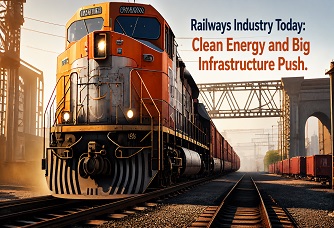
India’s rail network is moving through a major phase of change, with projects focused on speed, safety, freight and passenger convenience.
The latest Railways Industry Today developments show Indian Railways expanding capacity while improving services for millions of travelers. New testing facilities could support faster trains, while a nationwide drive targets cleaner drinking water at stations.
Alstom is seeking another locomotive order from its Madhepura plant, while freight trains are carrying more containers in single journeys. At the same time, IRCTC is upgrading ticket booking systems, supporting clean energy goals, smarter services and efficient rail travel.
Indian Railways’ first dedicated high-speed test track in Rajasthan is nearing completion, with train trials expected to begin during 2027-28. The Rs 967.07-crore project is being developed by RDSO between Gudha and Thathana Mithri, located around 70 km from Jaipur. The 59-km facility will allow different trains and railway equipment to undergo testing at speeds reaching up to 220 kmph.
Indian Railways has launched a nationwide drive to clean and disinfect drinking-water tanks and filtration systems at major railway stations. Zonal Railways will inspect tanks, water sources, filters, taps, coolers and dispensing points, then quickly fix identified problems wherever necessary. The drive also includes water testing, daily chlorine checks and repairs to damaged tanks, pipelines and filtration equipment across stations.
French train maker Alstom is seeking a new order for 200 electric freight locomotives from Indian Railways after its current 800-unit contract. The existing contract is expected to finish by March 2028, while the Madhepura plant continues producing and maintaining electric freight locomotives. Vivek Garg, Managing Director of Madhepura Electric Locomotive Pvt Ltd, said talks cover supplies supporting clean energy goals and greater local sourcing.
Also Read: Vande Bharat Booking & Passenger Experience
Indian Railways has successfully operated its first double-stack long-haul container train, moving 360 containers from JNPT in Mumbai to Vadodara. The train covered about 422 km using two double-stack rakes, allowing more cargo to move in a single journey. Union Minister of Railways of India, Ashwini Vaishnaw shared the achievement, while Delhi Chief Minister Rekha Gupta also welcomed the development and highlighted its freight benefits. Moving more cargo by electric trains can also support clean energy goals while reducing road traffic and fuel use across busy routes.
IRCTC is preparing major upgrades to its website and app to reduce slowdowns and service disruptions during busy booking periods. The plan includes stronger servers, storage and network capacity, along with a backup system designed to keep services running during failures. IRCTC says booking capacity could rise from about 37,000 tickets per minute to more than 100,000 tickets per minute.
These latest developments show Indian Railways industry working on major railway infrastructure projects alongside everyday services used by millions of passengers. Faster testing, cleaner water, stronger freight movement and easier ticket booking could improve the overall experience for millions of railway passengers. Together, these efforts also show how clean energy, local manufacturing and better infrastructure are becoming important parts of India’s railway growth.




We use cookies to ensure you get the best experience on our website. Read more...