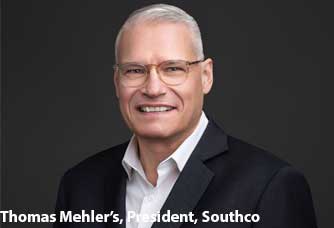
India’s industrial agenda is moving on several tracks at once. Public schemes are expanding the market for electric buses, railway upgrades continue, and the 2026-27 Union Budget has announced support for construction and infrastructure equipment. These developments span different industries and kinds of machinery. They provide the backdrop to Southco president Thomas Mehler’s Pune press briefing on 28 October and to a question worth asking of the company: how widely can its India business serve the equipment being built here?
Southco specialises in the hardware that allows equipment to open, close, secure and move into position. Its Indian priorities span commercial vehicles, buses, passenger mobility, rail and off-highway machinery. A latch or hinge may serve a familiar function, but each market places different demands on it. A public transport operator, a rail manufacturer and a construction equipment maker answer to different users, working conditions and purchasing demands. This wide range of industries delivers the story behind Mehler’s visit.
Public mobility provides an immediate context for the shift. The government’s PM e-Bus Sewa scheme aims to bring 10,000 electric buses into urban services. For the companies building and operating them, the experience of passengers and maintenance teams sits alongside the performance of the vehicle itself. Southco identifies buses, commercial vehicles and vehicle interiors among its priority markets in India. Its role is in the access and positioning hardware that people use repeatedly, often without noticing the supplier behind it.
Rail is a separate opportunity. India’s rail modernisation has kept passenger experience and maintenance in focus. On a rail vehicle, a secure panel, accessible service area or well-managed interior fitting can affect how equipment is used over years of operation. Southco has a global rail portfolio, and its India team identifies rail modernisation as a realistic area for growth.
Construction equipment brings yet another context. The Union Budget’s new scheme for construction and infrastructure equipment signals continued attention to domestic capability in the sector. On an earthmover or other off-highway machine, access hardware must suit a demanding environment and the practical needs of operators and technicians. Southco already works in off-highway equipment, and its India team sees construction investment as an opportunity. This makes construction equipment a distinct growth market alongside buses and rail.
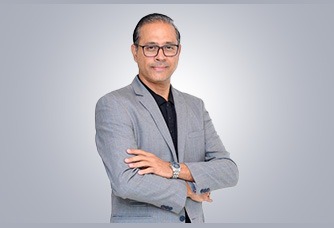
Mehler views this breadth as central to the India discussion.“What interests me about India is the range of industries that use access hardware in different ways. Each brings distinct requirements, giving our Pune team experience it can draw on across sectors,” he says.
His connection to Pune gives the visit added significance. While leading Southco’s Asia Pacific business, Mehler oversaw the launch of its India operation, including the opening of a regional headquarters and manufacturing facility in Pune in 2008 and the subsequent expansion of the Ranjangaon site. Southco’s acquisition of Pune-based Darshana Industries in 2022 incorporated a business with customers across transportation, off-highway, telecommunications and industrial equipment. These steps provided the company’s cross-industry work a local base.
Passenger vehicles and electric mobility extend that map. Southco identifies EVs and vehicle interiors as focus areas in India. Here, access may be bound up with appearance, feel and how often a part is handled, alongside security and serviceability. The company’s product range includes mechanical latches and locks, hinges, position-control solutions and electronic access. This variety provides several ways to engage in conversations surrounding changing vehicle design and the experience inside it.
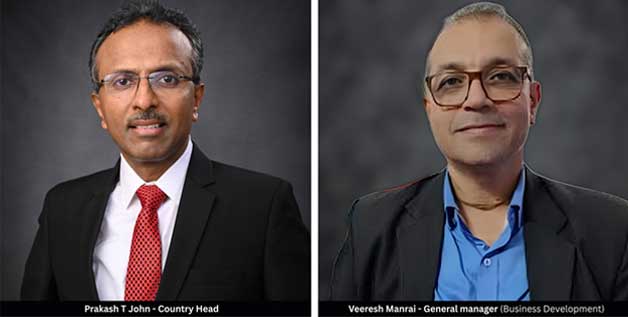
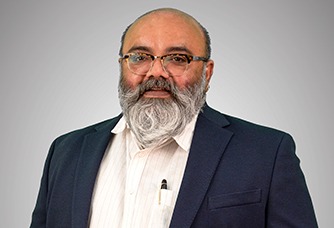
For Prakash T. John, Country Head of Southco India, that range of markets makes strategic focus essential. Pune gives the company manufacturing, engineering, testing and customer support capabilities, and the next phase is about building on that foundation rather than simply adding capacity. Under Make in India, his focus is on deepening localisation, so that more of what Indian OEMs buy is designed, engineered, tested and produced in the country, with Darshana adding manufacturing depth and a stronger local supplier base. This approach also points to further factory expansion as demand grows across various sectors, each moving at its own speed and with its own customer needs. Beyond India, Pune could take on a larger role within Southco's global network through a global capability centre (GCC) handling engineering, design and support work for customers worldwide.If that plan takes shape, India could become a base for serving the Middle East and beyond.
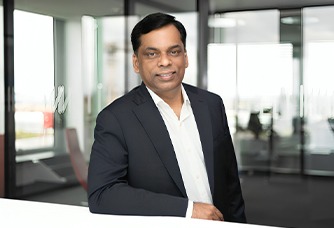
Veeresh Manrai, general manager for business development, sees the same breadth through customer conversations. His remit spans passenger and commercial vehicles, public transport, rail and off-highway equipment. “Opportunities are emerging across several industries, but they will not move at the same pace. Our job is to understand what matters in each market and respond with the right capability,” Manrai says.
Serving several industries also asks a company to set priorities. Southco’s India team identifies price pressure, supply disruption and the need to show value over a product’s working life as practical challenges. A rail customer and a construction equipment manufacturer may weigh those issues differently. The wider Southco’s market reach becomes, the more important it is to understand which requirements belong to a particular sector and which expertise can travel between them.
That is what makes Mehler’s Pune briefing a significant milestone in the company’s India story. He brings the perspective of a president who helped establish the operation. Prakash T. John brings a view of Southco’s strategic direction in India. Veeresh sees how the market changes from one industry to another. Together, their perspectives reflect the breadth of Southco’s growth in India, from public transport and rail to mobility and construction equipment.


We use cookies to ensure you get the best experience on our website. Read more...