Binay Agrawal is a seasoned business leader with over 17 years of experience in strategy, business development, M&A, and P&L management across the specialty chemicals and industrial sectors. As Regional Business Director at Lubrizol Corporation, he leads the company's engineered polymer business across India, the Middle East, and Africa, driving growth, localization, and manufacturing excellence.
In the following article, Binay examines India's evolving CPVC industry and the factors shaping its next phase of growth. He explains how localized manufacturing, strong quality standards, skilled installation practices, and lifecycle-focused value are creating a resilient CPVC ecosystem, positioning India as a global hub for innovation and sustainable infrastructure development.
For decades, the story of plumbing in India was largely written in metal. Galvanized iron pipes were the default choice across homes, hospitals, hotels and commercial buildings. They were familiar, widely available and considered dependable. Yet their limitations were equally well known as corrosion, scaling, leakages, declining pressure and concerns around water quality over time.
As India’s urban landscape evolved, moving toward high-rise living, larger commercial complexes and more demanding infrastructure, the expectations from piping systems began to shift. The need was no longer just about transporting water; it was about delivering it safely, consistently and across varying temperatures and pressures. This transition set the stage for the emergence of high-performance thermoplastics such as CPVC (chlorinated polyvinyl chloride).
CPVC, while established in the United States in 1959 with the introduction of FlowGuard technology by Lubrizol, entered the Indian market in the 1990s at a time when the plumbing ecosystem was still dominated by traditional materials.
Over time, it brought together a combination of properties that were highly relevant for a fast-developing country like India: resistance to corrosion, suitability for hot and cold-water plumbing, ease of installation, durability and compatibility with modern building requirements.
As construction practices evolved and awareness around water safety and lifecycle performance increased, CPVC transitioned from a niche alternative to a mainstream solution across residential and commercial segments.
This growth has been significant, not just in adoption but in scale. India’s CPVC pipes market has expanded rapidly, supported by urbanization, infrastructure development and increasing demand for reliable plumbing systems. Industry estimates project the market to grow from approximately Rs 8,000 crore in 2025 to over Rs 16,000 crore by 2031, reflecting sustained double-digit expansion.
India's next phase of CPVC growth will be shaped by how effectively it balances manufacturing scale with quality, compliance and ecosystem development.
However, the real transformation story extends beyond demand. For many years, India remained heavily dependent on imports of CPVC resin and compounds to meet its growing needs. Supply largely came from global markets such as China, Japan, South Korea and parts of Europe, exposing the domestic industry to fluctuations in pricing, logistics challenges and supply chain disruptions.
As demand matured, this dependence highlighted the need for a more resilient and localized ecosystem.
Today, India’s CPVC landscape is increasingly defined by integration. It is supported by a network of domestic pipe and fittings manufacturers, global technology providers, resin producers, compounders, distributors and installers. Leading Indian brands have scaled their CPVC portfolios significantly, while multinational specialty materials and vinyl technology companies are strengthening their presence in the country, not just as suppliers, but as long-term manufacturing partners.
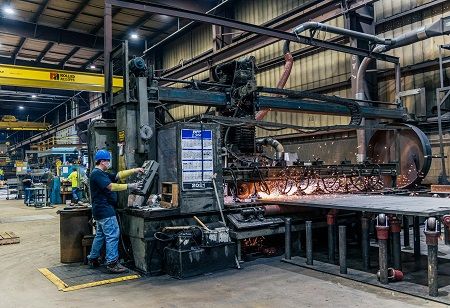
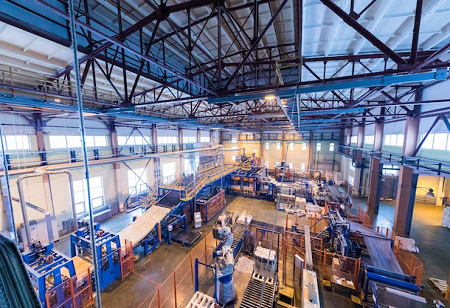
Recent investments in CPVC resin and compounding infrastructure in Gujarat by Lubrizol, including expanded compounding capacities in Dahej and the commissioning of large-scale CPVC resin manufacturing in Vilayat through global–local collaborations with Grasim Industries, reflect this shift toward a more integrated value chain. These developments are enabling India to move closer to an end-to-end CPVC ecosystem, spanning resin, compound and finished pipe systems, while strengthening supply reliability and reducing import dependency.
This evolution also aligns with India’s broader manufacturing priorities. Infrastructure investments across housing, water supply, sanitation, healthcare and industrial corridors require materials that can deliver consistent performance over long lifecycles. Local manufacturing improves availability and enhances the industry’s ability to respond to regional needs, improve technical support and maintain quality control across the value chain.
Yet, as with any rapidly growing market, scale brings its own set of challenges.
One of the most critical priorities for the CPVC industry is ensuring adherence to quality and compliance standards. As the material moves deeper into mainstream adoption, the risk of inconsistent formulations, substandard products and improper installation practices can affect overall system performance. This makes compliance with BIS standards, along with relevant international benchmarks such as NSF, ASTM and UL, essential to ensuring reliability, safety and performance.
In this context, compliance must become a visible differentiator. Engineers, consultants and developers need to recognize that long-term performance is closely linked to material quality, formulation consistency and system compatibility, rather than just upfront cost.
Equally important is the role of application awareness. While CPVC is widely associated with residential hot and cold-water plumbing, its relevance is expanding into more demanding segments. These include commercial infrastructure, healthcare facilities, industrial piping, HVAC systems and fire safety applications. In critical environments such as hospitals or data centers, material performance directly impacts operational reliability, safety and compliance.
However, the effectiveness of any piping system is ultimately determined at the point of installation.
In India, plumbers and contractors play a decisive role in translating product performance into real-world outcomes. Even the best materials can underperform if installation practices are not aligned with recommended guidelines. Improper jointing, incorrect solvent cement usage, inadequate curing times or poor system design can lead to failures that are often incorrectly attributed to the material itself.
This underscores the need for sustained investments in ground-level capability building.
Training programs, installer certification initiatives and on-site technical guidance must become integral to the industry’s growth strategy. As CPVC adoption expands into Tier II and Tier III cities, where a significant portion of future construction demand lies, building awareness and skill at the last mile will be critical to maintaining system integrity and customer confidence.
At the same time, the industry must shift the cost conversation. CPVC is often compared to alternative materials on an upfront basis, but its real value lies in lifecycle performance. Resistance to corrosion, minimal maintenance requirements, faster installation and long service life contribute to lower total cost of ownership over the life of a building. This perspective becomes particularly relevant in large-scale infrastructure projects, where reliability and durability can significantly influence operating costs and asset longevity.
Looking ahead, sustainability will also shape the next phase of growth. As India accelerates toward green building practices and resource-efficient infrastructure, material selection will increasingly be evaluated through the lens of durability, safety and lifecycle impact. CPVC’s long service life and performance characteristics position well within this evolving framework, although continued innovation in manufacturing efficiency and material optimization will remain critical.
The next decade represents a pivotal moment for India’s CPVC industry. The country is steadily building the capabilities required to become a manufacturing and innovation hub.
What began as a shift away from legacy metal piping has evolved into a broader transformation—one that encompasses material science, manufacturing integration, application engineering and ecosystem development.
For the chemical engineering and materials community, this transition offers important lessons. It highlights how localized manufacturing, supported by global technology and strong standards, can reshape an industry. It demonstrates the importance of aligning product innovation with real-world application needs. And it underscores that sustainable growth requires equal focus on materials, processes and people across the value chain.
India’s CPVC journey is still evolving, but its direction is clear. The future will be defined not just by how much the industry grows, but by how well it balances scale with quality, innovation with compliance, and expansion with education.
In that sense, the transformation of CPVC in India is more than a market story—it is a reflection of how the country is building its next generation of infrastructure: engineered for performance, anchored in local capability, and aligned with global standards.
(Disclaimer: The views and opinions expressed herein are solely those of the author and do not necessarily reflect the official policies or positions of Lubrizol or its affiliates.)







We use cookies to ensure you get the best experience on our website. Read more...