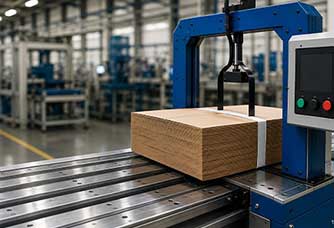
Inconsistent tension in banding machines can lead to significant product damage and costly downtime when running an automated packaging line. Getting the paper grade right is crucial for maintaining proper tension control, so let's explore which paper grades optimize tension control in automatic banding machines.
Premium-grade kraft paper with a basis weight between 90-100 GSM and high tensile strength (>4.0 kN/m) provides optimal tension control in most automatic banding applications.
While this answer holds for standard applications, it's important to continue reading because different products and environmental conditions may require specific paper grade adjustments to achieve the best results. Understanding these variables can help you fine-tune your banding operation for maximum efficiency.
The weight and dimensions of your packaged items play a crucial role in determining the optimal paper grade for your banding operation. Heavier products typically require stronger paper grades with higher tensile strength, often in the 110-120 GSM range, to prevent band breakage during handling and transportation. Conversely, lighter products can use standard 90-100 GSM paper without compromising stability.
Product size also influences paper width selection. Larger items may need wider banding paper (up to 100mm) to ensure proper load distribution and prevent edge tearing, while smaller items work well with standard 28mm to 50mm widths.
Humidity levels in your facility can significantly impact paper performance in banding machines. High humidity environments (above 60% RH) can weaken paper strength and affect tension consistency. Choosing moisture-resistant grades or papers with additional wet-strength treatment becomes essential in these conditions.
Proper storage of banding paper is often overlooked but can significantly affect its performance. Paper should be stored in a climate-controlled environment with humidity levels between 45-55% and temperatures between 68-72°F (20-22°C). Improper storage can lead to moisture absorption or brittleness, compromising the paper's tensile properties.
Keep paper rolls in their original packaging until use, and avoid storing them directly on concrete floors or near external walls where temperature fluctuations are common. Proper stock rotation using the FIFO (First In, First Out) method ensures consistent paper performance and prevents degradation from extended storage.
The operating speed of your banding machine must be properly matched to your chosen paper grade to maintain optimal tension control. Higher basis weight papers (110-120 GSM) generally perform better at slower speeds, typically 25-30 bands per minute, as they require more time to achieve proper tension without tearing. Lighter-weight papers (90-100 GSM) can handle faster speeds of up to 40 bands per minute while maintaining consistent tension.
When switching between paper grades, it's essential to calibrate your machine's speed settings. Start at a lower speed and gradually increase it while monitoring tension consistency and band quality. This approach helps identify the sweet spot for your paper grade and product combination.
Common tension-related problems often stem from mismatched paper grades rather than machine malfunction. If bands are consistently breaking, the paper grade may be too light for the application, or the tension settings may be too high for that particular grade. Conversely, loose bands typically indicate insufficient tension settings or a paper grade too heavy for the application.
Start troubleshooting by verifying that your paper grade meets the specifications recommended by a trusted packaging equipment partner for your banding machine. Then check for environmental factors, such as humidity changes or improper storage, that might affect paper performance. Finally, tension settings should be adjusted in small increments while testing with sample products until optimal results are achieved—document successful combinations of paper grades and tension settings for future reference.
Start by thoroughly auditing your current banding paper specifications, including its basis weight, tensile strength, and moisture resistance properties. Compare these specifications against your product characteristics, facility environment, and machine settings to identify any mismatches affecting your operation's efficiency.







We use cookies to ensure you get the best experience on our website. Read more...