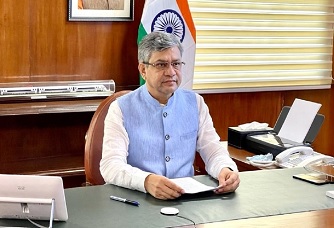
Union Minister Ashwini Vaishnaw has set a clear timeline for India’s first indigenous high-speed train, confirming that the Vande Bullet prototype will roll out in 2027.
The announcement places the Vande Bullet project at the center of India’s push to build advanced rail systems domestically while reducing dependence on global suppliers.
The high-speed train is being developed through a collaboration between Integral Coach Factory and BEML.
Production will take place at BEML’s upcoming facility in Bengaluru, where modern manufacturing technologies, including robotic laser welding, are being introduced to ensure precision and scalability.
Also Read: Reducing Mining's Carbon Footprint with Renewable Energy Solutions
Designed to reach speeds of around 250–280 km/h, the Vande Bullet is expected to operate on dedicated high-speed corridors such as Mumbai–Ahmedabad. The project builds on the success of Vande Bharat trains but moves a step further by focusing on long-distance, high-speed connectivity tailored for Indian infrastructure and passenger needs.
Vaishnaw also pointed to parallel developments within Indian Railways, including the rollout of Vande Sleeper trains and expansion of routes to strengthen connectivity across regions. These efforts aim to create a more efficient and modern rail network capable of competing with other modes of transport.
With the prototype scheduled for 2027 and production expected to follow, the Vande Bullet initiative reflects a broader shift toward self-reliance in high-speed rail technology. It signals India’s intent to join a select group of nations that design and manufacture their own bullet trains while improving travel speed and passenger experience nationwide.



.jpg "Building EV Bus Ecosystems for India's Clean Mobility Goals")

We use cookies to ensure you get the best experience on our website. Read more...