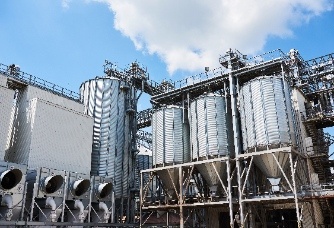
India is set to strengthen its fertilizer self-sufficiency with two new urea plants expected to begin production soon, adding a combined annual capacity of 25.4 lakh tons.
The move comes as part of a broader strategy to reduce dependence on imports and ensure uninterrupted supply to the agriculture sector.
The development is significant given India’s continued reliance on imported urea, which crossed 100 lakh tons in FY26. With global supply chains facing repeated disruptions, expanding domestic production has become a strategic priority.
India’s fertilizer sector has been particularly vulnerable to international market fluctuations, especially due to its dependence on imported raw materials like natural gas. Recent geopolitical tensions in West Asia, coupled with supply constraints and rising input costs, have exposed the risks associated with this dependence.
These disruptions have not only driven up global prices but have also strained availability, impacting timely supply for farmers. By increasing domestic capacity, the government aims to cushion the agriculture sector from such external shocks.
Over the past decade, India has made a concerted effort to revive and expand its fertilizer manufacturing base. Since 2014, six new large-scale urea plants have been set up, collectively adding 76.2 lakh tons to annual production capacity.
The addition of two more plants marks a continuation of this capacity-building push. Once operational, these facilities will further strengthen domestic supply chains and reduce the need for large-scale imports.
Urea remains one of the most widely used fertilizers in India, playing a critical role in crop productivity and food security. Any disruption in its availability can directly impact agricultural output.
By enhancing local production, the government aims to ensure that farmers have timely and affordable access to fertilizers, even during periods of global uncertainty. This is particularly important for a country where agriculture continues to support a large portion of the population.
Also Read: India Reassesses Green Ammonia Demand as Fertilizer Costs Surge
The expansion aligns with the broader objective of achieving self-reliance in key sectors. Fertilizers, being central to food security, are a critical component of this strategy.
Government interventions in recent years have focused not only on capacity expansion but also on improving supply chain efficiency, streamlining distribution, and maintaining price stability for farmers.
The commissioning of new urea plants reflects a long-term shift in India’s approach to fertilizer security from import dependence to domestic resilience.
While challenges such as raw material availability and energy costs remain, increasing local production capacity is a crucial step toward insulating the sector from global disruptions.
As these plants come online, India is likely to move closer to a more stable and self-reliant fertilizer ecosystem, ensuring both agricultural sustainability and food security.

.jpg "AR Enterprises: Building The Supply Networks Behind India's Construction Growth")
.jpg "Industrial Packers: Engineering Industrial Packaging for India's Manufacturing Future")




We use cookies to ensure you get the best experience on our website. Read more...