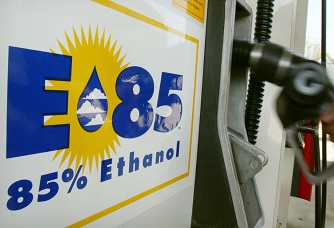
India has officially started the retail sale of E85 Petrol, marking a significant step in the country's push toward cleaner and more sustainable fuels.
The launch of E85 Petrol at a price of Rs 82.12 per litre has attracted attention due to its substantial cost advantage over conventional petrol and E20 fuel.
The new fuel blend is expected to support India's ethanol-blending goals, reduce dependence on crude oil imports, and promote environmentally friendly transportation solutions.
The first E85 fuel dispensing station has been launched in Delhi, making India one of the few countries actively promoting high-ethanol fuel blends. While the lower price tag has generated excitement among motorists, experts emphasize that E85 Petrol is suitable only for specific vehicles designed to handle higher ethanol content.
E85 Petrol is a fuel blend containing approximately 85 percent ethanol and 15 percent petrol. Ethanol is a renewable biofuel typically produced from agricultural products such as sugarcane, corn, and other biomass sources.
Compared to E20 fuel, which contains up to 20 percent ethanol, E85 significantly increases the share of renewable fuel. The government sees this as a major step toward reducing fossil fuel consumption while supporting domestic ethanol production.
The introduction of E85 aligns with India's broader strategy to increase ethanol blending in transportation fuels and strengthen energy security.
Also Read: Sustainable Practices in Ferro Alloy Smelting for Future Growth
One of the biggest highlights of the launch is the price. E85 Petrol is being sold at Rs 82.12 per litre, which is nearly Rs 20 cheaper than E20 petrol in Delhi.
The pricing strategy is intended to encourage consumers and automakers to adopt flex-fuel technology. However, lower fuel prices do not automatically translate into lower running costs.
Ethanol contains less energy than petrol, meaning vehicles running on E85 may consume more fuel to travel the same distance. The government has factored this difference into the pricing structure, making the fuel financially attractive despite its lower energy density.
Although E85 Petrol offers an appealing price advantage, it cannot be used in all vehicles.
The fuel is specifically designed for Flex Fuel Vehicles (FFVs), which are equipped with engines and fuel systems capable of handling high ethanol concentrations. Using E85 in a conventional petrol vehicle not certified for such fuel could lead to performance issues, engine damage, and fuel system problems over time.
Automobile manufacturers have already begun exploring flex-fuel technology for the Indian market. As adoption grows, more vehicles compatible with E85 are expected to become available.
Consumers are advised to verify their vehicle specifications before considering E85 fuel.
The launch of E85 Petrol supports multiple national objectives beyond transportation.
India imports a large portion of its crude oil requirements, making the economy vulnerable to global oil price fluctuations. Increasing ethanol consumption can help reduce import dependence and conserve foreign exchange reserves.
The initiative is also expected to benefit farmers by creating additional demand for agricultural feedstocks used in ethanol production. Higher ethanol production can strengthen rural economies while contributing to India's renewable energy targets.
From an environmental perspective, ethanol-blended fuels can help reduce greenhouse gas emissions when compared with traditional fossil fuels, supporting the country's commitment to cleaner mobility.
The introduction of E85 Petrol signals the government's commitment to diversifying India's fuel ecosystem. While the immediate impact may be limited due to the small number of flex-fuel vehicles currently on the road, the move lays the foundation for broader adoption in the coming years.
Industry experts believe that expanding ethanol infrastructure, increasing consumer awareness, and encouraging manufacturers to produce flex-fuel vehicles will be crucial for the success of E85.
As fuel technologies continue to evolve, E85 could become an important component of India's strategy to balance affordability, sustainability, and energy security.
.jpg "AR Enterprises: Building The Supply Networks Behind India's Construction Growth")
.jpg "Industrial Packers: Engineering Industrial Packaging for India's Manufacturing Future")





We use cookies to ensure you get the best experience on our website. Read more...