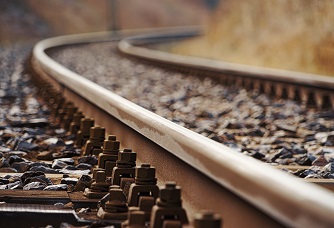
India’s freight rail network now stands closer than ever to closing the long-standing cost gap with China.
Maharashtra Chief Minister Devendra Fadnavis declared that the newly completed Western Dedicated Freight Corridor will push the country’s logistics cost down to around 7 percent, the same level China currently maintains.
Prime Minister Narendra Modi inaugurated the final sections of the 1,600-km corridor on Tuesday, linking Dadri in Uttar Pradesh with Jawaharlal Nehru Port near Mumbai.
The project promises faster transit, higher capacity and cleaner movement of goods, giving Indian industry a sharper edge in global supply chains.
The Western Dedicated Freight Corridor runs 1,506 km from New Dadri to New JNPT and forms one half of India’s dedicated freight network. Together with the Eastern Dedicated Freight Corridor, the two lines span approximately 2,843 km.
The Western corridor passes through Haryana, Rajasthan and Gujarat before it reaches Maharashtra. Fadnavis noted that the full operationalization of this route will cut logistics costs from the earlier 14 percent level, which the government had already reduced to 10 percent, down to the targeted 7 percent.
These gains directly improve the competitiveness of export-oriented and import-dependent industries while generating large-scale employment in Maharashtra.
Also Read: India as a Global Manufacturing Hub in the New Mobility Era
The Eastern and Western corridors together create high-capacity rail links between major industrial centers, manufacturing hubs and key ports. They free existing railway lines from heavy freight traffic and thereby create additional space for passenger trains.
The Union Budget this year also announced a third Dedicated Freight Corridor that will connect Dankuni in West Bengal with Gujarat via Jharkhand, Chhattisgarh and Maharashtra. Once built, the new line will further expand the dedicated freight grid and strengthen connectivity across additional industrial regions.
Fadnavis underlined that matching China’s logistics cost of 7 percent will allow India to compete more effectively and secure a larger role in global supply chains. He thanked the Central government, Railway Minister Ashwini Vaishnaw, the Japan International Cooperation Agency and the Japanese government for their support in completing the Western corridor.
This combination of faster transit, higher carrying capacity and lower cost positions India’s freight rail network as a critical enabler of manufacturing competitiveness and export growth.






We use cookies to ensure you get the best experience on our website. Read more...