Indian manufacturing is increasingly moving beyond capacity creation towards deeper technology, value addition and supporting infrastructure. This shift is visible across five recent developments.
JSW Projects and COEP Technological University are investing over Rs 800 crore in a battery R&D center in Pune.
The Bengal-Odisha industrial corridor is being positioned to support downstream aluminium manufacturing.
Jaipur is adding 5 MW of solar capacity to sewage treatment infrastructure.
A new report highlights the need for grid-stability milestones alongside clean-energy expansion, and August industrial output rose 8 percent, with manufacturing growing 9 percent.
Together, these developments point to how India's next manufacturing phase could depend on technology development, supply-chain depth and reliable energy infrastructure.
JSW Projects and COEP Technological University are setting up an Advanced Battery Research & Development Centre at COEP Tech's Chikhali Research Park with an investment of more than Rs 800 crore.
The two-phase facility will move from designing and prototyping lithium-ion, sodium-ion and other advanced-chemistry cells to validation and pilot-scale development of cells ranging from 100 Ah to 600 Ah.
The larger manufacturing significance lies in this R&D-to-production pathway. Rather than focusing only on battery research, the center creates a platform for design, prototyping, validation and eventual manufacturing applications.
This could strengthen domestic battery technology capabilities while reducing the distance between laboratory research and industrial deployment.
The partnership is also expected to support more than 1,000 ecosystem-related jobs across engineering, research, manufacturing and allied services.
Also Read: Manufacturing Capability: The New Currency of India's Global Ambition
The Bengal-Odisha industrial corridor is being positioned as a link between eastern India's industrial base and eastern and Southeast Asian markets.
Union Minister G Kishan Reddy has also called for greater development of aluminium-based downstream industries in West Bengal.
More than Rs 79,000 crore has already been spent on infrastructure projects in the state, while projects worth Rs 1.47 lakh crore are in the pipeline.
The manufacturing opportunity, however, goes beyond connectivity. Eastern India's aluminium availability could support fabrication, components and other value-added products, allowing the region to capture more manufacturing value instead of primarily supplying raw or semi-processed material.
Better ports, berths and transport links could further support an export-oriented supply chain serving Asian markets.
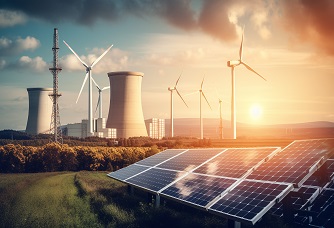
The Jaipur Development Authority plans to install 5 MW of solar capacity across six sewage treatment plants and two gardens along the Dravyavati River.
The project is expected to generate around 72 lakh units annually, save about Rs 6.12 crore in electricity costs each year and reduce CO₂ emissions by approximately 5,227 tons annually.
The bigger opportunity is the productive use of existing infrastructure. Energy-intensive facilities such as sewage and water-treatment plants can become sites for distributed renewable generation, reducing their dependence on conventional electricity.
If replicated, the model could extend beyond Jaipur to other municipal and industrial utility infrastructure.
India's 500 GW non-fossil capacity target will require more than renewable generation capacity.
A Federation of Indian Chambers of Commerce and Industry (Ficci)-Nangia report has called for measures including requirements for battery storage above 50 MW, minimum grid-inertia and system-strength standards, and faster identification of transmission corridors and congestion-management technologies.
This creates another manufacturing opportunity. The clean-energy transition will require battery energy storage systems, inverters, transformers, transmission equipment and grid-management technologies.
Grid readiness could therefore become a parallel industrial market alongside renewable generation.
Also Read: PM Surya Ghar Muft Bijli Yojana 2026: Rooftop Solar Subsidy, Installation & Online Application
August industrial output rose 8 percent, while manufacturing grew 9 percent. More significant for Indian manufacturing is the composition of that growth: capital goods increased 16.9 percent, intermediate goods 13.7 percent and consumer durables 11.1 percent. Electrical equipment, other transport equipment and motor vehicles also recorded strong growth.
The data therefore points beyond a headline production increase. Strong capital and intermediate goods output can indicate expanding activity deeper within industrial supply chains, including machinery, equipment and components.
At the same time, mining and quarrying contracted 5.6 percent, highlighting the importance of strengthening upstream supply alongside downstream manufacturing growth.






We use cookies to ensure you get the best experience on our website. Read more...