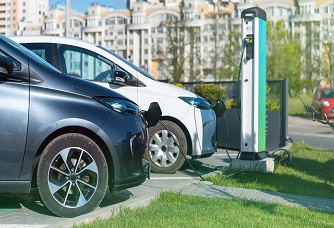
Tata’s all-EV BaaS move ignites a clear battery manufacturing push by making every model in the electric line-up more accessible.
TATA.ev extends Battery-as-a-Service across its full portfolio, including the higher-capacity Nexon.ev, Curvv.ev, Sierra.ev and Harrier.ev.
The program separates the battery cost from the vehicle price and finances the two components through independent loans.
This structure cuts the upfront acquisition cost sharply and gives customers a flexible financing choice.
Higher volumes that follow from lower entry prices will drive greater battery demand and strengthen the case for expanded domestic cell and pack production.
TATA.ev first introduced Battery-as-a-Service on the entry-level Tiago.ev and Punch.ev. The company now rolls the option out to Nexon.ev, Curvv.ev, Sierra.ev and Harrier.ev, covering every electric model it sells. Customers can still buy the vehicle and battery together in the conventional way, or they can choose BaaS and pay for the battery separately.
Under the BaaS structure, the vehicle loan functions like a regular car loan while the battery carries its own financing account. The battery EMI varies with battery size, down payment, and tenure. It excludes charging, maintenance, repairs and other running costs. Multiple financiers support the dual-loan product, subject to their approval and terms.
Also Read: World EV Day 2026: Driving India's Future of Mobility
The price impact appears most clearly on the larger-battery models. Key figures include:
|
Model |
Battery |
Regular Price |
BaaS Vehicle Price |
Upfront Saving |
|
Tiago.ev |
19 kWh |
Rs 6.99 lakh |
Rs 4.69 lakh |
Rs 2.30 lakh |
|
Punch.ev |
30 kWh |
Rs 9.79 lakh |
Rs 6.59 lakh |
Rs 3.20 lakh |
|
Nexon.ev |
45 kWh |
Rs 14.34 lakh |
Rs 8.99 lakh |
Rs 5.35 lakh |
|
Curvv.ev |
55 kWh |
Rs 17.19 lakh |
Rs 10.99 lakh |
Rs 6.20 lakh |
|
Sierra.ev |
63 kWh |
Rs 18.79 lakh |
Rs 11.99 lakh |
Rs 6.80 lakh |
|
Harrier.ev |
65 kWh |
Rs 21.79 lakh |
Rs 14.49 lakh |
Rs 7.30 lakh |
Battery usage costs range from Rs 2.6 per km on the smaller packs to Rs 5.9 per km on the Harrier.ev. The quoted BaaS prices apply to entry-level trims and assume typical daily usage of around 60 km (44 km for the Tiago.ev). They exclude charging, insurance, road tax and other statutory charges.
Vivek Srivatsa, Chief Commercial Officer of TATA.ev, states that growing EV acceptance drives demand for more financing choices. Customers can buy the EV outright with the battery included or select BaaS and lower the initial acquisition cost. The dual option keeps the conventional purchase path intact while opening a lower-entry route that can attract a wider buyer base.
Higher volumes that result from these reduced upfront prices will increase overall battery offtake in GWh terms. The larger packs on Nexon.ev, Curvv.ev, Sierra.ev and Harrier.ev amplify that demand effect.
Greater predictable offtake supports the economics of scaling battery production and strengthens the case for deeper vertical integration from cells to packs to vehicles.
TATA.ev positions Battery-as-a-Service as an additional financing tool rather than a replacement for outright ownership. Extending the program across the full electric portfolio, the company removes a key affordability barrier on its higher-capacity models. The resulting volume growth creates stronger downstream demand for batteries and reinforces Tata’s broader manufacturing ambitions in the electric mobility space.
.jpg "Saksham Enterprises: Optimizing Mission- Critical HVAC Infrastructure For The High Precision Sector")

.jpg "JDS Group of Companies: Innovating Smart Solutions For Modern Power Transmission & Distribution Infrastructure")




We use cookies to ensure you get the best experience on our website. Read more...