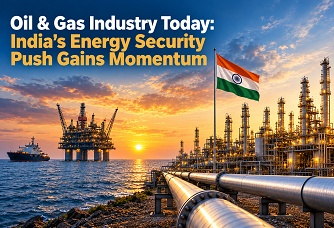
India’s oil and gas sector is navigating changing mobility patterns, fuel-market pressures and a growing need to strengthen domestic energy security.
From evolving lubricant demand and ethanol policy to shifting diesel consumption, the latest developments point to a market being shaped by both cost pressures and changing energy priorities.
The push for greater self-reliance is also bringing domestic production and innovation into sharper focus. Industry leaders are calling for more technology-led exploration, stronger startup participation and policy flexibility as India works to reduce its dependence on imported energy.
Here are today’s biggest oil and gas industry stories.
Castrol India is expanding its growth ambitions beyond traditional lubricants, with opportunities emerging across industrial, institutional and consumer segments.
The company has also entered vehicle-care products and sees EVs, hybrids, ethanol-blended fuels and ICE vehicles coexisting for years. Its industrial volumes have nearly doubled in recent years, while it is exploring opportunities in data centers and advanced infrastructure.
“We think there is still a lot of headroom for growth.” — Saugata Basuray, Managing Director, Castrol India
India’s 20% ethanol blending target is facing calls for greater flexibility amid concerns over feedstock availability and food prices. ICRIER has proposed temporarily reducing blending to 15% during severe shortages while retaining E20 as the long-term objective.
The study also called for greater ethanol import flexibility and faster adoption of second-generation ethanol using crop residues and non-food biomass.
“The final safeguard should be flexibility in the blending rate itself.” — ICRIER
State run oil marketing companies are losing 25–35% of bulk diesel sales as smaller businesses shift to retail pumps to avoid a Rs 38–40 per liter premium. Rising global diesel prices and refinery disruptions have widened the price gap.
While large institutional buyers continue using bulk channels, contractors, miners and road builders are increasingly switching to retail outlets to control fuel costs.
India’s dependence on imported energy is strengthening the case for domestic oil and gas production and technology-led exploration. ONGC Chairman and CEO Arun Kumar Singh said India imports about 88% of its oil and 50% of its gas requirements.
Public-sector energy companies are also backing startups through the MC²⁺ initiative, which can support up to 30 early-stage energy startups with funding and industry collaboration.
“We can't become Atmanirbhar Bharat without being Atmanirbhar in the energy sector.” — Arun Kumar Singh, Chairman & CEO, ONGC





We use cookies to ensure you get the best experience on our website. Read more...