India's energy sector powers through a week packed with bold moves, and the numbers tell a story of momentum rather than isolated headlines.
Clean energy investments, battery manufacturing incentives, and electric mobility targets weave together into one clear narrative: the country builds capacity today for the electricity demand of tomorrow.
NTPC commits massive infrastructure funds, the government backs battery component production, Suzlon secures a fresh wind order, and EV projections climb higher.
This weekly highlights roundup connects the dots across manufacturing, power infrastructure, and renewable energy to show exactly how each development supports the next, forming a coordinated industrial shift.
The government tackles a long-standing bottleneck this week with a fresh incentive plan worth 13,000 crore aimed at battery component manufacturing. The scheme targets the upstream materials that Indian manufacturers currently import in bulk from China, and the proposal has already moved past the announcement stage toward formal approval.
This move strengthens the domestic supply chain and reduces dependence on external suppliers, which is a necessary step as EV and grid-storage demand climbs.
These five components are critical building blocks of advanced battery cells, and India's near-total reliance on Chinese suppliers has long been a pressure point for domestic manufacturers.
Also Read: Hybrid Power & Tech Solutions for Sustainable Manufacturing Growth
Union Minister for Road Transport and Highways Nitin Gadkari projects that India's EV market will reach 20 lakh crore by 2030, speaking at a summit organized by the CII-ITC Centre of Excellence for Sustainable Development. The target forms a core pillar of the government's plan to make India's automobile industry the world’s largest within five years.
This shortfall highlights exactly where the battery component incentive plan and expanding cell manufacturing capacity need to deliver a faster, cheaper local production that directly addresses this electric bus manufacturing gap.
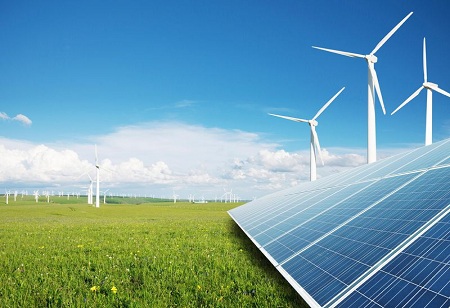
India's clean power push continues to widen. Suzlon secures a 250 MW wind order this week, a signal that developers keep placing large bets on wind capacity even as solar dominates headlines. The renewable sector overall shows steady expansion, with storage solutions increasingly pairing with generation projects to smooth out supply.
Girish Tanti, Vice Chairman of Suzlon Group, called Torrent Green Energy one of the company's valued partners for more than ten years. Similarly, Ajay Kapur, CEO of Suzlon Group, linked this growth to their sustained customer confidence.
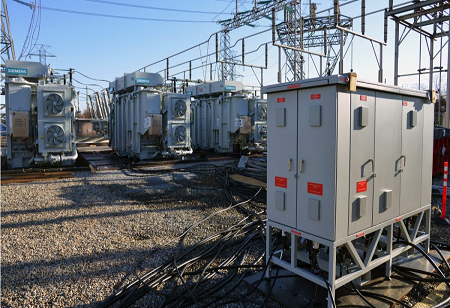
NTPC commits 16.86 lakh crore toward expanding India's power infrastructure, anticipating a sharp rise in electricity consumption. NTPC Chairman and Managing Director Gurdeep Singh announced the 16.86 lakh crore investment plan through FY37 at the company's 50th Annual General Meeting, calling the coming decade one of the most important growth periods in NTPC's history.
Also Read: India as a Global Manufacturing Hub in the New Mobility Era
|
Company/Body |
Move This Week |
What It Signals |
|
Government of India |
13,000 crore battery incentive scheme |
Push for domestic cell and cathode production |
|
NTPC |
16.86 lakh crore infrastructure investment |
Long-term bet on rising power demand |
|
Suzlon |
250 MW wind power order |
Continued developer confidence in wind capacity |
|
Ministry of Road Transport |
20 lakh crore EV market projection by 2030 |
Mobility sector as a demand driver for power and batteries |
The scale of this week's commitments points to a shift from announcement-stage plans to execution-stage capital. NTPC's 16.86 lakh crore figure dwarfs the battery incentive outlay, showing that infrastructure providers move first while manufacturing incentives catch up.
Suzlon's order size, though modest against NTPC's numbers, matters because it reflects private-sector confidence rather than government spending which is a healthier signal for long-term renewable growth. Read together, government incentives, state-run infrastructure spending, and private developer orders now move in the same direction rather than in silos.
The battery incentive scheme stands out as the week's major policy move. It complements existing production-linked incentive frameworks and signals that the government views battery self-sufficiency as core to India's clean energy and mobility ambitions. Expect further policy support for storage technology and grid modernization as EV adoption accelerates.
India builds three interlocking layers this week: stronger battery manufacturing, rising EV demand, and power infrastructure that anticipates future load. Each layer reinforces the others, better batteries support EV growth, EV growth pushes power demand, and power demand justifies NTPC's massive investment.
Companies like NTPC and Suzlon anchor this momentum on the ground, while government incentives set the direction from above.
.jpg "Saksham Enterprises: Optimizing Mission- Critical HVAC Infrastructure For The High Precision Sector")

.jpg "JDS Group of Companies: Innovating Smart Solutions For Modern Power Transmission & Distribution Infrastructure")




We use cookies to ensure you get the best experience on our website. Read more...