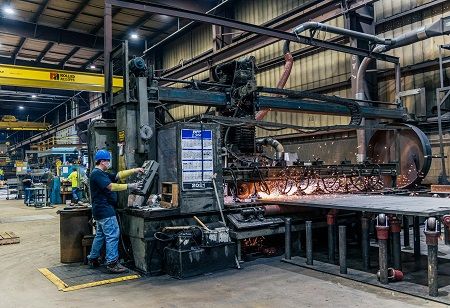
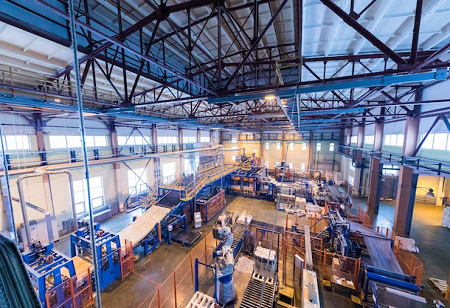
.jpeg "How States Are Rethinking Manufacturing Investment Beyond Incentives")
India’s manufacturing push is entering a new phase as states shift their focus from offering incentives to building execution-driven industrial ecosystems.
While central initiatives such as Make in India and Production-Linked Incentive (PLI) scheme have laid the foundation, the real competition is now unfolding at the state level. However, this is no longer a race driven purely by subsidies, but by the ability to deliver faster, more reliable, and scalable manufacturing environments.
States across the country are increasingly positioning themselves as end-to-end manufacturing destinations by combining policy support with infrastructure, logistics, and sector-specific strategies.
For years, state-level industrial policies largely revolved around tax breaks, land subsidies, and capital incentives. While these remain relevant, they are no longer the primary deciding factor for investors.
Manufacturers are now evaluating long-term operational efficiency, focusing on factors such as infrastructure readiness, power reliability, logistics efficiency, regulatory clarity, and speed of project execution.
This shift reflects a broader transition in investment decision-making, where lifecycle costs and operational stability are gaining priority over upfront financial benefits.
Leading states are moving beyond generic industrial policies and developing sector-specific manufacturing ecosystems.
Gujarat is leveraging its strong logistics and port infrastructure, while Tamil Nadu continues to build on its established manufacturing base in automobiles and electronics. Uttar Pradesh is aligning policy incentives with execution support in emerging sectors such as semiconductors.
At the same time, Karnataka, Telangana, and Andhra Pradesh are focusing on electronics, advanced manufacturing, and battery-related supply chains, creating specialized industrial clusters to attract investments.
This approach signals a shift from offering isolated incentives to building integrated ecosystems that support long-term industrial growth.
Also Read: Localization Without Isolation: India’s Semiconductor Strategy
The way manufacturing success is measured is also evolving.
Investment commitments and MoUs are no longer seen as sufficient indicators of progress. Instead, greater emphasis is being placed on actual project execution, time taken to operationalize facilities, job creation, export growth, and the development of local supplier ecosystems.
This shift highlights the importance of translating policy intent into tangible outcomes on the ground.
Competition among states is particularly intense in sectors that are central to India’s industrial transformation.
These include electronics manufacturing, semiconductors, electric vehicles, batteries, renewable energy, and advanced manufacturing. These sectors require not only policy support but also deep ecosystem readiness, skilled talent, and reliable infrastructure.
As a result, states that can offer a complete manufacturing environment are likely to attract a larger share of investments in these high-growth industries.
Sustainability is becoming an increasingly important factor in manufacturing decisions.
States are incorporating renewable energy adoption, environmental compliance frameworks, and waste management systems into their industrial strategies. This is especially relevant for sectors such as electronics and EVs, where environmental impact is a key concern.
A stronger focus on sustainability is helping states align with global supply chain requirements while also addressing domestic environmental challenges.
India’s manufacturing ambitions are now being shaped by competitive federalism at the state level.
As the focus shifts from incentives to execution, the states that can combine infrastructure, policy stability, skilled workforce, and sustainability will be better positioned to attract long-term investments.
The next phase of growth will depend not on who offers the most incentives, but on who can deliver the most efficient and reliable manufacturing ecosystem.





We use cookies to ensure you get the best experience on our website. Read more...